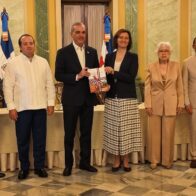
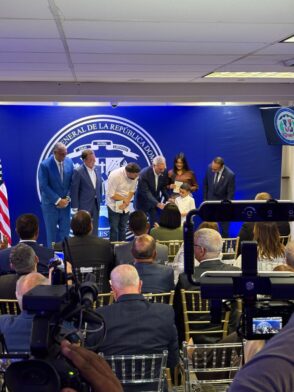
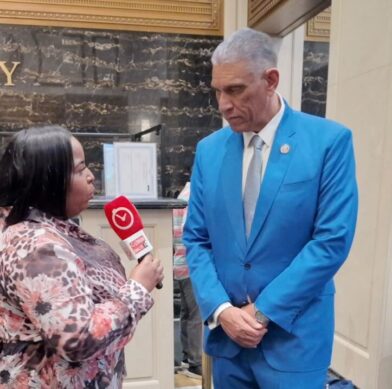
Santo Domingo.– In the framework of its 80th anniversary celebration, Autozama presented the book Santo Domingo: yesterday, today and tomorrow, a work that gathers seven years of work, research and reflection on the evolution of the city of Santo Domingo, its urban development, its mobility and the main challenges it faces.
The publication was conceived as an invitation to look at Santo Domingo more deeply, not only from its history, but also from the decisions that have marked its growth, the problems that today affect the quality of life of its inhabitants and the solutions that must be taken seriously to build a more orderly, safe and efficient city.
During the presentation of the work, Ramón Ernesto Morales, president of Autozama, stated that the book was born from a deep concern for the progressive deterioration of the city, the chaos in the streets, the loss of quality of life, the lack of urban order, and the need to understand how Santo Domingo arrived at its current situation.
He also pointed out that, for decades, the city has not had sustained, coherent, and efficient urban planning, and warned that many of the responses given to its problems have been partial, reactive, or insufficient.
The president of Autozama maintained that the transformation of the city cannot depend on the political cycle or improvised solutions, but rather on institutional continuity, technical capacity, authority, and a true commitment to the public interest. He also emphasized that they require leadership and public decisions that are evaluated by their results, not by their immediate acceptance.
He also stated that public transport cannot continue to be a pending promise and that the city requires a system that responds to the real needs of the citizenry, especially the worker who every day bears the costs of urban disorder.
The original conception and proposal of the work was made by Bienvenido Pantaleón (✝). The texts are by Omar Rancier, with complementary texts and research for infographics by Carmen Ortega. The creative direction was in charge of Freddy Jana; the design and layout were developed by Lourdes Periche, Ariel Thomas and Facundo Pezzi; and the photography corresponds to Fernando Calzada, along with archive images from Imágenes de Nuestra Historia, the General Archive of the Nation and Arquitexto.