
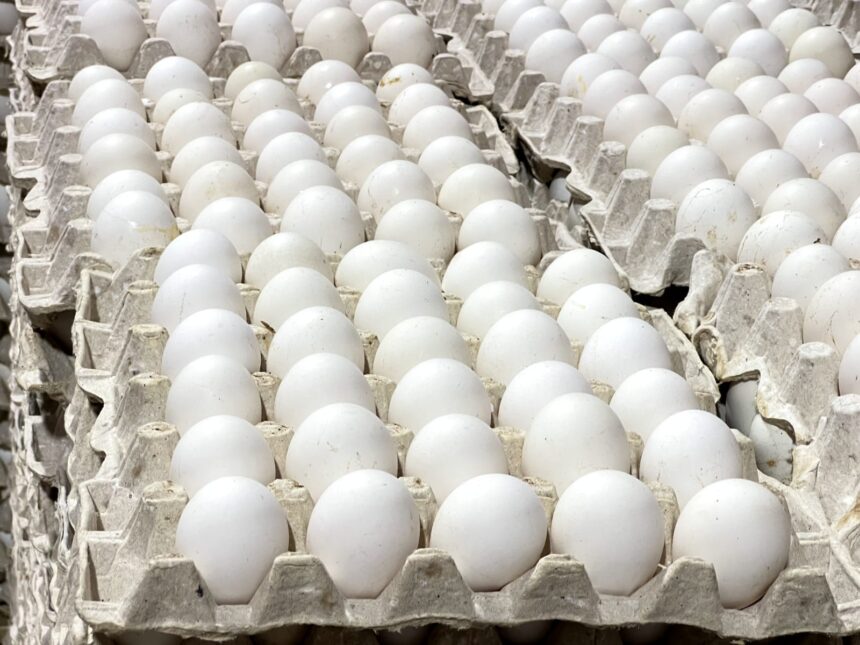
The Dominican Republic resumed egg exports to Cuba this Wednesday, after shipments had remained suspended due to logistical difficulties caused by the United States blockade against that Caribbean nation.
The information was provided by Miguel Lajara, a member of the Dominican Poultry Association (ADA), who specified that, as part of the reactivation of trade, 12 containers with 3 million 900 thousand 960 eggs were dispatched, corresponding to an export block made up of the companies Agrokilda, Granja Wilse, Huevos Perla, and Agropecuaria SSK.
He highlighted that the reopening of this market represents significant relief for national production, after specifying that shipments can be made, in this new stage, twice a month, which projects the export of more than 13 million eggs to Cuba.
Likewise, he recalled that before the interruption of shipments, the Dominican Republic exported around 60 million eggs per month to Cuba, one of the main destinations for this product.
He specified that the Dominican egg enjoys wide recognition in the Cuban market for its high quality and freshness. Thanks to the geographical proximity between both countries, the product reaches the island in a short time, maintaining its natural conditions and without the need to undergo refrigeration processes during transport, which preserves its properties and makes it a highly valued option for Cuban importers and consumers.

Lajara explained that the resumption of exports was made possible thanks to the approval, by the Dominican Government, of an operating regulation for maritime transport subsidies, designed to compensate for the increase in logistics costs and guarantee the continuity of shipments to the island.
The program includes a fund of RD$25 million, managed by the Dominican Poultry Association, in coordination with the National Association of Egg-Laying Hen Producers (Asonaprop), and establishes a subsidy of US$4,500 for each exported container, with a limit of up to 20 containers per week, until the available resources are exhausted.
He specified that the mechanism prioritizes traditional exporters, although it also allows for the participation of other producers when space is available, with the purpose of ensuring transparency and expanding commercialization opportunities for the sector.
More Read

He valued the Government’s support for the poultry industry and stated that the recovery of exports will contribute to strengthening the sector’s stability, preserving thousands of jobs, and maintaining the dynamism of national egg production.