Any Ceuta resident, visitor, or immigrant who wishes to travel by sea or air to peninsular Spain must pass through controls already established by the Schengen Agreement.
The European Commission stated on Friday that no irregular migrant has moved from Ceuta to the European mainland, basically because the Schengen treaty itself already includes a restriction on free movement in both this Autonomous City and Melilla.
Despite the actions of States like Italy, which asserts that it will monitor any “non-European” arriving from Spain, or the statements from various representatives of the European far-right, EU officials insist that the migrants who crossed the border irregularly will not head to other member states.
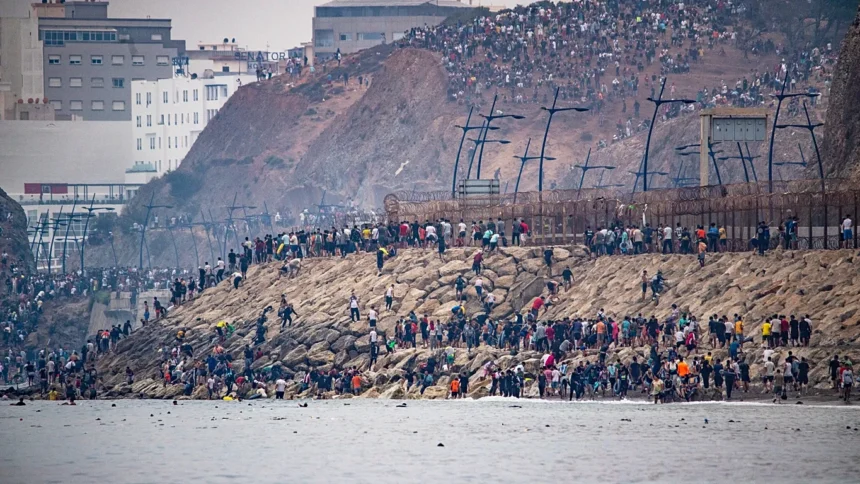
About 50,000 migrants, mostly Moroccans, stormed the Spanish enclave in Africa on Thursday, in the largest surge of irregular arrivals ever recorded on EU territory. Instead of expressing solidarity, several EU countries, including Italy, Finland, and Denmark, accused Pedro Sánchez’s government of failing to adequately protect Europe’s external borders.
We recommend reading:
More Read


Although Ceuta is Spanish territory, it is subject to special rules regarding free movement. “Controls on people leaving Ceuta and Melilla remain in force within the framework of the Schengen system. For these purposes, they are considered an external border of the EU,” explains a European Commission official.
The Schengen free movement rules apply only to EU citizens, people with valid residence permits, and travelers who meet the conditions for legal entry. In contrast, no one can enter or leave Ceuta without first undergoing identity checks, which makes it difficult for them to leave the enclave for Spain.
If an irregular migrant requests asylum, detention measures may be applied to them through an accelerated asylum procedure that came into effect last June. While their asylum application is being processed, applicants cannot leave Spain and may be returned if they are located in another European Union country.
More Read

Only beneficiaries of international protection have the right to travel within the Schengen area, but Morocco is considered a “safe country of origin” according to EU rules and, in principle, its citizens do not meet the requirements to obtain that protection. According to Spanish authorities, practically all the people who entered Ceuta on Thursday have already returned voluntarily to Morocco, despite the voices of local politicians who reject this claim.