An international team of scientists discovered a shark fossil approximately 150 million years old that could change what is known about the early evolution of these marine animals.
The specimen was found in rock formations from the Jurassic period and presents an exceptional level of preservation, which allowed researchers to analyze its complete anatomy in detail. Unlike most shark fossil records —which usually consist only of isolated teeth— this finding includes key body parts that offer more precise information about its structure.
The shark, about 25 centimeters long, had a slender body and unusual anatomical features. Among the most striking features is a sensory structure in the throat area, similar to a small chin or “mustache”, which is currently only observed in certain specific groups of modern sharks.
We recommend reading:
The most relevant aspect of the discovery is that the fossil combines characteristics of different current lineages. This mix of traits makes its classification within known groups difficult and suggests that the diversification of sharks was more complex than previously thought.
Researchers warn that basing the evolution of these animals solely on fossil teeth can lead to incomplete or inaccurate interpretations, as many ancient species may not fit clearly into modern categories.
The discovery raises new questions about when and how the main groups of current sharks emerged, and reinforces the importance of finding complete fossils that allow for a more precise reconstruction of the evolutionary history of these marine species.
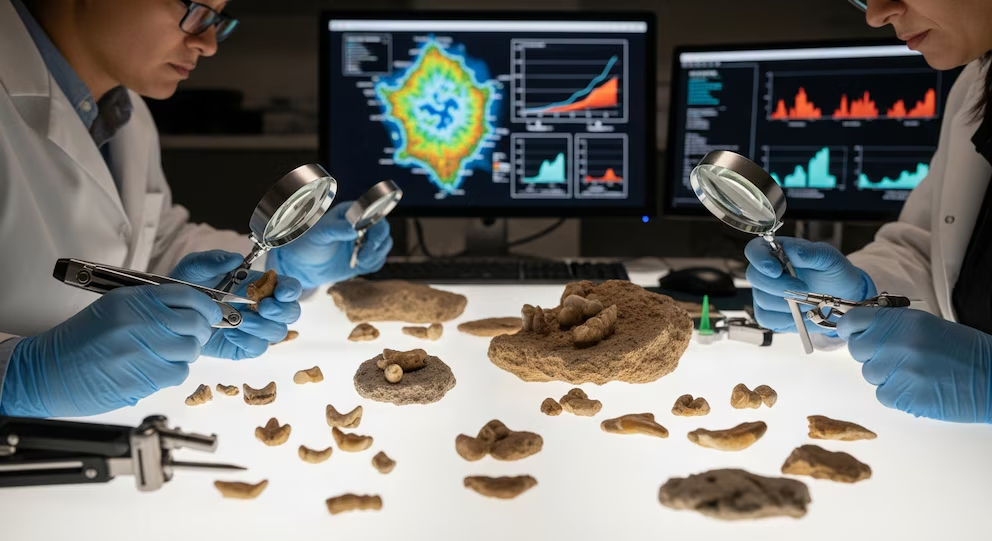


Fossil of 150-million-year-old shark found that challenges theories about its evolution