Logroño (EFE).- The paleontological excavations carried out this July at the site of Las Cerradas, in Igea (La Rioja), have led to the discovery of abundant fossils, which offer an increasingly complete view of a large herbivorous dinosaur, and whose researchers are working with the hypothesis that it could be a species not yet described.
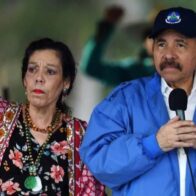
This is one of the conclusions of this campaign, carried out between July 4th and 12th, led by the Garras team from Igea, together with researchers from the universities of La Rioja, the Basque Country (UPV/EHU), and A Coruña, as detailed by those responsible in a note this Wednesday.
Although it is still too early to draw conclusions, the quality and scientific potential of the recovered material allow us to propose, as a working hypothesis that must be verified, that the specimen may represent a species not yet described, they have noted.
We recommend reading:An ancient whale graveyard in the Indian Ocean is teeming with life
This is, however, a hypothesis that must be confirmed through an exhaustive comparative study with other Early Cretaceous ornithopods.
More Read
The ecosystem
They have explained that the abundance of fossils discovered makes it essential to return to this site, which has great scientific potential, in the 2027 campaign to continue the excavation of the animal’s tail, which seems to correspond to the middle and posterior region of the skeleton.

Among the fossil remains found this year, elements of the pelvic girdle, a scapula, and several hand bones, including metacarpals and phalanges, stand out.
The combination of these new fossils, according to scientists, begins to offer an increasingly complete view of a large herbivorous dinosaur that inhabited this ecosystem about 120 million years ago.
More Read

Image of the paleontological excavations carried out this July at the Las Cerradas site, in Igea (La Rioja).
Each campaign at this site, which holds great scientific potential, allows for the completion of new pieces of this complex paleontological puzzle and brings researchers closer to precisely identifying the specimen and determining its position within the evolution of Early Cretaceous European ornithopods.
The excavation has not only allowed for the recovery of new remains of the large ornithopod dinosaur, but, thanks to the meticulous and systematic work carried out, fossils of other organisms that shared this ecosystem have appeared, such as remains of crocodiles, lepisosteiform fish, coprolites attributed to ‘hybodonts’ -a group of primitive freshwater sharks- and plants.
These findings are of enormous interest, as they allow for a more precise reconstruction of the environment in which this dinosaur lived.