The Government of Oman launched a new diplomatic offensive to try to unblock the crisis in the Strait of Hormuz, one of the most strategic maritime corridors on the planet. The Omani Foreign Minister, Badr al Busaidi, held telephone conversations with his counterparts from Iran, Egypt, Saudi Arabia, Qatar, and Kuwait with the aim of bringing positions closer and promoting an agreement that allows for guaranteeing the transit of vessels through a political solution acceptable to all involved actors.
As reported by the Oman Ministry of Foreign Affairs, the talks were aimed at identifying mechanisms to foster a stable consensus on maritime circulation in the strait, an essential passage for international trade and the transport of hydrocarbons. The initiative seeks to reduce the tensions that persist in the area after months of clashes and disagreements over the control of naval traffic.
Through a statement, Omani diplomacy indicated that the contacts focused on “ways to improve opportunities to reach practical, fair, and lasting agreements on navigation and the flow of supply chains through political and diplomatic solutions that serve the collective interests of the countries in the region and all parties benefiting from navigation through the Strait of Hormuz”.
The southern coast of Iran and Qeshm Island dominate part of the Strait of Hormuz, the scene of negotiations to ensure the safety of navigation
The ministry added that the foreign ministers agreed to highlight “the importance of navigation and its security, as well as the restoration of the flow of trade and supply chains linked to the regional and global economy”, in addition to stressing the need to maintain diplomatic coordination to preserve stability in the Middle East.
More Read

We recommend reading: U.S. claims to have reinforced naval blockade on Iran despite pause in airstrikes
Muscat did not offer details on the concrete proposals discussed during the talks. However, the approach comes at an especially delicate time for maritime security in the Persian Gulf, where the differences between Iran and the United States over the management of the strait continue to be one of the main obstacles to a broader understanding.
In parallel, sources familiar with the negotiations indicated that representatives from Iran and Oman are holding meetings to attempt to reactivate commercial transit through the Strait of Hormuz. According to these individuals, both delegations continued contacts following a meeting held over the weekend in Tehran, with the expectation of reaching an understanding that would subsequently facilitate the resumption of dialogue between Washington and the Islamic Republic.
More Read


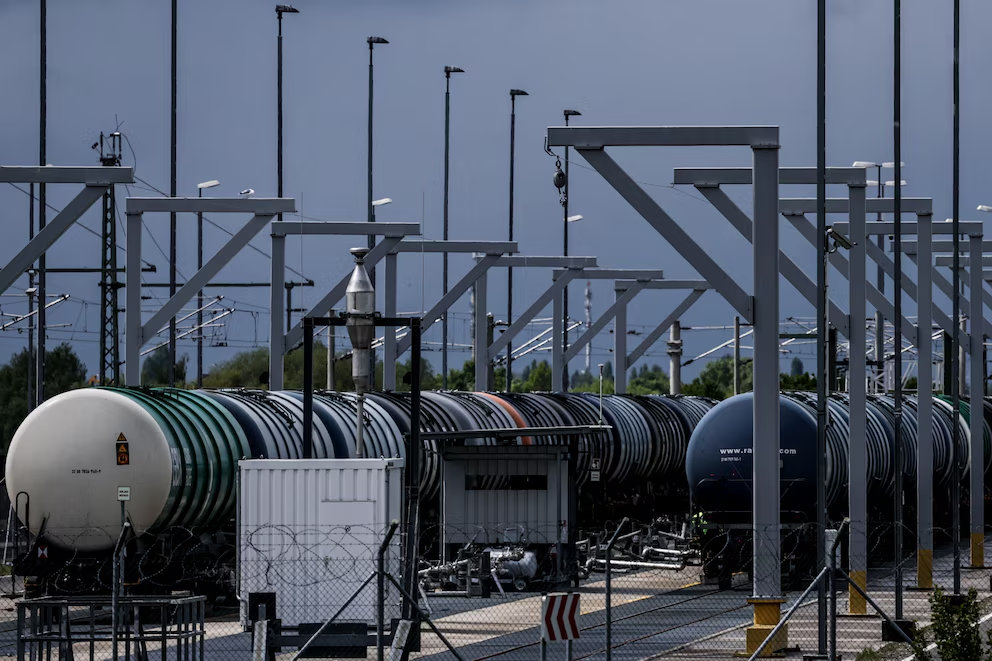
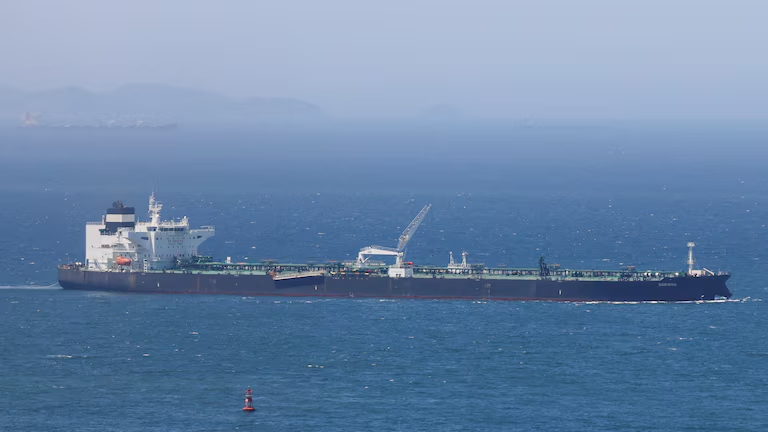
Oil tanker activity remains under international scrutiny amid negotiations to restore navigation security in the Strait of Hormuz
Among the alternatives analyzed is the reopening of the so-called “central passage” of the strait, a route that practically ceased to be used since the beginning of the conflict at the end of February. During these months, many vessels opted to sail near the Iranian coast or through a southern corridor close to the Omani peninsula of Musandam to reduce risks.
The same sources indicated that Omani negotiators consider it possible to announce progress in the coming days, although they acknowledged that there is still no guarantee that the talks will conclude with a definitive agreement. They also warned that the central channel might require demining operations before it can be used normally again, as there are reportedly sea mines placed during the crisis.
In that context, the President of the United States, Donald Trump, confirmed that diplomatic contacts are underway.
“Deep conversations are taking place,” he stated when asked about the negotiations, without specifying if he was referring specifically to the Strait of Hormuz. According to people familiar with the process, in addition to Oman and Iran, representatives from Egypt, Qatar, and Pakistan are participating, as well as U.S. envoys Steve Witkoff and Jared Kushner.
United States President Donald Trump confirmed that diplomatic contacts are underway
The Strait of Hormuz constitutes one of the main connection points between the Persian Gulf and the Gulf of Oman. Before the outbreak of the war between the United States, Israel, and Iran, approximately one-fifth of the world’s seaborne oil passed through that corridor daily, in addition to significant shipments of liquefied natural gas.
The dispute over who should manage navigation intensified following the breakdown of the temporary agreement reached in June between Washington and Tehran. Iran began demanding prior authorization for the passage of certain vessels and attacked ships using corridors promoted by Oman with U.S. backing. In response, the United States increased its military operations against Iranian targets, exacerbating the crisis.