The President of Syria, Ahmed al Sharaa, announced this Monday the release of a new national currency that will replace the Syrian pound in force since the era of the deposed regime of Bashar al Assad.
The change, which will come into effect on January 1, 2026, marks the beginning of a period that the new authorities describe as “a new era” for the country, after more than a decade of conflict and economic crisis.
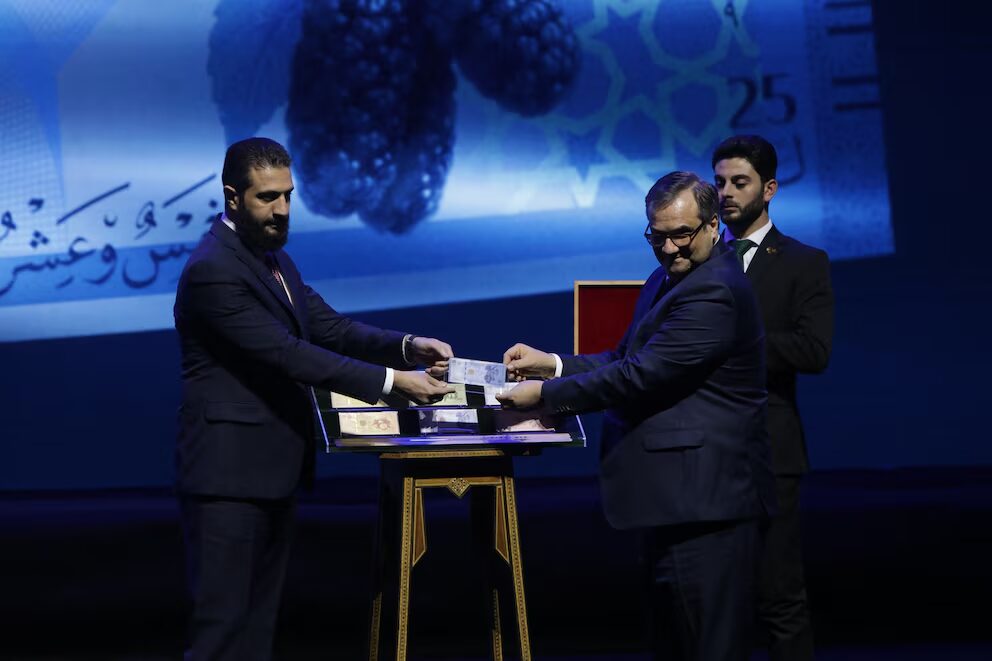
During a ceremony at the Damascus Conference Palace, Al Sharaa presented the new banknotes alongside the Governor of the Central Bank, Abdelkader Husrieh, and highlighted the symbolic nature of the redesign.
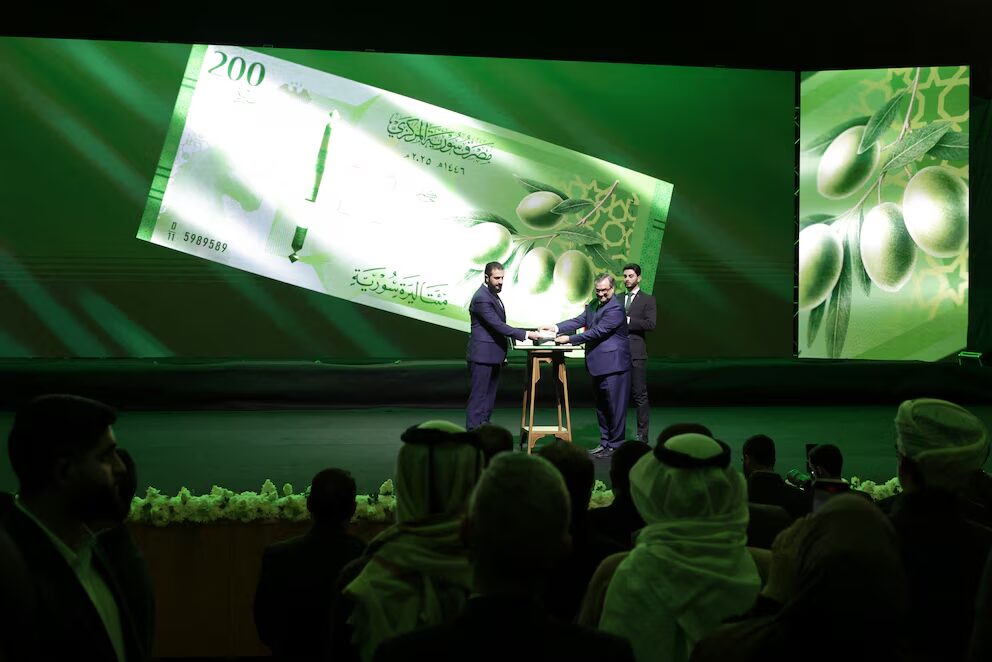
“This currency expresses a new national identity and moves away from individual veneration,” said the president, while emphasizing that the new design incorporates representative elements of Syrian culture and traditional goods such as wheat and olives.
The monetary transition process, as explained by the authorities, will be gradual. The governor of the Central Bank specified that there will be a 90-day coexistence period during which both currencies will circulate simultaneously. This period may be extended if necessary and the exchange will be carried out free of charge, without charges for the population.
“We will work to replace all old currencies with the new one. There is no need to insist on the change, as this could harm the exchange rate of the Syrian lira,” warned Al Sharaa, asking to avoid panic and hasty decisions.
The Syrian president emphasized that the substitution of the currency does not automatically imply an improvement in the economy.
“Improving the economy depends on increasing production rates and reducing unemployment rates in Syria,” he stressed. Al Sharaa acknowledged that the “transition phase is sensitive and delicate” and asked citizens to adopt “a calm strategy” in the process of adopting the new currency, which will be carried out according to a specific schedule established by the Central Bank.
The new Syrian lira has been designed after months of debate among the transitional authorities, who sought to reflect in the currency the values of a nation that intends to rebuild itself after years marked by conflict, international isolation, and sanctions.
The banknotes feature motifs that, according to Al Sharaa, “revive the historical memory of the goods that were originally available in Syria,” referring to agricultural products and recognized symbols of the country. The change, which will take effect on January 1, 2026, marks the beginning of a period that the new authorities describe as “a new era” for the country, after more than a decade of conflict and economic crisis (Bakr ALkasem / AFP)
The old Syrian pound, heavily devalued by the civil war and economic instability, will be gradually withdrawn from circulation. The transitional government explained that the decision to replace the currency is part of a strategy to facilitate transactions, reduce dependence on the dollar, and reinforce confidence in the national economy.
“The new coin design is an expression of the new national identity”, Al Sharaa pointed out. “It will facilitate buying and selling transactions, reduce dependence on the dollar, and increase confidence in the Syrian economy in the long term”.
The announcement comes a year after the fall of Bashar al-Assad’s regime, which left Syria facing serious economic and social challenges. The transitional authorities are working on various formulas for the recovery and reconstruction of the country, while the international sanctions that had been imposed during the previous period are progressively lifted.
Al Sharaa urged the population not to rush or panic. “The transition is a delicate process,” he explained, and insisted that the replacement of the currency will be orderly and will not immediately affect the real value of the money in circulation. The president emphasized that the success of the new currency will depend on the country’s ability to reactivate internal production and generate employment, beyond the simple substitution of banknotes. During a ceremony at the Conference Palace in Damascus, Al Sharaa presented the new banknotes alongside the governor of the Central Bank, Abdelkader Husrieh, and highlighted the symbolic nature of the redesign (Bakr ALKASEM / AFP)
The launch of the new Syrian lira represents a symbolic and operational step in the transitional government’s efforts to consolidate a new stage in the country’s recent history. The authorities hope that the measure will contribute to restoring financial stability and strengthening national identity, within the framework of a broader process of economic and social reconstruction.
Periodista egresada de la Universidad Autónoma de Santo Domingo (UASD). Le gusta escribir sobre política e historias humanas que puedan transformar vidas. Actualmente cursa un master en Comunicación Política y Marketing Digital.