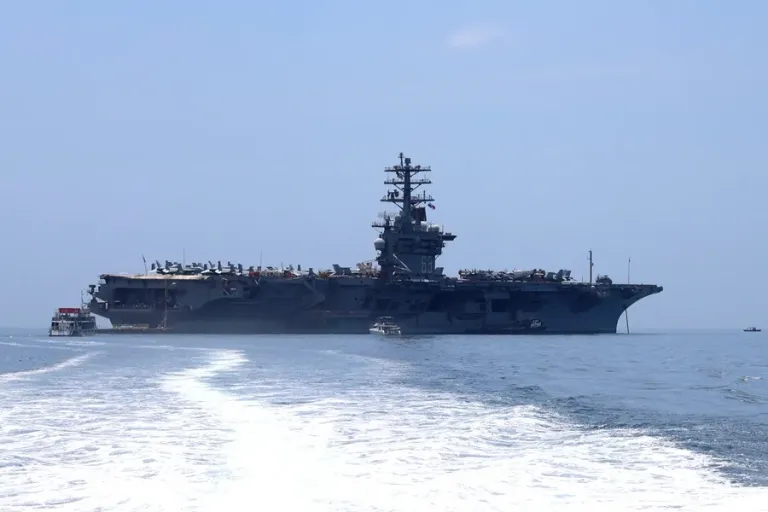

U.S. and Iran, a decades-long confrontation that keeps the Middle East on edge

6:37 pm
The tension between the United States and Iran is once again at the center of the international stage, amidst cross-threats, economic sanctions, and indirect confrontations that have raised the risk of a major escalation in the Middle East. Although there is no formal declaration of war, both countries maintain a prolonged conflict that dates back more than 70 years.
Roots of the conflict
The origin of the modern confrontation dates back to 1953, when a coup d’état supported by the United States and the United Kingdom overthrew the then Iranian Prime Minister Mohammad Mosaddegh, after the nationalization of oil. Subsequently, the Shah Mohammad Reza Pahlavi consolidated his power with Western backing. The definitive break came in 1979 with the Islamic Revolution led by Ayatollah Ruhollah Khomeini, which transformed Iran into an Islamic republic and marked the beginning of an openly anti-American policy. That same year, the hostage crisis at the US embassy in Tehran sealed the diplomatic rupture between the two nations.We recommend reading:Trump warns Iran that it is “too late” to negotiate
Sanctions and Nuclear Program
For decades, Washington has accused Tehran of developing a nuclear program with possible military purposes and of supporting armed groups in the region. In 2015, under the administration of President Barack Obama, the nuclear agreement was signed, which limited the enrichment of Iranian uranium in exchange for the lifting of sanctions. However, in 2018, then-President Donald Trump withdrew the United States from the pact and imposed new economic sanctions, which intensified the confrontation.Military Escalation
One of the most critical moments occurred in January 2020, when a U.S. drone strike in Iraq took the life of Iranian general Qasem Soleimani, head of the Quds Force. Iran responded with attacks on bases housing U.S. troops, raising tensions to the brink of a direct confrontation.
Since then, the clashes have been maintained indirectly, with attacks on strategic facilities, naval incidents in the Persian Gulf, and actions by Iranian-allied militias in countries such as Iraq and Syria.Current Panorama
In recent months, the situation has become more delicate due to increasing regional instability, the conflict in Gaza, and attacks against positions linked to the United States in the Middle East. Economic sanctions continue to affect the Iranian economy, while Washington maintains a military presence in strategic points in the area. Experts warn that, although neither side seems to be seeking open war, the risk of miscalculation could trigger an escalation of global consequences, including a rise in oil prices and greater instability in international markets. Also The international community is cautiously observing the evolution of this conflict, which remains one of the world’s most sensitive geopolitical hotspots.
Yerandi Santana es una periodista dominicana, graduado de Comunicación Social en la UASD. Ha trabajado en medios como TNI Canal 51, CDN y De Último Minuto, desarrollando experiencia en periodismo digital y televisivo.


#Most read
- 1.Magnitude 8.0 earthquake reported off Panama’s Pacific coast
- 2.VIDEO: Earthquake reportedly causes damage inside building in Panama
- 3.VIDEO: Father throws chair at judge after driver gets 120 hours of community service for killing his daughter
- 4.Biography of Juan Ramón Gómez Díaz: The Media Mogul in the Dominican Republic
- 5.Dominican woman sentenced to 25 years for killing fellow Dominican friend in Orlando
- 6.British man found dead and naked in Italy had attended pagan gathering involving drugs
- 7.Pamela Infante clarifies situation with Wander Franco
- 8.Dominican man shot by ICE agents in New York identified as Oscar Belgal
- 9.NYPD searches for Dominican man wanted in death of young woman who fell from 15th floor
- 10.5D Cinema in Japan surprises the world with an immersive experience that goes viral

Newsletter
Subscribe to our newsletter to receive our latest articles instantly!