

They claim that patients wait more than 30 days for ICU beds
Santo Domingo.– The Fuerza del Pueblo (FP) party denounced this Tuesday that health services in the Dominican Republic are on the verge of collapse and asserted that there are patients who remain for more than 30 days waiting for a bed in intensive care units (ICU), due to the precarious conditions affecting various hospital centers in the country.
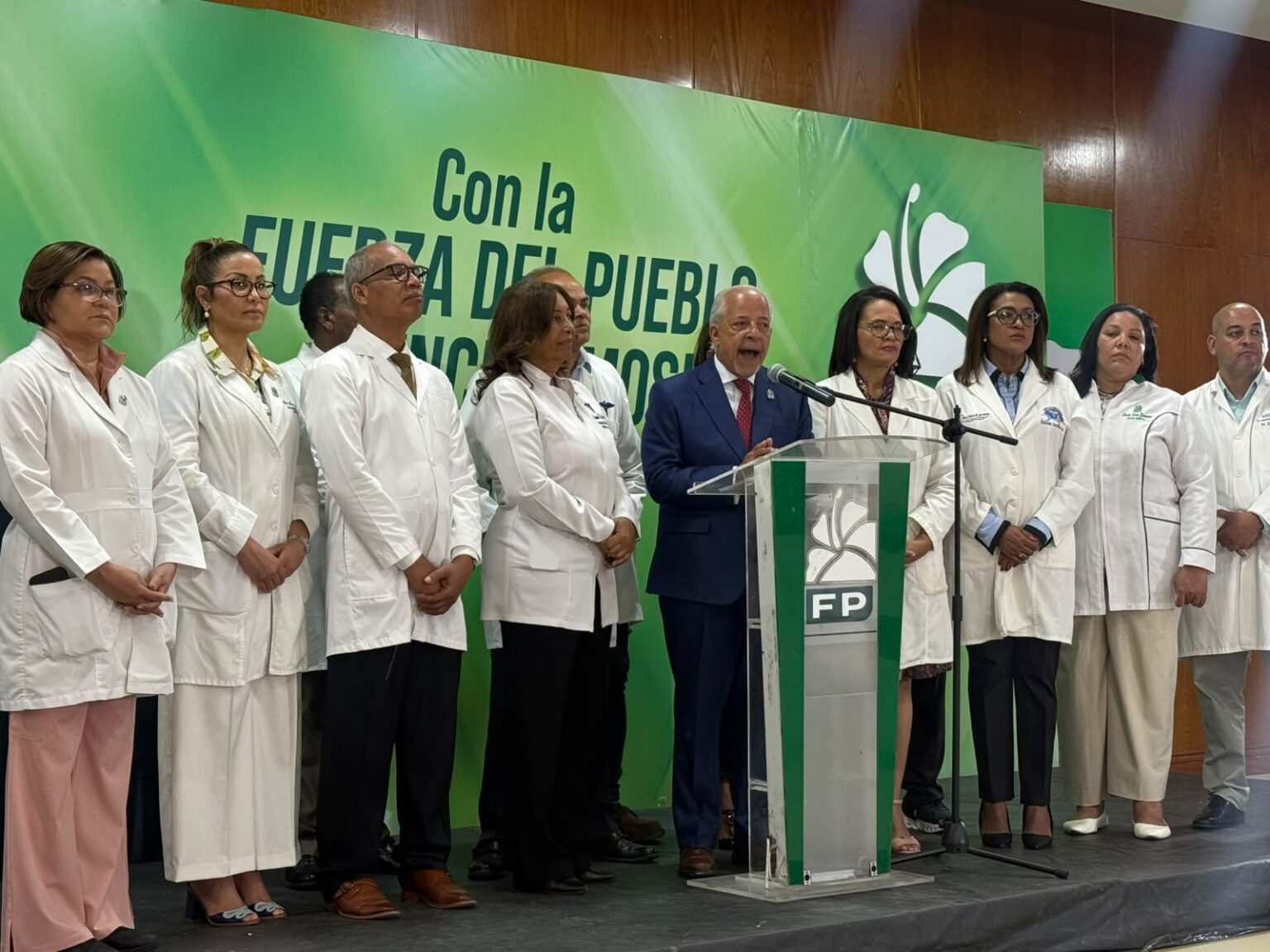
The position was presented by the organization’s Health Secretary, Dr. Ramón Alvarado, during a press conference held at the Johnny Ventura People’s House, where he was accompanied by deputy secretaries from the various health areas of the Fuerza del Pueblo.
You might be interested in: Fuerza del Pueblo strengthens its political and organizational structure in San Martín

Alvarado stated that worrying situations are being recorded in public hospitals, including patients being treated on the floor due to a lack of physical space and stretchers, people in critical condition not receiving, as he denounced, adequate assistance, as well as shortages of equipment, medications, supplies, and available spaces in intensive care units.
He also pointed out that patients who have waited for a long time to undergo surgical procedures face the suspension of their surgeries even after having been prepared and having undergone the corresponding studies and laboratory tests.
He explained that these suspensions may force patients to repeat part of the required studies before they can finally undergo surgery.
In the political leader’s view, these situations highlight a lack of planning and deficiencies in the management of health services.

Deterioration of hospitals reported
Alvarado also warned about the deterioration of hospital infrastructure, citing leaks, roof problems, failures in electrical networks and generators, floor deterioration, and deficiencies in water supply.
As part of the complaint, he presented situations that, according to him, are occurring at the Francisco Moscoso Puello hospitals in the National District; Vinicio Calventi in Los Alcarrizos; and the Jaime Mota Regional University Hospital in Barahona.
Regarding the Francisco Moscoso Puello Hospital, Alvarado stated that in the emergency area, patients in delicate conditions can be seen waiting for care, some on the floor or sitting on plastic chairs and others receiving intravenous solutions while standing.
He added that ambulances remain detained while waiting for the release of stretchers to transport patients and stated that some people have remained for more than 30 days in the emergency area waiting for a bed in an intensive care unit.
Alvarado maintained that the situation reaches the extreme that, on occasions, patients die in the emergency room without having been formally admitted to the hospital center.
As indicated, the difficulties are not limited to the emergency area, but also affect other hospital services.
Regarding the Vinicio Calventi Hospital, located in Los Alcarrizos, he pointed out difficulties related to the lack of physical space, retention of ambulances while waiting for transport stretchers, saturated hallways, and injured or channeled patients who remain seated while waiting for care.
Likewise, he denounced a lack of air conditioning in service areas, a situation that, as he explained, forces doctors and patients to use fans to mitigate the heat.
He also pointed out shortages of medical equipment, including CT scanners and echocardiographs, as well as a lack of bed sheets, laboratory reagents, and other supplies.
Alvarado also questioned the quality of the food provided to both patients and service staff, and asserted that the center’s deficiencies have been reported repeatedly by doctors and users.
Regarding the Jaime Mota Regional University Hospital in Barahona, Alvarado described the emergency situation as disorganized and denounced a lack of medicines, supplies, and consumable materials, as well as electrical problems, deficiencies in air conditioning, and physical space limitations.
He added that the mental health area has ventilation and air conditioning problems, while the laboratory and blood bank face, as he stated, shortages of supplies and reagents that hinder the performance of basic and specialized tests.
He also denounced deficiencies in the maintenance of the filters and the osmosis system used for hemodialysis services.
In the surgical areas, he pointed out the deterioration of the floors, a condition that, he maintained, could increase the risks of hospital-acquired infections. Likewise, he asserted that X-ray and tomography equipment are out of service.
They demand a response from the Government
Alvarado attributed the reported conditions to a lack of planning by the current administration and maintained that the existing deficiencies are affecting the population’s right to receive adequate and timely health services.
“The lack of planning by the PRM government has health services on the verge of collapse, violating a fundamental right of the Dominican population,” he stated.
On behalf of the Fuerza del Pueblo, Alvarado demanded that the Government adopt immediate measures to address the pointed-out deficiencies and improve care conditions in hospital centers.