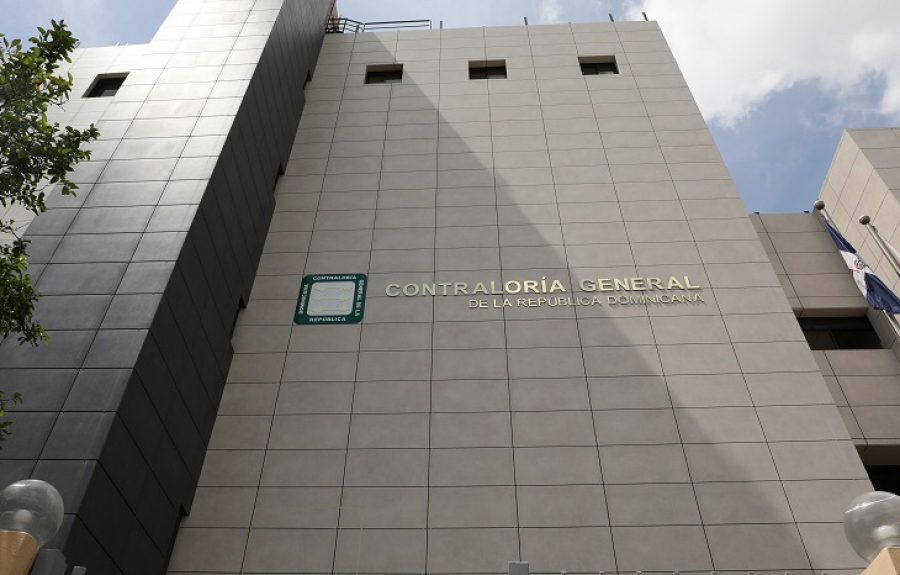
Santo Domingo.- More than six months after promising the publication of 39 audits, the Comptroller General of the Republic has yet to keep its word. In January, Comptroller Félix Santana García assured that these reports were already ready and that their disclosure would mark a “historic boost to transparency.” However, since September 2023, not a single new report has been released.
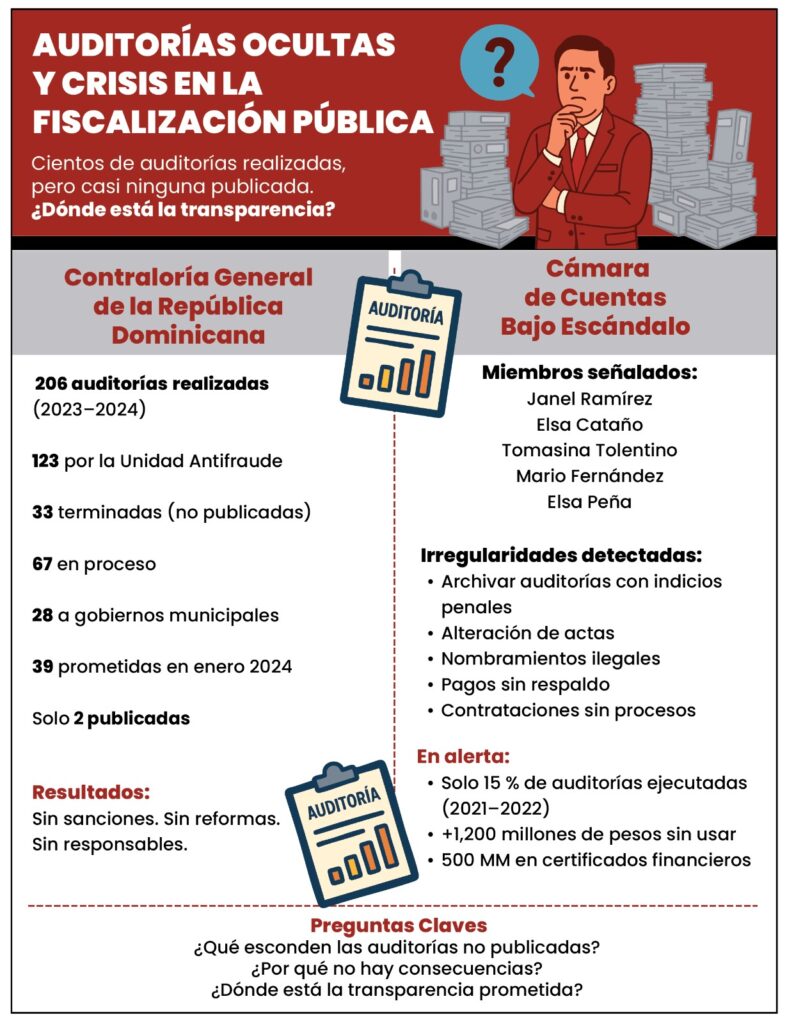
From 206 audits conducted between 2023 and 2024, only two have come to light: one to the Specialized Tourist Security Corps (CESTUR) and another to the Dominican Air Force. Both revealed a pattern of irregularities as serious as they are alarming, leading one to wonder what the documents that have not yet been made public contain.
Many audits, little transparency
The Comptroller’s Office itself indicates that 123 of those audits were prepared by its Anti-Fraud Unit. Of the 39 reports promised in January, 33 are finished but not published. There are also 67 in progress and another 28 focused on municipal governments. Despite the volume, the concrete effect has been minimal: no one has been held responsible, no sanctions have been issued, nor have reforms been implemented. The population still lacks access to data that should be public, and accountability seems stagnant.
The Accounts Chamber, under fire
The body that should complement this oversight process, the Chamber of Accounts, is going through its own storm. Instead of acting as a guarantor of state supervision, it is now the focus of a scandal that could lead to a political trial against its five current members: Janel Ramírez Sánchez, Elsa María Cataño, Tomasina Tolentino, Mario Arturo Fernández and Elsa María Peña Peña.
An investigation carried out by a special commission of the Chamber of Deputies indicates that the members of the plenary incurred serious irregularities. These include the manipulation of reports, the misuse of public funds, and the performance of functions without having the legal competence to do so. The president of the organization, Janel Ramírez, would have archived at least ten audits with criminal indications without submitting them to the knowledge of the plenary.
Elsa Cataño appears as responsible for signing altered minutes and leading sessions outside the law. Tomasina Tolentino endorsed undue appointments; Mario Fernández authorized unsupported payments, and Elsa Peña favored hiring without following established processes. All this occurred amidst internal confrontations, leaks of compromising audios, and the disappearance of key documents.
The Chamber of Deputies report also reveals that during 2021 and 2022, the Accounts Chamber barely executed 15% of the scheduled audits. Even more serious: it left unused more than 1,200 million pesos from its budget, of which 500 million were kept in a financial certificate, generating interest while the institution did not fulfill its supervisory role.
What little has been revealed
The only audits that have seen the light of day have been fundamental in corruption cases such as Coral 5G. The report on CESTUR evidenced multiple anomalies: more than 20 people were receiving salaries without working, monthly payments were made without justification to the intelligence director, and millions in fuel were delivered without control. In addition, contracts were awarded in violation of legal requirements and conflicts of interest were identified between employees and suppliers.
In the Air Force, the irregularities detected were even more disturbing: 211 institutional vehicles unaccounted for, 54 aircraft improperly registered, occupied land without documentation, and bank accounts operating outside the control of the Treasury. Payments for unsupported services worth tens of millions of pesos were documented, and companies linked to each other benefited from dubious tenders.
And the rest?
The two published audits point to a negligent and corrupt management structure of public resources. But they are just the tip of the iceberg. If the little that has been known reveals this level of disorder, it is inevitable to wonder what else the reports contain that have not been disclosed. Who are they protecting? Why is no action taken on the irregularities already documented? Who is responsible for the prevailing opacity?
For now, the so-called “fight against corruption” seems stalled in promises. The audits are there, but hidden. The institutions in charge of oversight are caught in scandals. And the citizenry, which should be the main beneficiary of transparency, is still waiting for answers.
We are a multiplatform outlet offering news and television content. The fastest-growing news outlet in audience in the history of Caribbean communication.