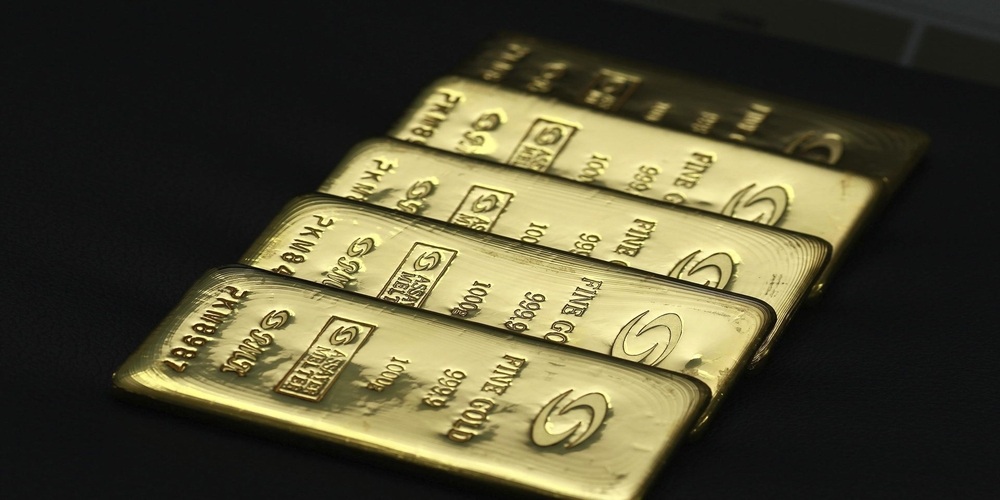
Frankfurt (Germany).- Gold overtakes the euro in second place as the second-largest global reserve asset at market prices in 2024, behind the dollar, according to the European Central Bank (ECB).
For the moment, there have been no significant changes in the international use of the euro, but the ECB considered this Wednesday that it is important to remain alert because central banks are accumulating gold reserves at a record pace.
Gold prices reached records in 2024 and central banks’ gold holdings reached highs since 1965 during the Bretton Woods era, which concluded in 1971, ending the agreements that established a fixed exchange rate anchored in the convertibility of the dollar into gold.
Gold prices in 2024 surpassed their highest levels seen during the oil crisis in 1979, says the ECB in its annual report on the international importance of the euro, published today.
Central bank gold reserves are at levels close to those of the Bretton Woods era, although they now account for a much smaller share of the total gold supply.
The share of gold in
foreign reserves, which include currencies and gold,
increased to 20% at the end of 2024, surpassing that of the euro at 16%, due to the high prices of this precious metal.
Central banks have increased their gold reserves by more than 1,000 tons in 2024, more than double the level seen in the previous decade, while the price of gold rose 30% in nominal terms, not including inflation.
You may be interested in: The price of gold exceeds $3,400 and sets a new record
The central banks of countries furthest from the West are the ones that have bought the most gold after Russia’s invasion of Ukraine at the end of February 2022 to diversify their portfolios due to geopolitical tensions and sanctions.
Turkey, India, and China are the biggest buyers and together acquired 600 tons of gold since the end of 2021.
Russia Liquidates Exports with Cryptoassets to Avoid Sanctions
The ECB also highlights in the report that
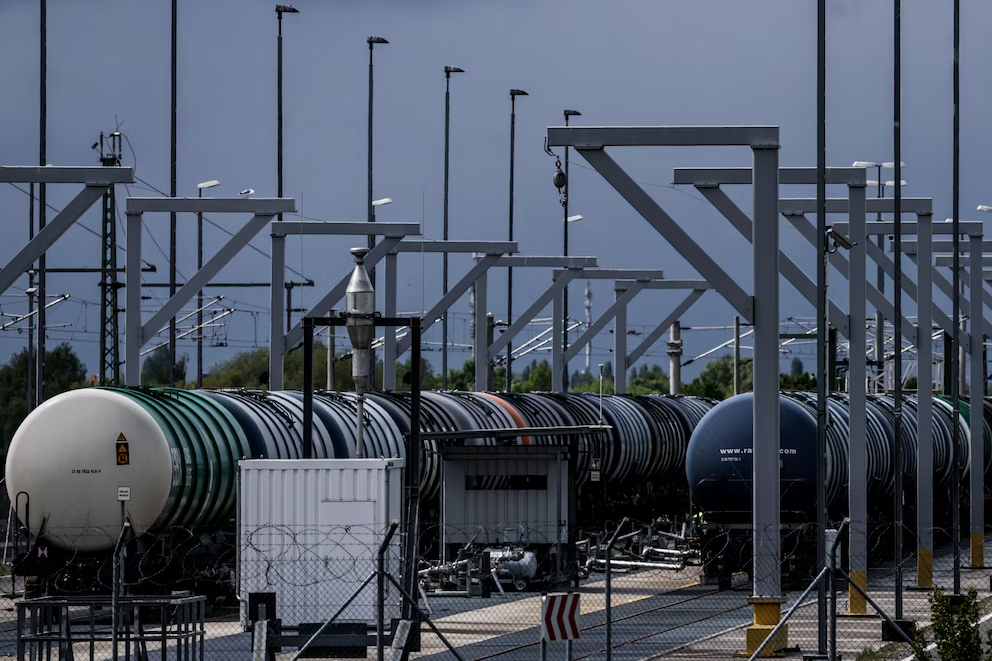
Russia is increasingly using crypto assets to settle a portion of oil exports and smooth the conversion of the Chinese renminbi and the Indian rupee into rubles.
Russian oil companies have used Tether, bitcoin and ether in March of this year, adds the ECB.
Therefore, the ECB considers that cryptocurrencies are a small but growing part of Russia’s $192 billion (about 168.42 billion euros) oil trade.
In December 2024, Russian Finance Minister Anton Siluanov confirmed that Russia uses bitcoin and other digital currencies when making commercial payments to avoid sanctions from G7 countries.
Russian-allied countries reduce exports invoiced in euros
Also, some countries are studying alternatives to traditional cross-border payment systems.
“There is evidence of a link between geopolitical alignments and changes in invoicing currency patterns in world trade, especially since Russia’s invasion of Ukraine,” according to the ECB.
It is evident in countries that have distanced themselves geopolitically from the West such as Russia, Belarus, Kyrgyzstan, and Uzbekistan, where exports invoiced in dollars and euros were between 10 and 50 percentage points lower in 2023 than between 2015 and 2019.