
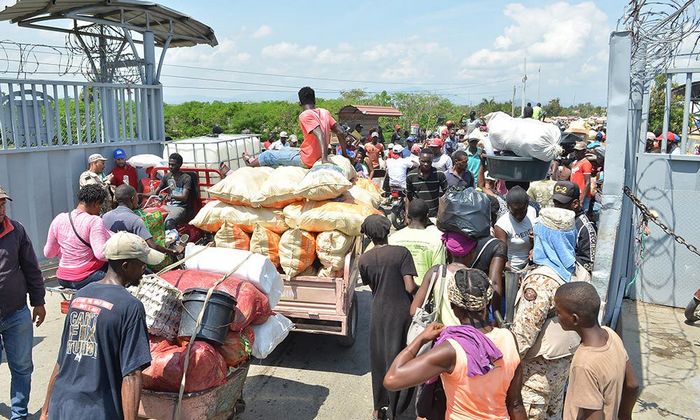

The Haitian government has reinforced its prohibition on the land transit of goods from third countries that pass through the Dominican Republic before reaching Haiti.
The measure is contained in a circular dated September 30, 2026, issued by Haiti’s Ministry of Economy and Finance and signed by Minister Serge Gabriel Collin. The document states that Haiti does not recognize any dry port or transshipment or transit mechanism in Dominican territory for foreign goods destined for the Haitian market.
Under the measure, goods originating in countries such as the United States, China or Panama must be transported directly to Haitian seaports or international airports, where they will undergo customs controls and be subject to the applicable duties and taxes.
The restriction does not apply to goods legally manufactured in the Dominican Republic. Those products may continue entering Haiti through authorized land border crossings. Haitian customs authorities were also instructed to strengthen controls along the border.

The decision comes as the Dominican Republic has been strengthening controls and traceability measures for goods transiting toward Haiti. The Dominican General Directorate of Customs announced in September that transit operations would require prior notification and increased supervision, including measures for high-risk shipments.
The Haitian measure is also a reaffirmation of restrictions that have been in place regarding the use of Dominican territory as a transit route for third-country goods destined for Haiti. A 2025 United Nations report documented an earlier Haitian circular addressing the same issue.