


Vienna.- The OPEC+ alliance, led by Saudi Arabia and Russia, decided this Sunday to maintain its strategy of increasing oil supply for the sixth consecutive month, adding 188,000 more barrels to the market starting in September, an increase limited by the current difficulty of moving crude oil due to the war in the Middle East.
The decision was made in a videoconference of the Ministers of Oil and Energy of Saudi Arabia, Russia, Iraq, Kuwait, Kazakhstan, Algeria, and Oman, as reported by the Organization of the Petroleum Exporting Countries (OPEC) in a statement issued from its headquarters in Vienna.
“In their collective commitment to support the stability of the oil market, the seven participating countries decided to implement a production adjustment of 188,000 barrels per day starting from the additional voluntary adjustments announced in April 2023,” the note points out.
You might be interested in: Iran threatens to tighten the closure of Hormuz if the U.S. maintains the naval blockade
With that new pumping increase, the supply cut of 1.65 million barrels per day agreed upon in 2023 is completed, at least on paper, when the group still included the United Arab Emirates, which left the organization in May.

The implementation of this new increase, which will come into effect in September, may be hindered by the serious disruptions in crude oil supply to the markets of key OPEC+ members—such as Saudi Arabia, Iran, Iraq, and Kuwait—caused by the war unleashed on February 28 by the United States and Israel against Iran.
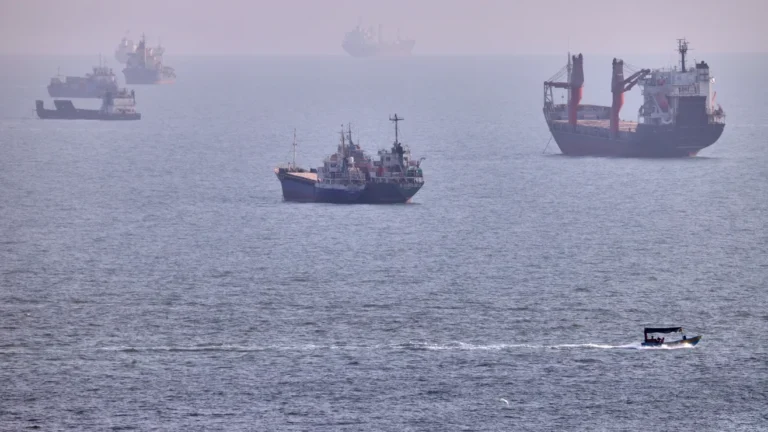
Traffic difficulties through key points such as the Strait of Hormuz and the Red Sea have affected the export capacity of those countries.
Added to this is a drop in Russian production due to attacks on oil infrastructure with which Ukraine seeks to limit Moscow’s ability to finance its aggression.
In fact, the Joint Ministerial Monitoring Committee, an advisory body to OPEC+, expressed its concern today regarding attacks on energy infrastructure, and warned that restoring the full capacity of those facilities “is costly and time-consuming, which affects the overall availability of supply.”

He also highlighted that these attacks or the disruption of international maritime routes increase “market volatility” and weaken OPEC+ efforts to support stability “for the benefit of producers, consumers, and the global economy.”
Today’s agreement sets quotas for the seven countries, which in some cases are well above the most recent production data.
For example, they forecast 9.949 million barrels of oil per day (mbd) for Russia, while its output last June, according to data included in an OPEC+ report itself, was 8.928 mbd.
The quota reserved for Saudi Arabia, of 10.47 mbpd, is also much higher than the 6.84 mbpd it had in June, according to the independent sources mentioned in that report.
In their statement today, the seven countries indicate that they will meet again on September 6 to analyze the market situation, although various analysts believe that after that new increase in pumping, OPEC+ is inclined to keep its official supply level frozen during the last quarter of the year.
The seven countries gathered today are the hard core of OPEC+, the alliance formed in 2016 by OPEC, which now has eleven members, and ten other oil-producing nations, including Russia, Mexico, Kazakhstan, and Azerbaijan.