
Colombian Chancellery says withdrawal of visa to Petro “undermines” UN Charter

9:22 pm
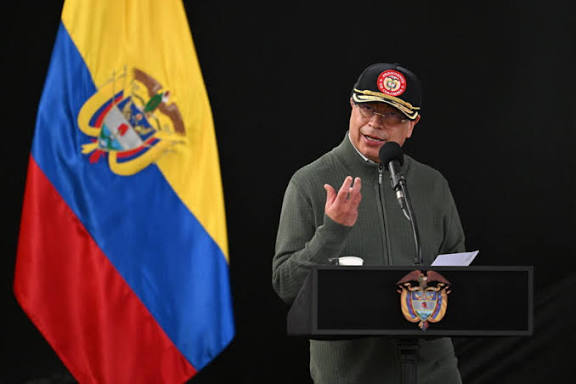
Bogotá.- The Colombian government stated this Saturday that the revocation of President Gustavo Petro’s US visa, announced by the State Department, “undermines” the United Nations Charter and freedom of expression.
The U.S. State Department said on Friday that it will revoke Petro’s visa for urging soldiers of that country “to disobey orders and incite violence,” during a pro-Palestinian demonstration in New York, after participating throughout the week in various activities of the UN General Assembly.
You may be interested in: Abinader and Marco Rubio highlight cooperation at the UN
The Colombian Foreign Ministry stated in a statement that the UN headquarters in New York “is a scenario that grants the right to representatives of member countries” to have an official visa, in this case from the U.S., “as a ‘sine qua non’ condition leading to participation in acts, events or conferences framed within the development of the High-Level Week of the United Nations General Assembly.” “Consequently, denying or revoking a visa – as a diplomatic weapon – undermines the spirit of the 1945 Charter of ‘in situ’ participation with promotion and protection of the right to freedom of opinion and expression without consideration of borders,” added the Ministry of Foreign Affairs. The Chancellery underlines that “otherwise, it would be essential to seek a completely neutral host country that allows, regardless of its bilateral relations and political and ideological positions” that the UN itself issues “an authorization to enter the territory of that new host State”. The Chancellery’s position aligns with that of President Petro, who said this Saturday that the revocation of his visa violates international law and diplomatic immunity rules, and therefore considers that the UN headquarters cannot remain in New York. “What the US government is doing to me breaks all the immunity rules on which the functioning of the United Nations and its General Assembly is based. There is total immunity for presidents attending the Assembly and the US government cannot condition the opinion of the US (sic),” Petro wrote on his X account.Defense of Palestine
The government’s statement adds that “Colombia will continue to actively participate in multilateral forums, particularly in the United Nations, reaffirming that the Headquarters Agreement of 1947 obliges the United States to guarantee the entry of state delegations to these instances.” It also reiterates “that raising one’s voice to denounce events affecting the Palestinian population cannot be interpreted as an act against the law, but as a moral and political obligation in the face of possible serious violations of International Humanitarian Law and the human rights of that population.” The Colombian president is a defender of the Palestinian cause and in his speech last Tuesday at the UN once again denounced Israel’s “genocide” in the Gaza Strip and called to “unite armies and weapons” to “liberate Palestine”. “Our country firmly maintains its commitment to the defense of human rights, peace, and multilateral diplomacy as essential tools to overcome conflicts and strengthen the international community,” stated the Ministry of Foreign Affairs’ statement. In July 1996, the United States also revoked the visa of the then Colombian president, Ernesto Samper, after being accused of receiving money from drug traffickers for his 1994 election campaign.
Periodista egresada de la Universidad Autónoma de Santo Domingo (UASD). Le gusta escribir sobre política e historias humanas que puedan transformar vidas. Actualmente cursa un master en Comunicación Política y Marketing Digital.


#Most read
- 1.Armed men attack U.S.-flagged vessel in Haiti’s Port-au-Prince Bay
- 2.5D Cinema in Japan surprises the world with an immersive experience that goes viral
- 3.VIDEO: Witnesses say man prayed and bowed to tiger before fatal zoo attack in England
- 4.Solange Omon, from Cameroon, is chosen as the new Victoria’s Secret angel
- 5.VIDEO: Guatemalan teenager wakes up inside her coffin after being presumed dead
- 6.Now in Italy! Riots erupt in Milan as protesters loot stores and clash with police
- 7.VIDEO: iPhones and luxury perfumes float in the Strait of Hormuz after cargo ship sinks
- 8.Iguazú Falls surge forces closure of Devil’s Throat walkway in Brazil
- 9.Dominican man shot by ICE in the Bronx had robbery conviction and pending drug charges
- 10.The Panama Canal begins evaluation of companies interested in building two ports

Newsletter
Subscribe to our newsletter to receive our latest articles instantly!