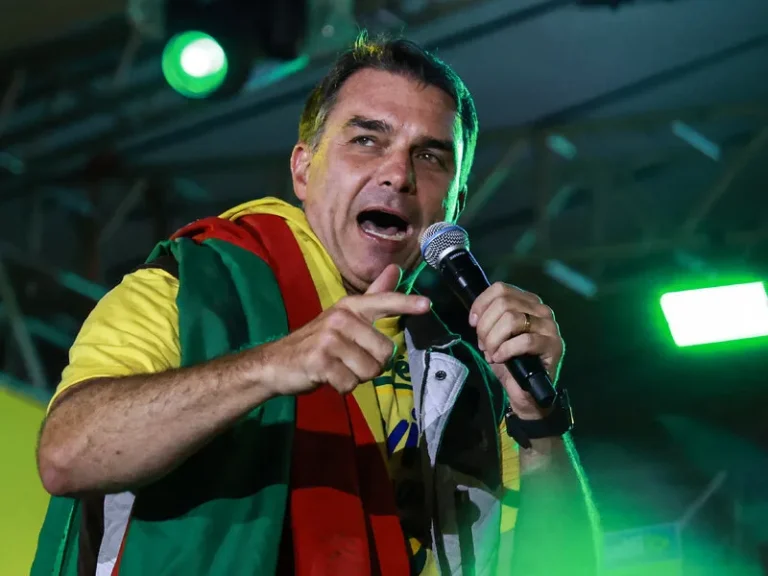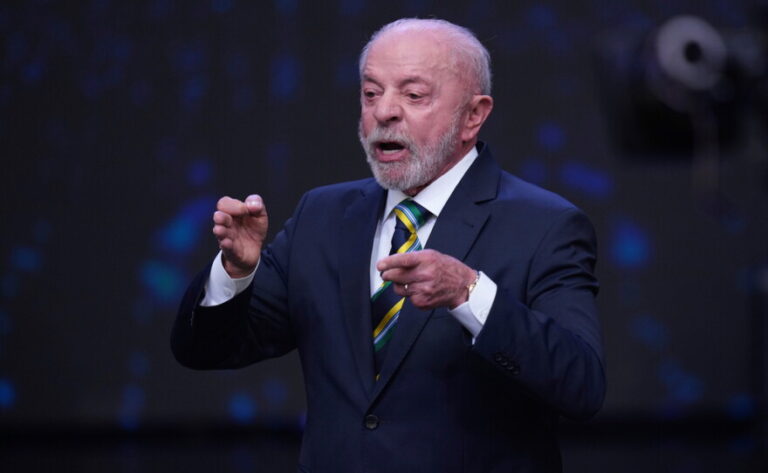

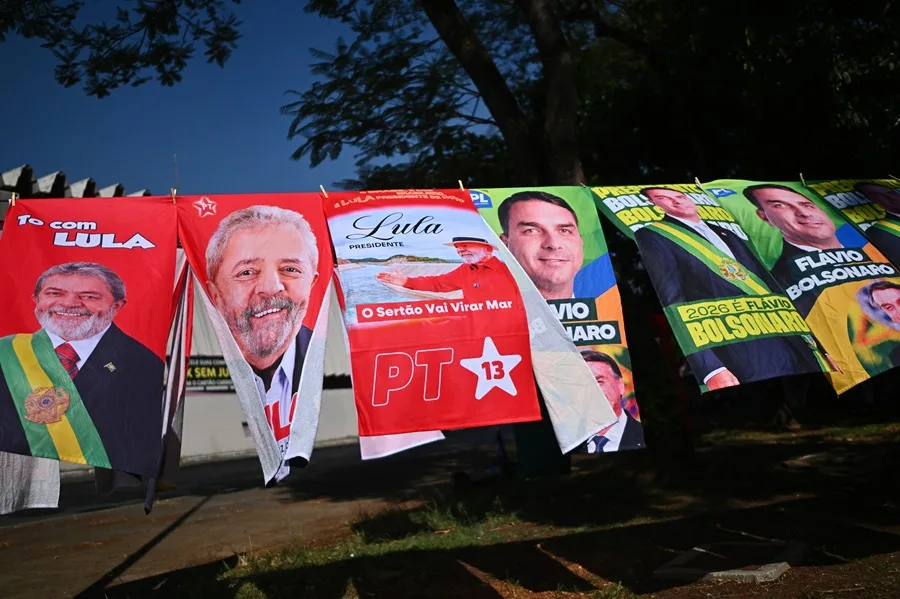

Foreign policy is among the main topics of debate in Brazil’s presidential elections, given the differences between President Luiz Inácio Lula da Silva and opposition senator Flávio Bolsonaro regarding relations with the United States, international economic cooperation, and Latin American integration.
Both leaders are competing in the presidential runoff this Sunday, October 25, with proposals that suggest different directions for Brazilian diplomacy.
Lula promotes a strategy based on the autonomy of international decisions, multilateralism, and participation in cooperation organizations among emerging economies. Bolsonaro, on the other hand, proposes expanding political and commercial ties with Washington and strengthening relations with governments aligned with his positions.
The debate on foreign policy also includes the diplomatic and commercial differences that arose between Brazil and the United States during the administration of President Donald Trump.

Foreign policy and the U.S.
Relations between Brasilia and Washington constitute one of the main points of divergence between the candidates.
Flávio Bolsonaro, son of former president Jair Bolsonaro, proposes to restore the diplomatic rapprochement with the United States that characterized his father’s administration, through initiatives for regional cooperation, security, and trade.
Among his proposals is the incorporation of Brazil into the Shield of the Americas, a mechanism promoted by Trump to coordinate regional actions against organizations linked to organized crime.
The senator has also expressed his intention to negotiate trade agreements with U.S. authorities.

According to the information released regarding his proposals, in July he sent a communication to the U.S. Secretary of State, Marco Rubio, in which he expressed his willingness to establish talks through a potential transition team.
For his part, Lula maintains that bilateral relations must be developed under the principle of respect for Brazilian sovereignty and without conditions on the country’s internal decisions.
The president has questioned certain U.S. initiatives, considering that they could limit Brazil’s ability to define its foreign policy.
Likewise, he has denounced what he interprets as attempts at foreign influence in the electoral process, particularly in relation to international expressions of support for his opponent.

Foreign policy and BRICS
Another of the topics present in the Brazilian elections is the continuity of the country’s participation in international mechanisms of economic and political cooperation.
During his terms in office, Lula has promoted Brazil’s presence in the BRICS, a group originally composed of Brazil, Russia, India, China, and South Africa, to which other countries have subsequently joined.
From the president’s perspective, this mechanism allows for the diversification of trade relations, the promotion of investments, and the expansion of the participation of emerging economies in international decision-making spaces.
His administration has also advocated for strengthening multilateral institutions and seeking agreements with different economic blocs.
This orientation contemplates maintaining ties with the United States, China, Europe, and other regions, without concentrating diplomatic relations on a single power.
In contrast, representatives of conservative Brazilian sectors have questioned the country’s participation in the BRICS due to China’s economic influence and the geopolitical differences between Beijing and Washington.
These positions are part of the debate on the role that Brazil should play in international economic relations.
Latin American foreign policy
Cooperation with Latin American countries constitutes another of the issues that differentiate the proposals of Lula and Flávio Bolsonaro.
The current president has supported regional mechanisms such as the Community of Latin American and Caribbean States (CELAC) and the Union of South American Nations (UNASUR).
These initiatives seek to promote political, economic, and diplomatic coordination among the participating countries, in addition to facilitating common positions on issues of regional interest.
For Lula, Latin American integration constitutes a tool to expand cooperation and strengthen Brazil’s participation in international negotiations.
Bolsonaro proposes a different orientation, focused on strengthening bilateral relations with governments that share political alignment with his proposals.
Among the countries mentioned in his diplomatic agenda are Argentina and Israel, whose relations with the Lula administration have gone through periods of disagreement.
Foreign policy with allies
The opposition candidate seeks to modify Brazil’s relationship with the Argentine government of President Javier Milei.
According to the information provided, Milei expressed his support for Bolsonaro and participated in an activity related to the launch of his campaign in São Paulo.
The ties between Lula and the Argentine president have shown public differences due to their political positions and statements on regional issues.
In August, according to the material provided, Brazil reduced its level of diplomatic representation in Argentina amid those tensions.
Bolsonaro proposes establishing a relationship of greater cooperation with Buenos Aires, particularly in the political and economic spheres.
Regarding Israel, the senator proposes restoring the ties affected by the differences between the Brazilian government and the Israeli authorities.
The discrepancies between both administrations have been related to their positions on the conflict in the Middle East and other international policy issues.
The approach to these governments is part of the diplomatic orientation that Bolsonaro intends to develop in the event of reaching the Presidency.
Foreign policy and trade
The differences between Brazil and the United States are not limited to political and diplomatic matters.
Bilateral trade is also among the topics of discussion due to the tariffs applied by Washington on certain Brazilian products.
These measures have generated disagreements regarding the conditions of access to the U.S. market and the economic relations between both countries.
Added to trade tensions are controversies related to diplomatic representations.
According to the provided material, Washington revoked the Brazilian ambassador’s visa amid differences linked to the Lula government’s delay in pronouncing itself on the appointment of the U.S. representative.
Another issue noted is the decision by U.S. authorities to add two Brazilian criminal organizations to their list of terrorist groups.
This measure has sparked discussions regarding its potential consequences for bilateral security cooperation and the respective jurisdictions of each State in confronting criminal organizations.
Trump’s statements regarding the Brazilian electoral process are also among the elements that have fueled the political debate.
Foreign policy after elections
The outcome of the elections in Brazil could have consequences for the country’s diplomatic relations with other nations in Latin America and the rest of the world.
A continuation of Lula in the Presidency would allow for maintaining the orientation towards multilateral cooperation, regional integration, and ties with emerging economies.
His proposal contemplates preserving Brazilian participation in the BRICS and in Latin American organizations, as well as continuing a policy of relations with different powers.
In the event of a Flávio Bolsonaro victory, Brazil could initiate a phase of greater political and commercial rapprochement with the United States.
That scenario could also translate into modifications of relations with Argentina, Israel, and other governments, in addition to a review of Brazilian diplomatic priorities.
The differences between both candidates cover economic cooperation, security agreements, regional integration, and Brazil’s role within international organizations.
Foreign policy and voters
According to the figures included in the provided information, around 158.7 million voters are called to participate in the presidential election day.
The vote pits two proposals against each other regarding the leadership of the Brazilian State and the way in which the country should relate to other nations.
In addition to deciding on the continuity or change of government, the result will determine Brazil’s diplomatic priorities regarding the United States, China, Latin American countries, and multilateral organizations.
The elections in Brazil thus place foreign policy among the issues that could define the country’s international orientation during the next presidential term.