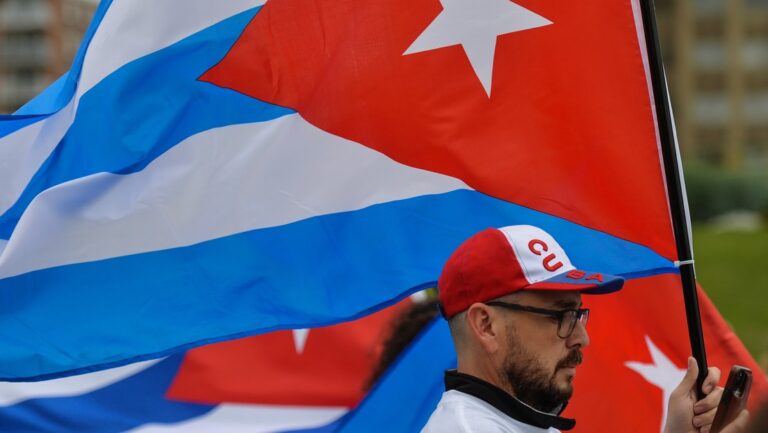

Havana, on its relationship with the US: “Any alternative to the current one is better”

12:24 pm
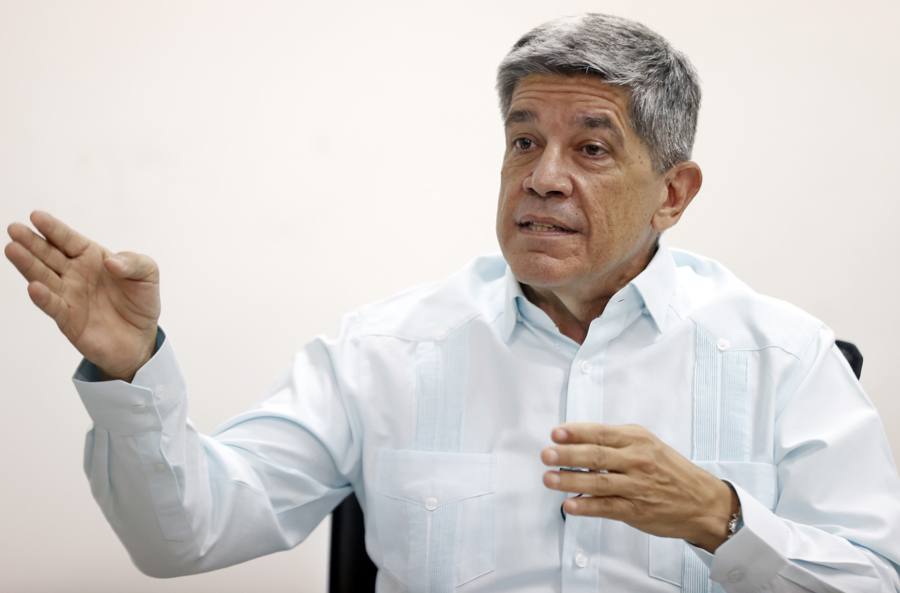
Havana, June 18 (EFE).- More sanctions, zero communication and no coordination. Cuba’s Deputy Foreign Minister Carlos Fernández de Cossío describes in an exclusive interview with EFE the current relationship of his country with the United States and assures that “any alternative” to this panorama would apparently be “better”.
Since Marco Rubio’s arrival at the U.S. State Department under President Donald Trump, Cuba has been hit with sanctions: from being put back on the list of state sponsors of terrorism to measures against its medical missions abroad, the veto of its main remittance management company, and the restriction of entry into its territory for its nationals.
“The measures obviously cause damage,” acknowledges De Cossío, who speaks of “impact” on the economy, agriculture, industry, tourism, the energy system, and the “daily life” of Cubans.
It indicates that the Cuban government had already foreseen that a new Trump Administration could impose sanctions on Cuba and that they even contemplate that more “are possible”, although they will try to “evade” them.
“History has shown that every time (the sectors favorable to the hard line against Havana) have a period like the current one, in which they believe that their goal of overthrowing the Cuban government and destroying the Cuban revolution is near, they rush to take measures pretending that it is the step they need,” he points out.
Migration Agreements
However, the deputy minister points out that for the moment Havana has the impression that Washington plans to continue complying with bilateral agreements on migration. The monthly flight with Cuban migrants qualified by the U.S. as “inadmissible” continues to operate and Cuba -according to De Cossío- is “willing to continue accepting those returns.” Washington, for its part, seems that this year it will fulfill the 20,000 non-tourist visas for Cubans, according to the information available to the Ministry of Foreign Affairs. Cuba, adds, will continue to fulfill its migratory commitments as long as they contribute to the “end of the agreements”: a “regular, orderly and safe” migration. “The day that is not the case, we will then assess what action we will take,” he points out. Despite this, the semiannual meetings that help implement the migration agreements are on hold after the one scheduled for spring was not held. “The United States wants to comply with the agreements so far, but is not willing to meet,” says De Cossío. For its part, the bilateral coordination of the Biden era in terms of security, the fight against terrorism and international crime “has practically stopped in absolute terms” and there is hardly any “certain degree of exchange, especially from Cuba to the United States”, indicates the deputy minister. De Cossío asserts that Cuba maintains that communication out of “responsibility”, not out of “whim” or “political calculation”, but considers that “there is no political will on the part of the US Government” to do the same. The lack of communication and coordination, the vice minister points out, also affects the deportations of Cubans to third countries (according to media, at least two Cuban Americans were taken to South Sudan) and the repercussions of Washington’s decision to revoke humanitarian parole (temporary permission granted by the United States for foreign people to enter the country for humanitarian reasons) to about 100,000 Cubans. It states that Washington has not contacted them regarding either of these two matters. “There is no coordination. This is a unilateral decision by a Government that has assumed the criterion that being strong is legitimate and that using – and even abusing – force is legitimate,” he says about the revocation of parole. In his opinion, Washington is treating migrants “as if they were not even human beings.” Regarding the possibility of Donald Trump wanting to make a 180-degree turn in the bilateral situation at some point, he responds that Havana can “contemplate any scenario” and is willing to have a “respectful relationship”, even “friendship”, despite the “differences”. “If it were possible for the United States and Americans – as it is possible for Latin Americans, Africans, Asians and Europeans – to engage commercially and economically with Cuba, to make money in Cuba, we would have no problem,” he explains. Asked if the current scenario is the worst, De Cossío responds: “Apparently any alternative to the current one is better.”Medical Missions
Regarding the controversial Cuban medical missions, the vice minister emphasizes that “it is not forced labor”, contrary to the accusation of the US, but rather “medical cooperation” based on “bilateral agreements sovereignly signed” between Havana and third countries. In his opinion, Rubio attacks them with sanctions to “try to discredit an aspect of Cuba’s solidarity foreign policy” and to “cut off income received by the Cuban public health system.” De Cossío argues that the U.S. deals with “fallacies” to impose a “prejudice” that aims to “cast doubt on the legitimacy” of these programs when, he assures, they are similar to some of the United Nations. “The United States Government, with a machinery backed by tens of millions of dollars, has managed to locate and generate this question that the receiving governments (of the medical missions) reject, which aims to delegitimize a program that is absolutely legitimate and that saves lives,” he affirms. Asked about the complaints that the passports of doctors on missions are being taken away, he acknowledges that “there are countries where, by decision of the medical cooperation, passports have been grouped together”, but that “in most cases that does not happen”. Faced with the option of host countries paying doctors directly, De Cossío prefers not to answer: “If I answer that question, it seems that what Cuba does in places where it is not paid directly is illegitimate.”Juan Palop

We are a multiplatform outlet offering news and television content. The fastest-growing news outlet in audience in the history of Caribbean communication.


#Most read
- 1.British man found dead and naked in Italy had attended pagan gathering involving drugs
- 2.He shot her, mutilated her and put her body through a meat grinder: boyfriend kills businesswoman and her daughter in Russia
- 3.Dominican woman sentenced to 25 years for killing fellow Dominican friend in Orlando
- 4.Multiple cyberattacks expose the data of millions of people in Japan
- 5.5D Cinema in Japan surprises the world with an immersive experience that goes viral
- 6.Dominican Republic will host the IV World Police Games in 2026
- 7.Public Health inspects Dr. Fadul’s clinic, who claims to “cure” autism
- 8.They recognize the digital success of La Casa de Alofoke in Google Week Guatemala 2025
- 9.Dollar price in the Dominican Republic this Tuesday, September 22, 2026
- 10.ANPA warns DR is not prepared for full opening of the rice market

Newsletter
Subscribe to our newsletter to receive our latest articles instantly!