
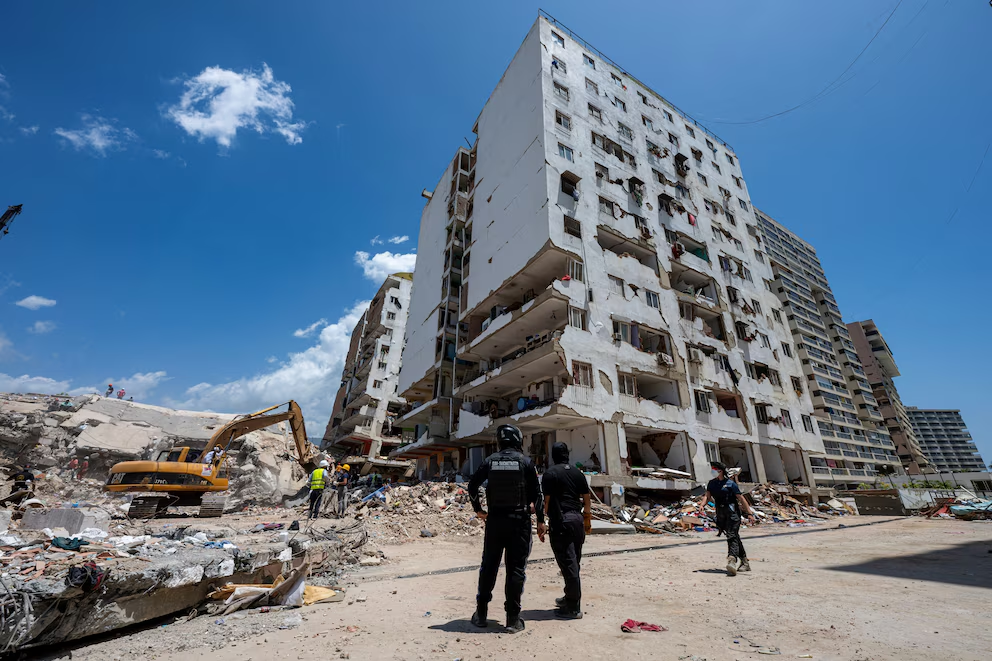

Venezuela formally requested technical and financial assistance from the United Nations Development Programme (UNDP) to launch housing programs for those affected by the earthquakes that devastated the north of the country on June 24.
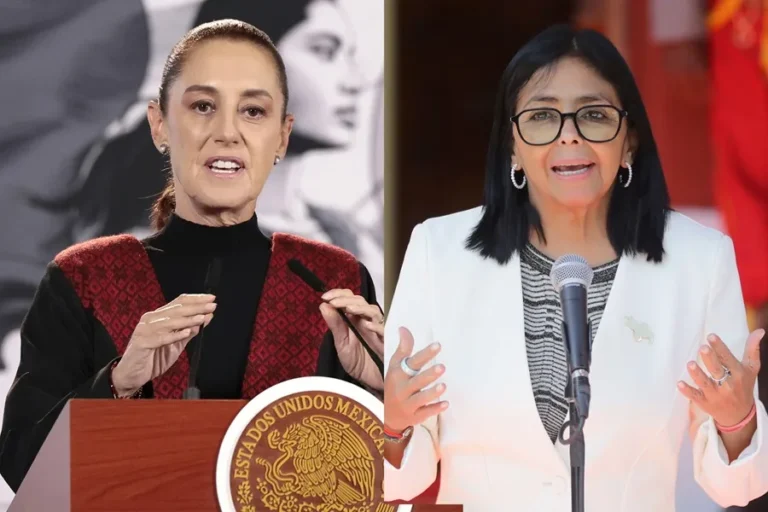
Acting President Delcy Rodríguez confirmed that the magnitude of the emergency requires international support to respond to the more than 17,000 families who were left homeless.
During a conversation with the UNDP Administrator, Alexander De Croo, Rodríguez expressed gratitude for the organization’s willingness to collaborate on the reconstruction.
“We are going to carry out a post-disaster needs assessment to move forward with national recovery and reconstruction,” the Chavista official explained.

The double earthquake, with magnitudes of 7.2 and 7.5, caused the death of at least 3,342 people and left more than 16,700 injured, according to the latest official report. In addition, 17,345 people lost their homes and 79 temporary camps have been set up in different locations.
A total of 856 buildings were affected and 190 collapsed completely, which has left a large part of the population without shelter or belongings.
We recommend reading:Survivor of the earthquakes in Venezuela: “We lost our house and we are still waiting for an answer”
Rodríguez detailed that he is maintaining negotiations with other multilateral organizations to evaluate alternatives for the disaster.

“We are in talks with the United States Department of State and the International Monetary Fund (IMF) to recover resources that will allow for the reconstruction of the damaged infrastructure,” he noted.
In addition, he mentioned contacts with the Inter-American Development Bank and the World Bank, organizations that “have already offered non-reimbursable cooperation and lines of credit to address the recovery process.”
To channel the aid, the Chavista regime created an initial fund of 200 million dollars and a special account at the CAF-Development Bank of Latin America and the Caribbean intended to receive international donations, with audit mechanisms to ensure transparency.
Volunteers and municipal staff collaborate in the identification and burial of unidentified bodies in the state of La Guaira.

The context of the emergency has forced a reorganization of key cabinet areas. This Sunday, Rodríguez appointed engineer Francisco Garcés as the new Minister of Transport, to lead the recovery of housing and infrastructure through the Great Venezuela Reborn Mission. Garcés had already been appointed head of a presidential commission in charge of inspecting homes affected by the earthquakes.
UN Humanitarian Plan
Meanwhile, UN Secretary-General António Guterres announced this Monday that the organization’s humanitarian response plan for Venezuela, launched after the earthquakes that occurred nearly two weeks ago, has so far raised 274 million dollars. This was reported by Guterres’ spokesperson, Stéphane Dujarric, who also specified that the private sector has contributed more than 32 million additional dollars in support of assistance efforts. In addition to these figures, there are donations of goods and services intended to cover the urgent needs of the population.
The initiative, led by the United Nations Office for the Coordination of Humanitarian Affairs (OCHA), aims to provide aid to 5.5 million vulnerable people in the country. The plan requires a total of 632 million dollars to be able to offer life-saving care, according to data published on the official website of UN Secretary-General Antonio Guterres, addressing delegates at a session on nuclear non-proliferation at the organization’s headquarters, New York.
According to the agency’s assessment, the impact of the June 24 earthquakes adds to a pre-existing humanitarian crisis: at the beginning of this year, 7.9 million Venezuelans were in need of assistance due to the effects of economic stagnation, inflation, and the saturation of public services.
Unidentified bodies
In parallel to the reconstruction efforts, the management of the deceased has become a humanitarian challenge. In the Catia La Mar parish, La Guaira state, municipal teams dug trenches in the local cemetery to bury more than 150 bodies that have not been identified.
The rectangles of earth where the bodies lie feature white crosses and plaques with the inscription “Special identification” and the date of death, June 24, 2026. Due to the magnitude of the tragedy, morgues and hospitals were overwhelmed, and it was necessary to improvise a morgue in the silos of the port of La Guaira.
The situation has sparked outrage among residents who are still searching for missing relatives.
“This is horrible (…), but I am not moving from here because I know he is there. I found his motorcycle, I found his helmet, he is there, God willing alive. If not, at least to find him, to see him, one needs to give them their eternal rest”, expressed Zuly, a woman who since the day of the earthquakes has been sleeping in a small square near the bakery where her 23-year-old son worked.
Amidst the mourning, Delcy Rodríguez ruled out social unrest. “There will be no social explosion; what we have here is deep social solidarity from our people,” she stated during the official ceremony with the national flag at half-mast for Independence Day. La Esperanza cemetery, in La Guaira, hosts the burials of the people who died following the earthquakes recorded on June 24.
Meanwhile, the population is participating in funeral masses and vigils, and in the most affected areas, efforts continue to recover bodies from under the rubble.