

Infobae accessed the text of the Memorandum of Understanding (MOU) signed by the Trump administration and Iran to open a negotiation channel to dismantle the Shiite regime’s nuclear program and achieve a stable peace process in the Middle East.
Textually, the MOU establishes the following
“1: The United States of America and the Islamic Republic of Iran and their allies in the current war, by signing this MOU, declare the immediate and permanent termination of military operations on all fronts, including in Lebanon, and commit from now on not to initiate any war or military operation against each other and to refrain from the threat or use of force against each other and ensuring the territorial integrity and sovereignty of Lebanon. The final agreement will confirm the permanent termination of the war on all fronts, including in Lebanon and other provisions of this paragraph.
2: The United States of America and the Islamic Republic of Iran commit to respecting each other’s sovereignty and territorial integrity, and to refrain from interfering in the internal affairs of the other.
3: The United States of America and the Islamic Republic of Iran commit to negotiate and reach a final agreement within a maximum of 60 days, extendable by mutual agreement.

4: Immediately after the signing of this MOU, the United States of America shall begin the lifting of its naval blockade and any disruption or impediment against the Islamic Republic of Iran, and shall completely end the naval blockade within 30 days. During this period, vessel traffic shall be proportional to the pre-war traffic numbers being restored by the Islamic Republic of Iran. The United States of America further commits to withdraw its forces from the proximity of the Islamic Republic of Iran within 30 days after the final agreement.
5: By signing this MOU, the Islamic Republic of Iran will make arrangements using its best efforts for the safe passage of commercial vessels free of charge for 60 days only from the Persian Gulf to the Sea of Oman, and vice versa. Commercial vessel traffic will begin immediately, and considering the need to remove technical and military obstacles, demining by the Islamic Republic of Iran will be established within 30 days. The Islamic Republic of Iran will conduct a dialogue with the Sultanate of Oman to define future administration and maritime services in the Strait of Hormuz, in discussion with other littoral states of the Persian Gulf in line with applicable international law and the sovereign rights of the coastal states of the Strait of Hormuz.
6: The United States of America commits, together with regional partners, to develop a definitive and mutually agreed plan with at least 300 billion US dollars for the reconstruction and economic development of the Islamic Republic of Iran. The mechanism for the implementation of this plan will be finalized as part of the final agreement within 60 days. All required licenses, exemptions, and permits necessary for the relevant financial transactions will be granted by the United States of America.
7: The United States of America commits to terminating all types of sanctions against the Islamic Republic of Iran, including United Nations Security Council resolutions, that is, IAEA Board of Governors resolutions, and all unilateral U.S. sanctions, primary and secondary, on an agreed timeline as part of the final agreement. The Islamic Republic of Iran and the United States of America recognize the critical importance of the aforementioned sanctions termination issue, and express their intention to immediately address these issues in negotiations in order to reach a mutual agreement on them.

8: The Islamic Republic of Iran reaffirms that it will not seek or develop nuclear weapons. The United States of America and the Islamic Republic of Iran have agreed to resolve the disposition of stored enriched material according to a mechanism to be mutually agreed upon in accordance with the schedule mentioned in paragraph seven, with the minimum methodology being back blending on-site under IAEA supervision. The two parties also agreed to discuss the issue of enrichment and other mutually agreed matters related to the nuclear needs of the Islamic Republic of Iran, based on a satisfactory framework to be agreed upon in the final agreement. The final agreement will confirm the provisions of this paragraph. The United States of America and the Islamic Republic of Iran recognize the critical importance of the nuclear issues mentioned above and express their intention to immediately address these issues in negotiations in order to reach a mutual agreement on them.
9: Pending final agreement, the United States of America and the Islamic Republic of Iran agree to maintain the status quo. The Islamic Republic of Iran will maintain the current status quo of its nuclear program, and the United States of America will not impose new sanctions and will not deploy additional forces in the region.
10: The United States of America commits that immediately after the signing of the MOU and until the termination of sanctions, the U.S. Department of the Treasury will issue waivers for the export of Iranian crude oil, petroleum products, and derivatives, and all associated services, including banking transactions, insurance, shipping, etc.
11: The United States of America commits to making fully available for use the frozen or restricted funds and assets held by the Islamic Republic of Iran, following the implementation of the MOU. The United States of America and the Islamic Republic of Iran will mutually agree on the procedures related to the release of these funds during negotiations. Such funds, whether held in the original account or transferred, shall be made fully usable for payment to any ultimate beneficiary designated by the Central Bank of the Islamic Republic of Iran. The United States of America commits to issuing all necessary licenses and authorizations accordingly.
12: The United States of America and the Islamic Republic of Iran agree that an executive mechanism shall be established to monitor the successful implementation of the MOU and future compliance with the final agreement.
13: After signing, and subject to the commencement of the implementation of paragraphs 1, 4, 5, 10, and 11 of the MOU, and the continued implementation of these measures, the United States of America and the Islamic Republic of Iran will begin negotiations regarding the final agreement exclusively on the remaining paragraphs.
14: The final agreement will be backed by a binding resolution of the United Nations Security Council (UNSC)“. JD. Vance, Vice President of the United States, together with Steve Witkoff, Special Envoy for the Middle East, and Jared Kushner, Donald Trump’s son-in-law. The three are the official negotiators of the Memo that the White House signed with Iran
The White House considers the Memo as a path for negotiation with Iran, and nothing more.
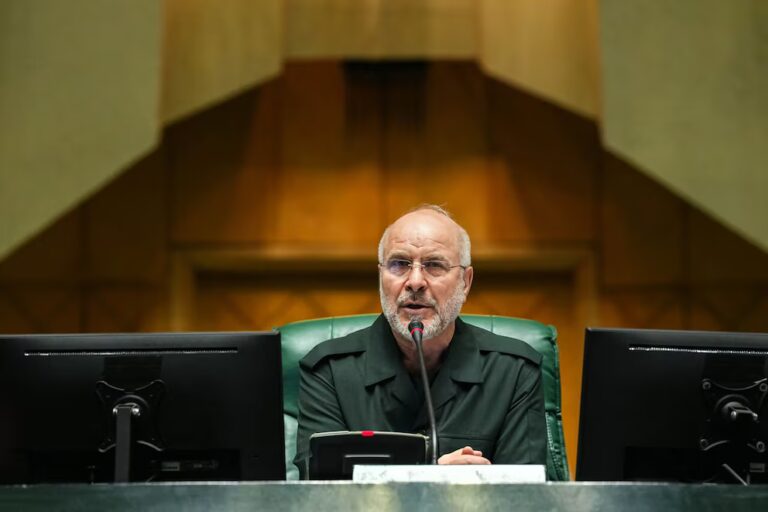
In this context, JD. Vance -Vice President of the United States-, Steve Witkoff -Special Envoy to the Middle East-, and Jared Kushner -son-in-law of Donald Trump– will meet in Geneva with Mohamad Baqer Qalibaf, Speaker of the Parliament of Iran, and Abbas Araghchi, the regime’s foreign minister, to initiate talks with a minimum timeframe of 60 days.
During a phone conversation that Infobae held with two key officials of the Trump administration, it was explained that the United States aims to ensure that Iran’s nuclear program is dismantled.
This main objective of Washington has a roadmap that can be summarized as follows:
–Seize the enriched uranium and remove it from Iran.
–Limit the capacity of Iranian enrichment by controlling its technology, including centrifuges.
-Establish a method of complete inspection. The Iranian uranium enrichment plant in Natanz
It will be a complicated negotiation: Washington and Tehran do not agree on that roadmap.
The Shiite regime accepts diluting enriched uranium, but rejects the possibility of handing it over and even less compromising its technological capacity.
Faced with this foreseeable situation, the White House affirms that Iran has a destroyed economy and needs the millions in funds blocked due to its terrorist activities. Therefore, the United States would unblock the funds if Tehran surrenders its uranium and technology.
In any case, upon the signing of the Memo, the Republican administration will make a gesture of detente toward the Shiite regime. It will lift the current sanctions on the commercialization of Iranian oil, as established in point 10 of the MOU.
But beyond this gesture, the negotiation strategy of the United States leverages the concept of quid pro quo. The more reliable Iran is, the more economic benefits the White House will allow.
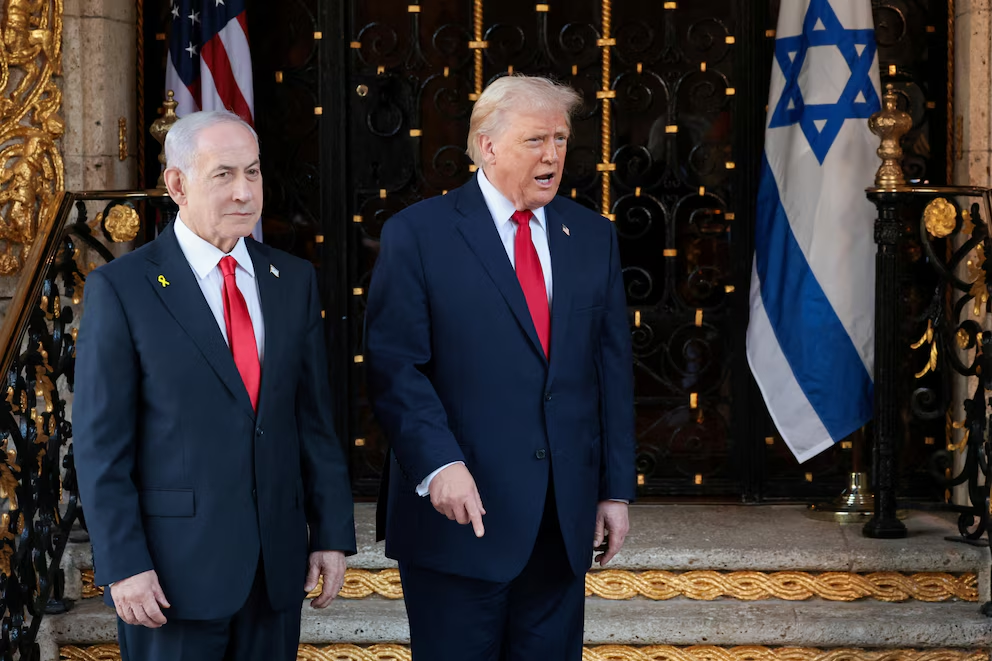
Donald Trump and Benjamin Netanyahu, Israeli Prime Minister, during an official meeting at Mar-a-Lago, (Miami, United States)
When the negotiation regarding Iran’s nuclear program concludes, Washington’s intention is to advance an agreement that puts an end to the terrorist attacks carried out by Hezbollah, Hamas, and the Houthis against Israel.
The two senior White House officials who explained the terms of the negotiation assert that Israel maintains its right to defend itself against possible aggression from Iran’s proxies, and that the Shiite regime committed to preventing Hezbollah from attacking during the peace talks.
On June 19 the MOU is signed in Switzerland, and from that moment on direct negotiations will begin between the United States and Iran.