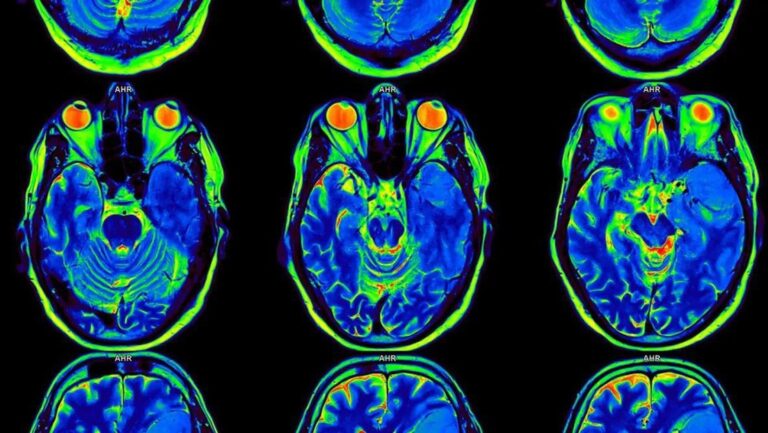


Israeli scientists have developed an artificial intelligence model called Brain-IT that can reconstruct images a person is viewing by analyzing their brain activity, producing visual representations that closely resemble the original images.
Researchers at the Weizmann Institute of Science trained the system using more than 70,000 images collected while eight participants viewed different pictures. The model can work in both directions, translating brain scans into images and images into predicted brain scans.
According to the researchers, Brain-IT can recreate visual details ranging from objects such as stop signs and food to sports scenes and indoor or outdoor environments. The system can reportedly produce a reconstruction in about an hour, significantly reducing the time required by some previous approaches.
The technology uses an “encoder” to overcome the limited amount of available brain-scan data. Researchers said the system can generate predicted scans for images that had never actually been viewed inside an MRI machine, effectively creating additional training data.

During the experiment, Brain-IT identified 128 functional regions that appeared to perform similar functions across participants. Some regions responded more strongly to images of food, while others were associated with sports, indoor scenes or outdoor environments.
The researchers believe the technology could eventually help scientists study how different regions of the brain process visual information. They also said it could have applications in helping people with paralysis communicate.
The research builds on earlier attempts to reconstruct images from brain activity. Previous systems were able to produce rougher or less precise images, while the researchers say Brain-IT can generate more detailed reconstructions in less time.
Despite the advances, the system remains dependent on fMRI scans and was developed using a relatively small group of participants. The researchers said expanding brain-imaging datasets is difficult because of the time and cost involved in scanning large numbers of people.