

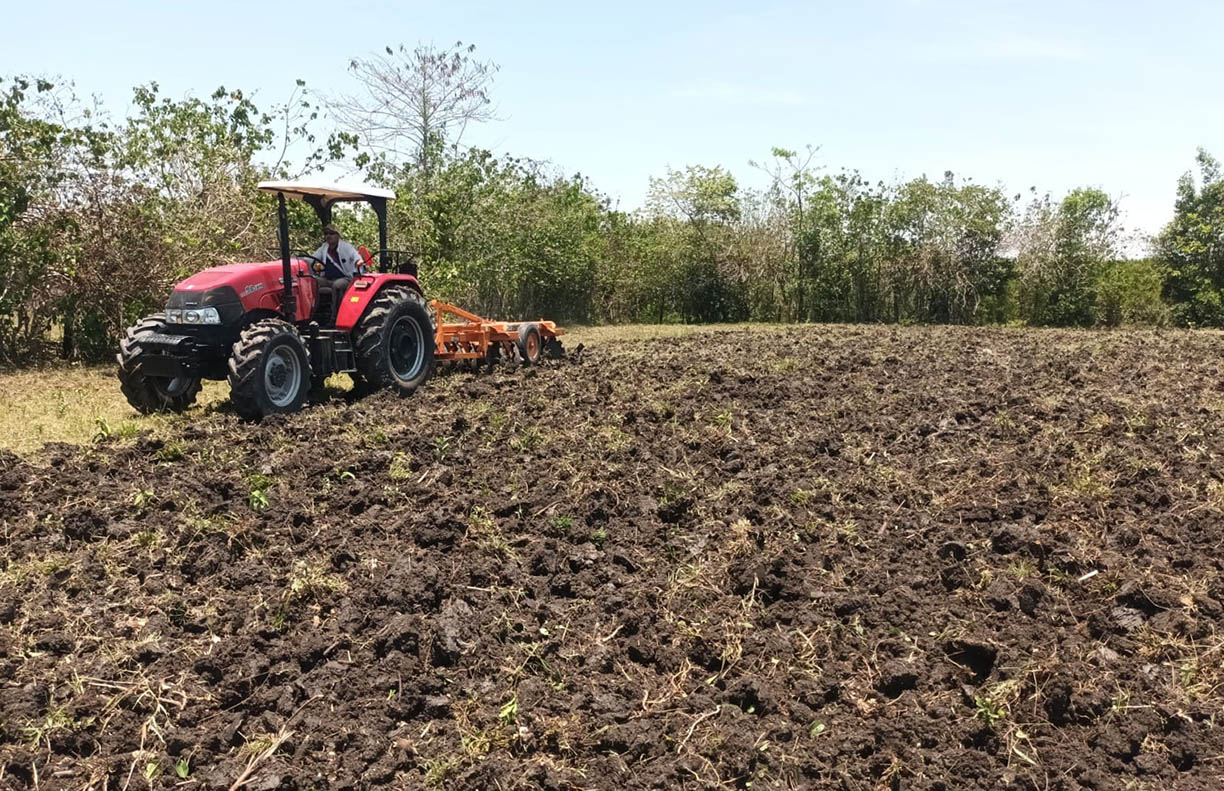

The National Mechanization Program (PRONAMEC) is the Dominican Government’s main strategy to promote the modernization of the agricultural sector through the incorporation of technology, machinery, and new financing models that allow for increased productivity, reduced production costs, and strengthened competitiveness of national agriculture.
The initiative stems from the strategic importance of agriculture to the Dominican economy, a sector that contributes 5.6% of the Gross Domestic Product (GDP), generates 8.8% of national employment, and accounts for 11.8% of the country’s exports. Together with agricultural extension and food security, PRONAMEC constitutes one of the three strategic pillars of the Ministry of Agriculture to transform the Dominican countryside.
The program responds to one of the main structural challenges of Dominican agriculture: the high dependence on foreign labor for land preparation, planting, crop management, harvesting, and post-harvest tasks.
For decades, a significant portion of these activities has been carried out by foreign workers, many of them in an irregular migratory status, which has created vulnerability for the sector in the face of labor shortages, rising production costs, and changes in immigration policy. In this context, PRONAMEC seeks to progressively reduce this dependency through the incorporation of machinery, technology, and innovation, strengthening the productivity and competitiveness of Dominican agriculture.

The initiative also responds to another reality of the Dominican countryside: nearly 260,000 producers are registered in the country and around 81% are small producers, who have traditionally faced limitations in accessing credit and acquiring modern machinery. For this reason, the program proposes a model that democratizes access to mechanization, allowing producers of all sizes to incorporate technology into their production processes and improve their profitability.
Its objective is to increase productivity, reduce production costs, decrease post-harvest losses, optimize the use of water, fertilizers, and other inputs, improve the profitability of agricultural holdings, and strengthen the country’s capacity to guarantee its food security and compete more efficiently in national and international markets.
The mechanization proposed by PRONAMEC covers the entire agricultural cycle, from land preparation and leveling to planting, fertilization, precision agriculture, drone use, crop management, intelligent irrigation systems, harvesting, post-harvest, sorting, and transport. The incorporation of these technologies will allow agricultural tasks to be carried out with greater speed, precision, and efficiency, reducing costs, increasing yields, and promoting more sustainable agriculture.
One of the pillars of the program is public investment aimed at developing the national mechanization infrastructure. The Government will promote the creation of a network of Agricultural Mechanization Service Centers (AMSC), the acquisition of specialized equipment, the training of technical personnel, and the implementation of digital platforms for the management and monitoring of the system. This investment seeks to create the conditions for mechanization to reach all productive regions of the country and generate a permanent impact on the sector’s productivity.

The financial component constitutes another of PRONAMEC’s innovative elements. The program contemplates financing schemes backed by the State, in alliance with the Agricultural Bank, BANDEX, and private banks, which will facilitate the acquisition of machinery through loans with preferential rates, state guarantees, and agricultural leasing modalities.