

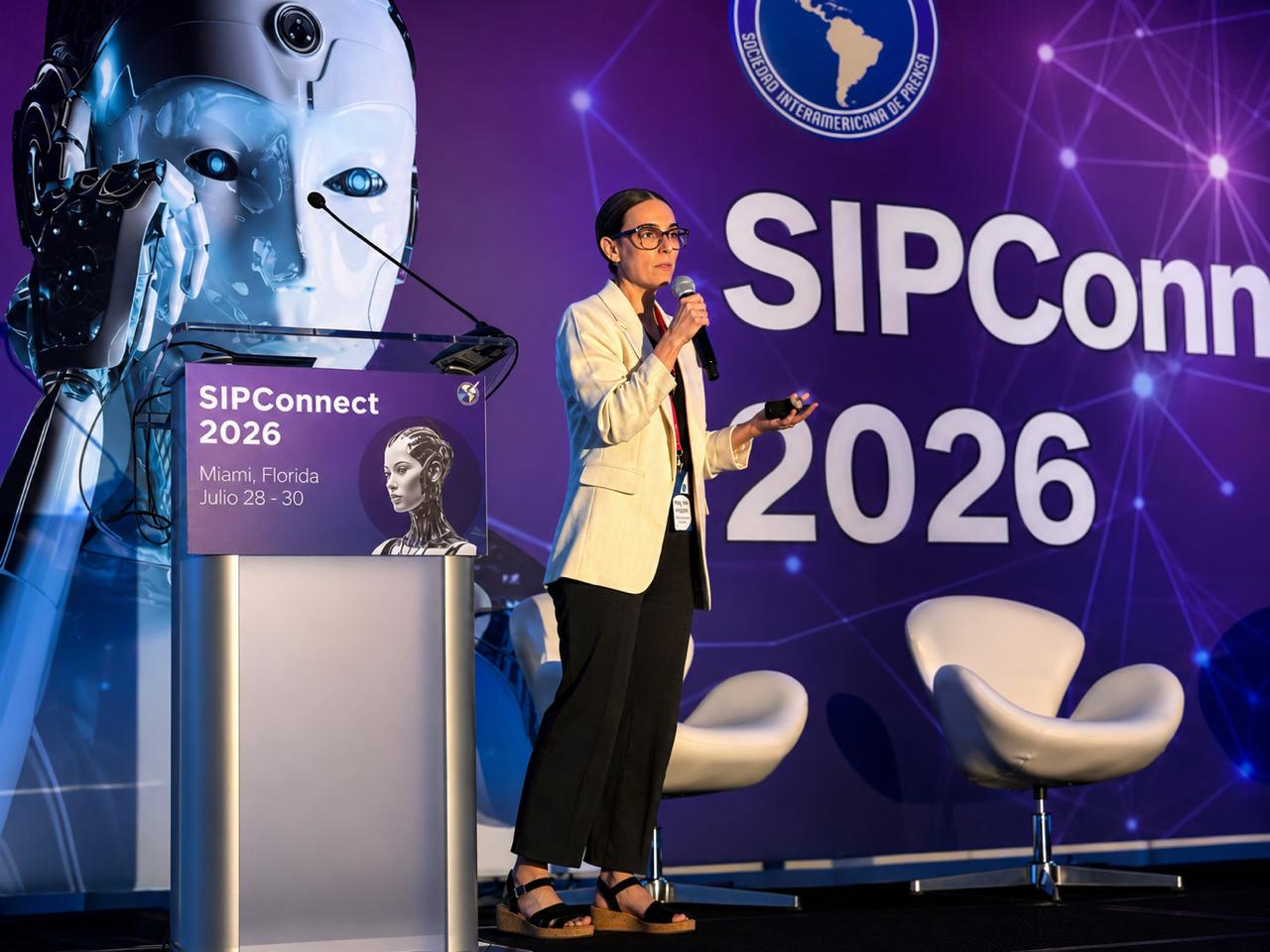

Miami.- AI-powered chatbots are establishing themselves as a new gateway for news consumption, especially among younger audiences and those who follow current events most frequently, according to research presented by Amy Ross Arguedas, a researcher at the Reuters Institute for the Study of Journalism, during SIP Connect 2026.
In the panel “The industry in transformation: ideas for the next media cycle”, Ross Arguedas explained that, although the use of chatbots to get informed remains a minority, the trend shows sustained growth and is changing the way people access and process information.
The researcher pointed out that users no longer turn to these tools solely to check headlines, but also to investigate, summarize, delve deeper, and evaluate information, giving them an increasingly broad role in the information experience.
Likewise, he warned that the transition from a model based on links to one centered on answers generated by artificial intelligence could significantly reduce the traffic that media outlets receive from search engines and other platforms, in addition to transforming the way audiences discover news.

Regarding newsroom strategy, the study reveals that editors believe areas such as investigations, field reporting, community building, events, human-interest stories, and opinion will be more resilient to the advancement of artificial intelligence, which is why they plan to increase their investments in this content.
We recommend reading:
In contrast, they anticipate lower investment in evergreen content, general news, and service journalism, as they consider them more vulnerable to being replaced by chatbot-generated responses.
Research also shows growing media interest in strengthening video and audio production, formats that publishers consider more competitive against AI and whose consumption continues to expand on platforms like YouTube and TikTok.
Ross Arguedas concluded that these changes evidence a growing demand for clearer, summarized, and personalized content, which reopens the debate on the differential value of journalism, focused on original reporting, connection with communities, and the ability to offer context and explanations that artificial intelligence cannot yet fully replicate.