The Association of Industries of the Dominican Republic (AIRD) stated that sustainability has become an essential component of business competitiveness and economic development, highlighting the need to continue strengthening collaboration between the productive sector and environmental authorities to ensure balanced and sustainable growth.
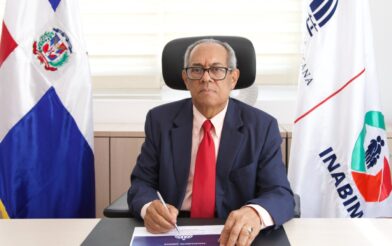
During an Industrial Meeting organized by the AIRD and aimed at its member companies, the Minister of Environment and Natural Resources, Paíno Henríquez, and the president of the entity, Julio Virgilio Brache, exchanged perspectives on sustainability, competitiveness, and the challenges the country faces in advancing toward a more resilient and sustainable development model.
Brache pointed out that environmental issues occupy a central place in investment and competitiveness decisions worldwide today. “The sustainable development of the Dominican Republic requires dialogue, trust, and collaboration between those who produce wealth and those who have the responsibility to protect our natural heritage,” he expressed.
Likewise, he reiterated the importance of permanent dialogue between the different national actors to build sustainable and lasting solutions. “When the public sector and the private sector engage in dialogue with honesty and a vision for the future, the environment wins, the economy wins, and Dominican society wins,” he concluded.
In his speech, Minister Paíno Henríquez stated that sustainability can no longer be seen as an obligation isolated from economic development, but rather as a strategic element to strengthen the country’s competitiveness. “The greatest environmental reform we are promoting is not a new regulation; it is the transformation of the way the State responds to citizens and investors,” he declared.
More Read
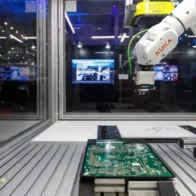
Henríquez explained that this vision translates into an institutional modernization agenda aimed at simplifying processes, strengthening transparency, and offering greater certainty to citizens and the productive sector. He highlighted the progress in the digitalization of services, process automation, and the traceability of environmental files, as part of the Ministry’s commitment to more efficient and predictable management.
He also explained that the institution is advancing in the automation of processes, the standardization of requirements, and the digital traceability of environmental services, with the goal of offering greater transparency, efficiency, and legal certainty. “Sustainability is no longer just a compliance requirement. Today, it is a factor of competitiveness. The countries that manage to produce more with fewer resources, reduce their environmental impacts, and generate trust in their institutions will be the ones that lead the economy of the future,” he stated.

Likewise, he maintained that protecting natural resources and strengthening the economy are not conflicting objectives. “The challenge consists precisely in ensuring that both advance together, generating well-being for people and opportunities for the country’s development,” he stated.
More Read
Brache highlighted that international markets increasingly demand that companies produce responsibly, properly manage their environmental impacts, reduce emissions, and efficiently use natural resources. “Sustainability is no longer a complementary element. Today, it is at the very heart of competitiveness,” he stated.
In that sense, he highlighted that the Dominican industry has been promoting initiatives for circular economy, energy efficiency, waste valorization, and investments in cleaner technologies, convinced that sustainability is a necessary condition to build more resilient companies prepared to compete in an increasingly demanding global environment.
The president of the AIRD pointed out that to accelerate this transformation, it is essential to continue strengthening an institutional environment based on clear rules, legal certainty, and regulatory predictability, as well as a permanent cooperative relationship between the public and private sectors.
During his speech, he also highlighted the importance of addressing strategic issues for the country with a technical and responsible vision, such as waste management, the circular economy, sustainable water management, climate change adaptation, the energy transition, and the responsible use of natural resources. “True sustainability consists of ensuring that economic growth and environmental protection advance together, rather than presenting them as opposing goals,” he stated.
The activity concluded with a panel moderated by Mario Pujols, executive vice president of the AIRD, in which members of the organization had the opportunity to exchange concerns and proposals directly with the Minister of Environment on topics related to sustainability, competitiveness, and environmental management.
Both the AIRD and the Ministry of Environment and Natural Resources agreed on the importance of continuing to strengthen spaces for dialogue and collaboration between the public sector and the productive sector to promote a sustainable development agenda based on innovation, competitiveness, and the protection of the natural heritage of the Dominican Republic.