

A United States citizen working for a humanitarian organization in the Democratic Republic of the Congo has contracted Ebola, the U.S. government reported on Friday.
The case became known while the African country is facing the fastest-growing Ebola outbreak recorded on the continent, with an expansion favored by violence, displacement, and the lack of adequate protection for healthcare personnel.
The scale of the outbreak was exposed this week with figures released by the Africa Centres for Disease Control and Prevention: 1,830 confirmed cases and 648 deaths in Congo. Infections were confirmed in Uganda.
According to the U.S. Centers for Disease Control and Prevention, cited by CBS, the agency is working with the affected person’s employer, U.S. agencies, public health authorities, and Congolese partners to prevent further transmission and identify close contacts.

The CDC did not provide further details about the patient.
The case became known while Congo attempted to contain an outbreak that health authorities have been facing for months and whose evolution was concerning due to its speed and the conditions on the ground. The combination of the initial silent circulation of the virus, armed conflict, and attacks against medical facilities complicated the response.
Congolese authorities declared the new Ebola outbreak on May 15, after the disease had been spreading for weeks without official detection, according to the World Health Organization. That initial delay widened the transmission window before the formal activation of control measures.
The outbreak was caused by the Bundibugyo virus, a rare variant of Ebola for which there is no approved vaccine or treatment. The disease often causes deadly symptoms, which increased the pressure on a healthcare system already affected by insecurity and resource shortages.
Last week, clinical trials began to treat this variant, after researchers launched a study with the intention of finding tools to combat the virus. The opening of those trials introduced a path for a medical response in the midst of an emergency that until now lacked specific approved options.

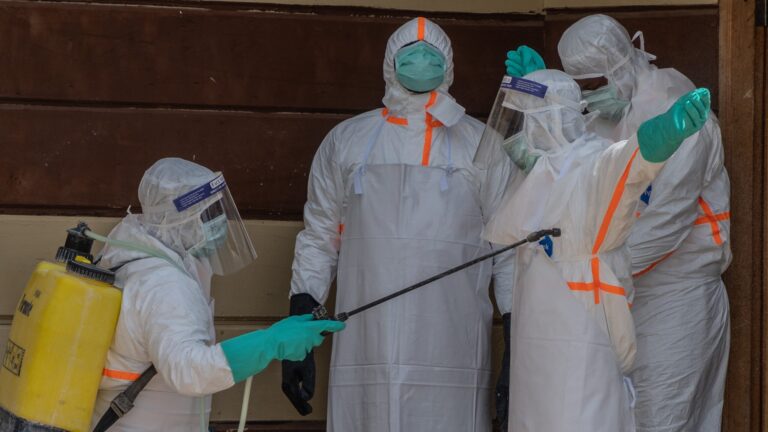
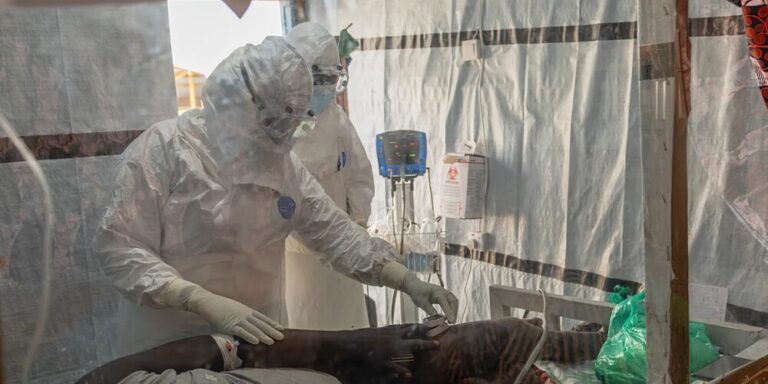
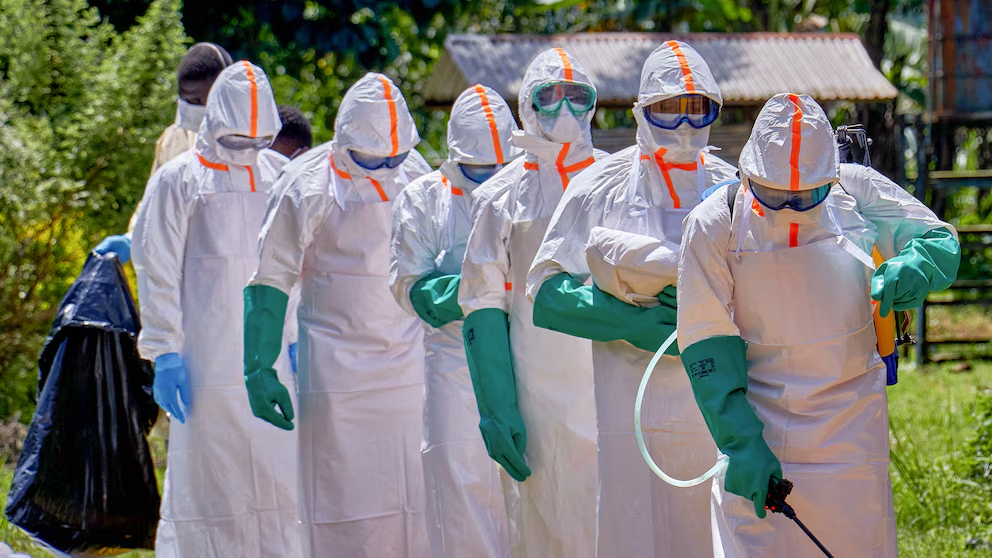
The operation also faced material difficulties. According to the text cited by CBS, doctors and other health workers often lacked sufficient protective equipment, a shortage that left them exposed to contagion and reduced the operational capacity of care centers.
The spread of the virus coincided with displacements and attacks on health centers
Violence, displacement, and attacks on health centers in eastern Congo fueled the spread of Ebola and hindered the health response
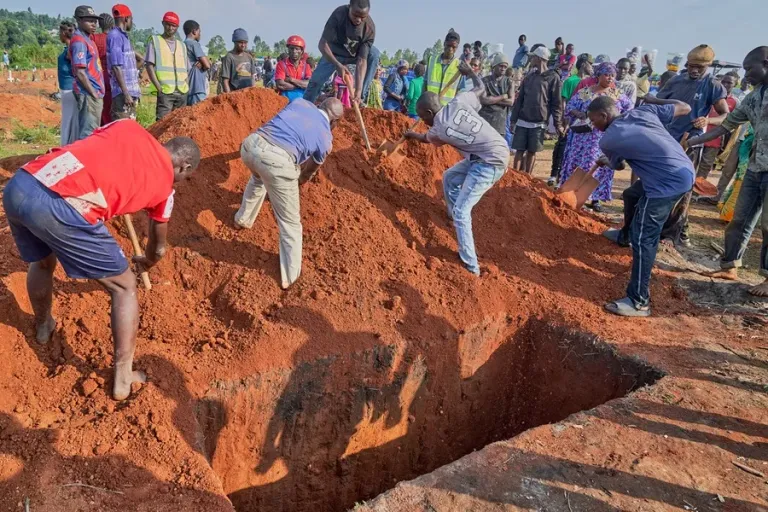
Eastern Congo is experiencing a persistent conflict that has forced thousands of people to flee from violence. This population movement has contributed to the spread of the virus, while mistrust from some communities and attacks on health centers have hindered case identification and contact tracing.
That context helps explain why the outbreak reached such a scale in a short time. The circulation of the virus in insecure areas hinders surveillance work, disrupts care chains, and exposes health teams to additional risks, even before contact with infected patients.

The new case detected in an American worker was not the first linked to personnel from that country stationed in Congo. During the first week of the outbreak, an American doctor working there also contracted the virus and was transported for treatment.
After several weeks of care in a German hospital, that doctor recovered. He then returned to the United States in June, after his family remained in quarantine separately.
The background showed that the exposure of foreign workers on the ground had already forced the activation of international care and isolation mechanisms. It also revealed that the discussion about where to treat U.S. citizens exposed to Ebola had been in place since the beginning of the emergency.
Officials from President Donald Trump‘s administration initially said that the United States planned to send Americans exposed to Ebola abroad to a new center in Kenya, instead of repatriating them. That project was suspended by order of a Kenyan court.
The White House requested USD 1.4 billion to respond to the outbreak in the region
The White House requested USD 1.4 billion from Congress to respond to the Ebola outbreak in Congo, Uganda, and other places in the region.
In a recent request to Congress, the Trump administration asked for USD 1.4 billion in additional funding to respond to the outbreak in Congo, Uganda, and other locations. The request reflected that Washington considered the situation a regional threat, not limited to a single country.
The detection of the infected aid worker reinforced that concern because it confirmed that the outbreak also affected personnel involved in assistance and containment. The CDC focused its immediate response on two fronts: cutting off potential chains of transmission and locating those who have had close contact with the infected person.
The case gained relevance because it involved a variant of the virus for which there is still no approved vaccine or treatment, and because it unfolded in a scenario where the health response was disrupted by armed violence, mass displacement, and a lack of supplies.