

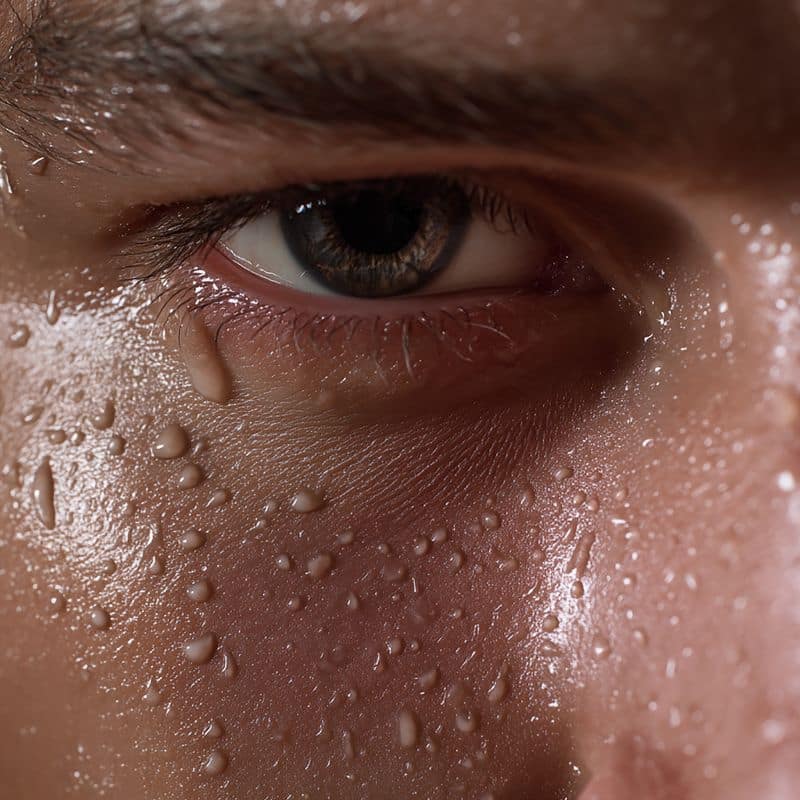

Santo Domingo.- Sweat is a natural mechanism of the body that plays an essential role in regulating body temperature. Although it is usually associated with heat or physical activity, it can also appear as a response to stress, anxiety, or certain medical conditions.
Sweating occurs through sweat glands distributed throughout the body. When the temperature rises, the body releases sweat to cool the skin through evaporation, helping to prevent overheating.
This liquid is mostly composed of water, but it also contains mineral salts and small amounts of substances such as urea, lactate, glucose, and ammonia. Its composition can vary depending on the level of hydration, diet, health status, and the intensity of physical activity.
Specialists point out that sweating is a completely normal and essential function for the body. However, when sweat production is excessive and occurs even without heat or exercise, it could be a condition known as hyperhidrosis, which can affect daily routine and social relationships.

Among the main recommendations for controlling excessive sweating are maintaining proper hydration, wearing light clothing made of natural fibers, applying appropriate deodorants or antiperspirants, and avoiding, as much as possible, very spicy foods, caffeinated drinks, and excessive alcohol consumption.
We recommend reading: From stress to anxiety: the consequences of a lack of water in the body
Likewise, maintaining good personal hygiene helps to reduce bad odors associated with sweat, since these are not caused by the sweat itself, but by the action of the bacteria found on the skin.
Experts also advise consulting a healthcare professional when sweating appears suddenly, is very profuse, occurs at night, or is accompanied by symptoms such as fever, weight loss, chest pain, or difficulty breathing, as it could be related to a health problem that requires medical evaluation.
Taking care of hydration, maintaining healthy habits, and paying attention to changes in the body are measures that contribute to coping with high temperatures and reducing the discomfort caused by excessive sweating, especially during the summer.