

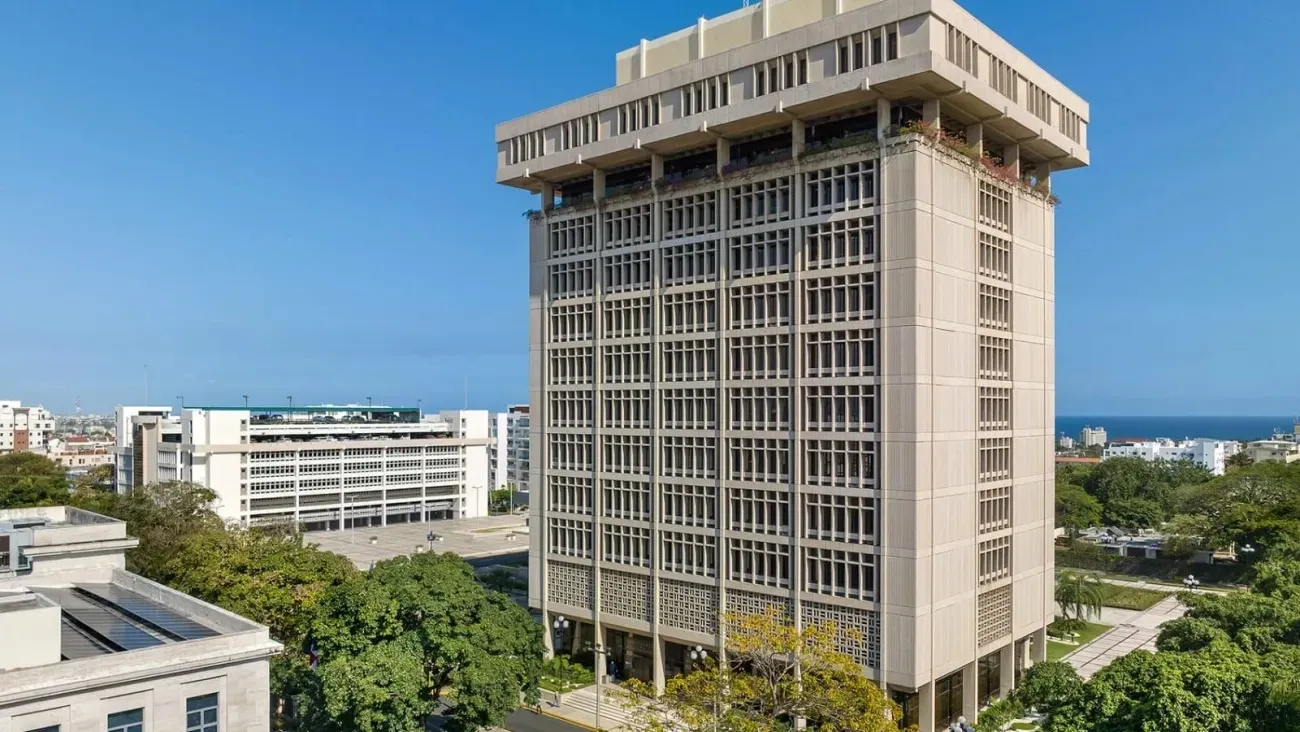

The figures for the Monthly Economic Activity Indicator (IMAE) corresponding to June 2026 reflected a year-on-year growth of 6.4%, the highest recorded so far this year, bringing the average expansion of economic activity during the April-June quarter to 5.0%, accumulating an increase of 4.5% in the first semester, more than doubling that recorded in 2025. In addition, it is observed that the trend-cycle indicator continues to show a recovery process for the Dominican economy since the end of 2025, reaching a year-on-year pace of 5.5% in June of this year.
It is important to highlight that this performance has been achieved in an international environment characterized by geopolitical tensions that have driven up oil prices and transport rates, generating pressure on production costs globally.
The behavior exhibited by the economy during the month of June 2026 is mainly due to the expansion of the real value added of the Mining (18.1%), Construction (14.9%), Free Trade Zone Manufacturing (5.8%) sectors, and Service activities as a whole (5.2%), with Financial Services (13.1%), Professional Services (8.7%), Education (8.9%), Other Market Service Activities (5.6%), Transport and Storage (5.7%), Health (4.9%), and Hotels, Bars, and Restaurants (4.6%) standing out among the latter. In addition, Local Manufacturing and Agriculture activities grew by 2.5% and 1.6%, respectively.
The construction activity recorded a year-on-year expansion of 14.9% in June 2026, accounting for approximately 30% of the IMAE growth in June. This significant pace of expansion is largely due to the increase in the execution of private investment projects and the greater dynamism of public investment, as reflected in the budgetary execution of the government’s capital expenditure item recently highlighted by the Minister of Finance and Economy. Likewise, this performance was favored by financial conditions that facilitated greater availability of resources for the sector. In this context, credit destined for construction grew 22.6% year-on-year at the end of June, equivalent to more than RD$34 billion additional compared to the same period of the previous year. Likewise, the notable increase in sales of the main construction inputs reflected the sector’s productive linkages and its contribution to the performance of other branches of the economy.

Regarding the results of the remaining industrial activities in June, mining recorded a year-on-year variation of 18.1%, associated with higher extraction volumes of gold and silver, in a context of favorable conditions in the international metals market. In the case of free trade zone manufacturing, the activity exhibited a year-on-year growth of 5.8%, a performance associated with exports under this regime, which recorded a year-on-year increase of 6.1% in June 2026. Similarly, local manufacturing grew by 2.5%, supported by the performance of the manufacturing of non-metallic mineral products, metallic products, and other manufacturing industries.
The value added of the hotel, bar, and restaurant activity recorded a year-on-year growth of 4.6% in June 2026, driven mainly by the increase in the arrival of non-resident passengers by air. During the aforementioned month, 816,512 tourists were received, a figure that represents an increase of 6.0% compared to June 2025. Likewise, the accumulated flow of international visitors reached 4,963,343 people during the first semester of 2026, for a growth of 10.0% compared to the same period of the previous year. This favorable performance reflects the results of the tourism promotion strategies implemented by the Ministry of Tourism, aimed at strengthening the country’s presence in the main source markets and expanding the diversification of the visitors’ countries of origin.
Regarding financial intermediation, insurance, and related activities, it experienced a year-on-year growth of 13.1%, with this result influenced by the 9.1% expansion of credit directed to the private sector in both national and foreign currency, equivalent to an additional RD$217 billion compared to June 2025, as well as the significant increase in explicit commissions from financial system entities.
Finally, it is important to highlight that the Dominican economy has solid fundamentals, a stable financial system, and a resilient private sector, which, together with the coordination of monetary and fiscal policies, will allow it to continue facing the challenges of the external environment. The Central Bank will continue to monitor the evolution of the economic situation and its possible effects, maintaining its commitment to price stability and macroeconomic stability.