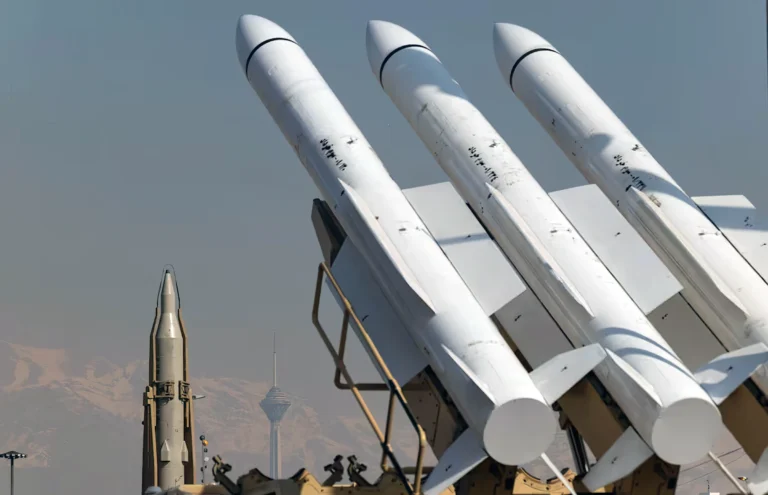


US forces confirmed bombings against Iranian military installations following an offensive against three American destroyers, while Tehran accused Washington of having first violated the ceasefire in effect since April.
Despite the seriousness of the episode, both sides avoided declaring the definitive collapse of the truce and conveyed messages aimed at containing a further escalation.The United States Central Command (CENTCOM) reported that Iranian forces launched “multiple missiles, drones, and small boats” against three American destroyers crossing the Strait of Hormuz. According to the military report, none of the ships were hit and the threats were neutralized before impact.
Washington later confirmed attacks against Iranian military infrastructure linked to the operation.We recommend reading: Trump threatens greater military force against Iran if there is no agreement and after an exchange of fire in Hormuz
“CENTCOM does not seek an escalation, but remains prepared and positioned to protect U.S. forces”, the military command stated in a statement released on social media.

However, Trump himself later sought to de-escalate the confrontation and maintained that the ceasefire “continues to be in effect”. During a telephone conversation with ABC News, the president described what happened as “a little love tap” and denied that the truce had collapsed. “No, no, the ceasefire continues. It is in effect”, he affirmed.
From the Iranian side, the regime offered a completely different version of events. The military command of the ayatollahs accused the United States of violating the ceasefire agreement by attacking a tanker and another vessel near Hormuz. According to Tehran, the Iranian forces immediately responded with attacks against U.S. military ships deployed in the region. Tehran also insisted that the internal situation remains under control despite the increase in military tension. The spokesperson for the Foreign Ministry, Esmaeil Baqaei, stated that Tehran will define its final position regarding the negotiations once internal consultations are concluded and announced that it will be transmitted to Pakistan, a country that acts as a mediator between both parties. The President of the United States, Donald Trump, speaks at the White House as tensions with Iran rise after the clashes in the Strait of HormuzMeanwhile, from Islamabad signals of caution but also optimism emerged. The Pakistani Prime Minister, Shehbaz Sharif, declared that he hopes the current ceasefire “could turn into a lasting truce”.
The military episode occurred in an extremely delicate context for international maritime trade. Since the beginning of the open conflict between Iran and the United States at the end of February, the Strait of Hormuz suffered severe operational restrictions. According to data presented in Panama by the Secretary-General of the International Maritime Organization, Arsenio Dominguez, around 1,500 ships and 20,000 crew members remain trapped in the region due to the crisis.
The strait concentrates a key part of the global transport of oil and gas, so any interruption generates immediate concern in the energy markets and in international trade routes.Conversations between Israel and Lebanon
In parallel, the regional situation continues to impact other fronts of conflict in the Middle East. US officials confirmed that Israel and Lebanon will resume indirect talks next week, amid renewed tension with Hezbollah after an Israeli attack on southern Beirut that killed a commander of the terrorist group. Israel and Lebanon will resume indirect talks next week, amid renewed tension with Hezbollah (REUTERS) The U.S. Secretary of State, Marco Rubio, assured days ago that an agreement between Israel and Lebanon is “perfectly achievable”, although he pointed to Hezbollah as the main obstacle to stabilizing the border. Despite the exchange of fire in Hormuz and the climate of maximum military tension, both Washington and Tehran avoided presenting the day as the beginning of a new open war. While Iran insisted that the situation had returned to normal, the United States emphasized that its operations were defensive in nature and that it continues to be willing to maintain the current truce.