We recommend reading:Supérate holds meetings in the southern region with 1,800 beneficiary families of social programs
Planning with a vision for the future
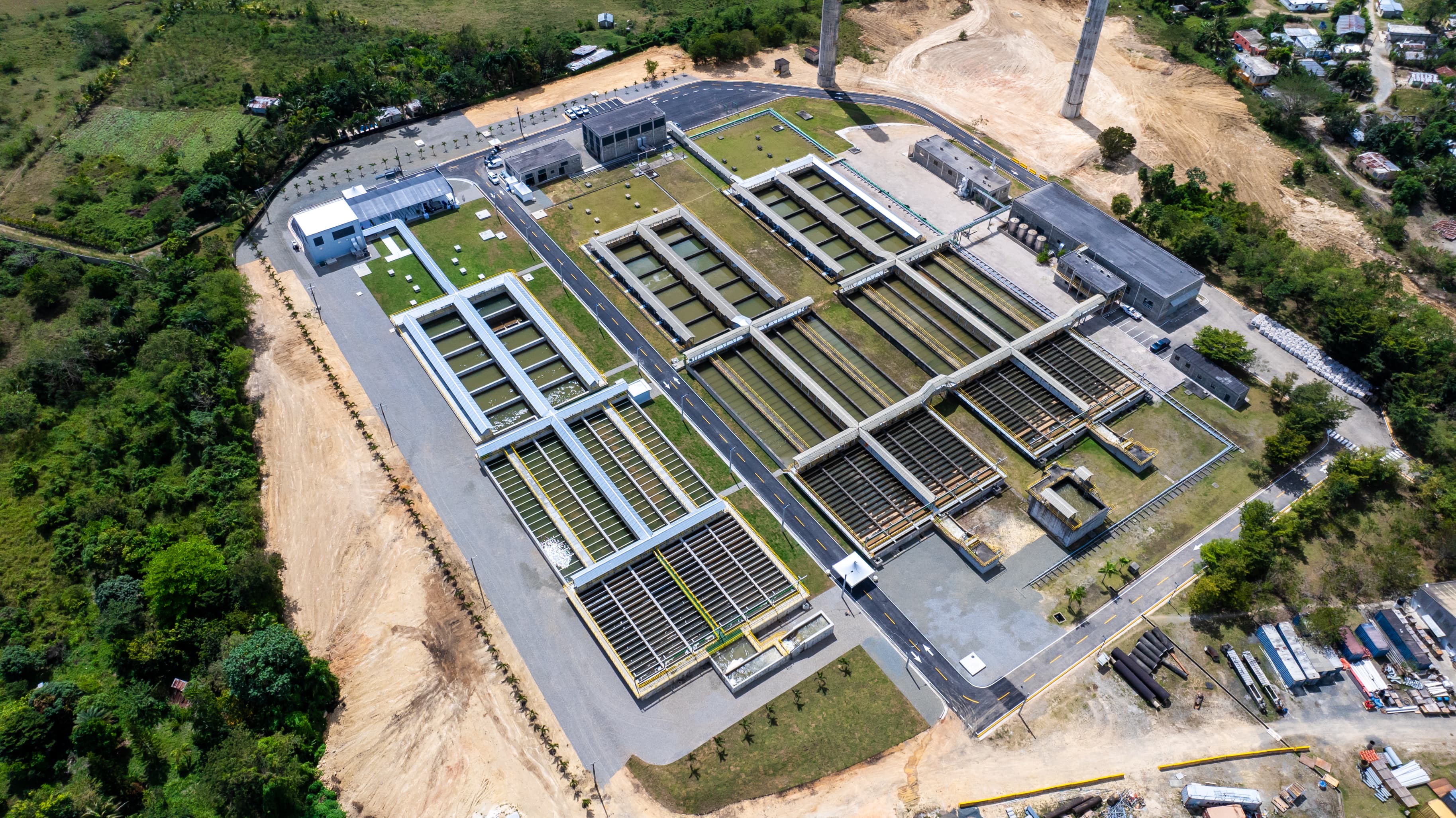
In the act, President Abinader stated that his government has undertaken with planning and continuity the structural solution of the potable water supply in Greater Santo Domingo, while announcing new projects that will guarantee the supply for the next 20 years. The president highlighted that since 2004 a new aqueduct for Greater Santo Domingo had not been built or planned, which generated a lag in the face of population growth. Faced with this situation, he explained that his administration carried out technical studies and hired specialized firms to expand the water supply in the capital. He also announced that approximately 2 additional cubic meters will be added in the third quarter of the year through the optimization of the Haina aqueduct, impacting Santo Domingo Oeste and the National District.Final Project of 10 cubic meters
The Head of State announced that the Government will begin the process to develop a structural solution that will provide an additional 10 cubic meters per second: 1 cubic meter for Cotuí and 9 cubic meters for Greater Santo Domingo. He indicated that the pre-qualification process for companies will open in March and the tender will be awarded in the middle of the year. The work will have an estimated duration of between two and a half to three years. “That will be the definitive solution for 20 years for Greater Santo Domingo.” You can also readPlanning also in energy
President Abinader highlighted that this same strategic vision is applied to the electricity sector, where in recent months about 200 additional megawatts have entered the system in Energías 4 and 70 megawatts in SIBA Energy. In the coming days, close to 300 megawatts in simple cycle from Energía 2000 will be integrated, reaching 400 megawatts in combined cycle during the summer. He added that for next year, the entry of new plants such as San Felipe II and Manzanillo I is planned, as well as other projects that will consolidate the national energy capacity until 2028.The Dominican Republic Takes a Decisive Step in Water Infrastructure
From his side, the general director of the Caasd, Felipe “Fellito” Suberví, assured that the Dominican Republic takes a decisive step in terms of water infrastructure with the commissioning of this expansion. Suberví highlighted that it is the largest pumping aqueduct in the country, a work that transforms the present and strengthens the future of Greater Santo Domingo, where almost a third of the national population resides. He explained that, upon assuming management, they found a system producing less than 50% of its installed capacity, with over two decades of delay in water infrastructure. The head of Caasd assured that they will continue to expand the network towards sectors that still do not have piped water and reiterated that they are working on the rehabilitation of 100% of the aqueducts operated by the institution. He also reported that, together with the Inter-American Development Bank (IDB) and CAF – Development Bank of Latin America and the Caribbean, they are advancing on the Hatillo dam and Cotuí aqueduct project, whose bidding process will be initiated this year. “This is not a list of promises. When public resources are well managed and work is done with transparency, humility and passion, the results are seen,” concluded Suberví. The expansion now reaches a production of 6 cubic meters per second, equivalent to 136 million gallons per day, of which almost 23 million will be allocated to Santo Domingo Norte.Over the last four years, the Caasd has recovered and expanded the system’s capacity, providing more than 90 million additional gallons daily. Among the main works carried out are: construction of a new pumping station; construction of four regulating tanks with a combined capacity of 113,636 cubic meters; installation of more than 52 kilometers of large diameter networks, replacing obsolete infrastructures.