

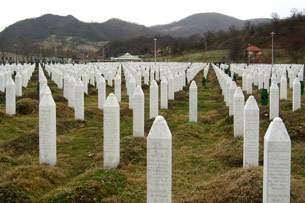

The United Nations General Assembly has declared July 11 as the International Day of Reflection and Commemoration of the 1995 Genocide in Srebrenica, a day to remember and reflect on one of the most tragic episodes in recent European history. The declaration of this historic day was made through resolution A/RES/78/282 of May 30, 2024, sponsored by Germany and Rwanda.
What happened in Srebrenica in 1995?
To put this United Nations declaration into context, one must go back to the dissolution of the former Yugoslavia in the early 1990s. This situation led to a series of ethnic and territorial conflicts that devastated the Balkan region. Between 1992 and 1995, Bosnia and Herzegovina were the scene of a war that cost the lives of more than 100,000 people and displaced more than two million, primarily affecting the Bosnian Muslim population.
One of the darkest moments of this conflict was the Srebrenica massacre in July 1995. Despite having been declared a safe area by the UN, the Bosnian Serb army invaded the city and carried out the slaughter of thousands of Muslim men and boys. Approximately 25,000 women, children, and elderly people were forced to leave their homes.
Recognition of the Srebrenica Genocide
The Srebrenica massacre has been recognized as an act of genocide by the International Court of Justice (ICJ) and the International Criminal Tribunal for the former Yugoslavia (ICTY). This recognition is significant, as few episodes in recent history have been officially classified as genocide. At least 8,372 lives were lost in Srebrenica, and the impact on local communities was devastating.

Re
The Srebrenica genocide left deep scars on the survivors and the families of the victims, in addition to generating persistent tensions between the different ethnic groups of Bosnia and Herzegovina. The Special Adviser on the Prevention of Genocide, Alice Wairimu Nderitu, has expressed her concern regarding attempts to deny this genocide and glorify those responsible for these crimes.
In this sense, the UN has emphasized the importance of remembering and educating about these events to prevent future genocides. The General Assembly has urged Member States to preserve historical truth through educational systems and commemorative programs.
Commemoration of July 11th
On July 11, 2024, the International Day of Reflection and Commemoration of the 1995 Genocide in Srebrenica will be observed for the first time. The inauguration of this day will take place at the United Nations headquarters in New York, with a high-level commemorative event organized by the Permanent Mission of Bosnia and Herzegovina.

This day serves not only to honor the memory of the victims, but also to reflect on the importance of peace, justice, and reconciliation in a region that is still working to overcome the wounds of the past. It is a wake-up call to the international community to commit to preventing and condemning all forms of genocide and ethnic violence.