
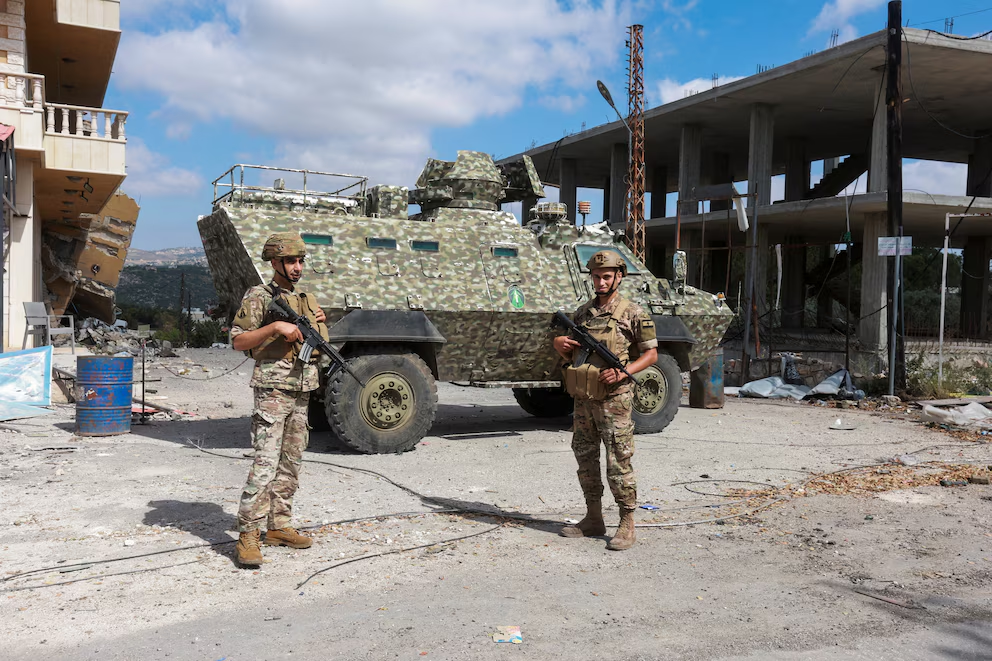

The Lebanese Army deployed troops on Tuesday in the southern town of Zawtar al-Gharbiyeh, in the Nabatieh region, hours after Israeli forces left the area within the framework of a US-mediated plan. The operation marks the first effective handover of territory under the so-called pilot zones program, designed to return to the Lebanese State control of a strip about ten kilometers deep that Israel has occupied since the conflict intensified in March 2026.
The trilateral agreement that underpins this transfer was signed on June 26 in Washington by the ambassadors of Israel and Lebanon to the United States, in the presence of Secretary of State Marco Rubio. The framework establishes a phased mechanism: the Lebanese Army deploys to villages evacuated by Israel, verifies that they have been cleared of Hezbollah infrastructure and weaponry, and certifies compliance to a tripartite Military Coordination Group. Only then does Israel proceed to withdraw its troops from the next zone. Washington presented the start of the program on Monday as a diplomatic milestone, although two of the three initially designated villages—Froun and Srifa—were already empty of Israeli soldiers before the announcement.
The entry of the Lebanese Army did not occur without incident. Israeli soldiers fired near the deployed units, which prompted a formal warning from the Lebanese armed forces regarding the risks to the plan. Israel confirmed the episode and attributed it to Lebanese personnel with an engineering vehicle crossing about 150 meters into its so-called security zone in the vicinity of the neighboring village of Zawtar al-Sharqiyeh, which Tel Aviv considers outside the pilot program. There were no injuries.
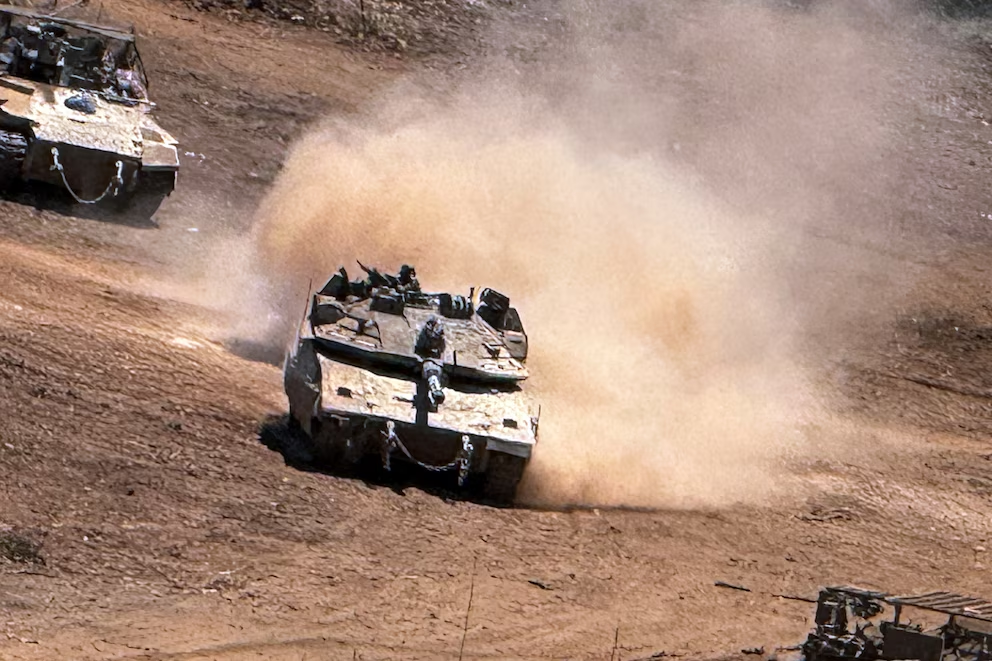
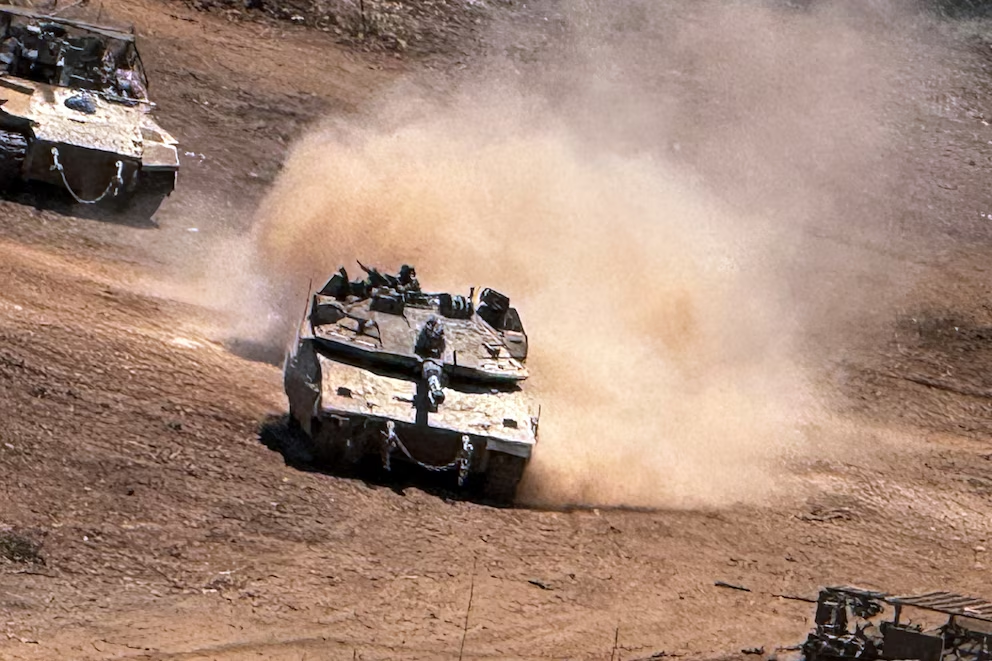
An Israeli tank and an armored personnel carrier conduct maneuvers on the Israeli side of the border between Israel and Lebanon, after crossing the border into Israel, on July 1, 2026. Photograph taken with a mobile phone.

We recommend reading: Israel kills six members of a family, including the four minor children, in Gaza City
The immediate priority is demining. A Lebanese high-ranking official informed Reuters that engineering teams were scouring the town for unexploded ordnance and that much work remained before it could be declared safe. Mayor Abed Ezzeddin described extreme destruction: more than half of the buildings had been demolished and the remaining ones suffered severe damage, leaving the village in uninhabitable conditions.
Ezzeddin also raised a question that summarizes the fragility of the agreement on the ground: how to guarantee a safe return for the displaced when Israeli forces remain in Zawtar al-Sharqiyeh, just a five-minute walk from the village that the Lebanese Army has just taken. The mayor’s doubt is not rhetorical. Dozens of villages in the occupied strip have been razed—hospitals, power plants, water systems—and tens of thousands of Lebanese remain unable to return to their homes.
The context in which this operation is inserted is that of a war that began on March 2, 2026, two days after the United States and Israel launched attacks against Iran. Hezbollah then announced its entry into the conflict in support of Tehran. Israel has continued with bombings and demolitions in occupied areas even after the signing of the June 26 agreement.

Hezbollah rejected the trilateral agreement from the very first moment. Its secretary-general, Naim Qassem, described it as humiliating and declared it null and void, demanding an unconditional Israeli withdrawal before any talks regarding the group’s disarmament. Israel, for its part, conditions any withdrawal on the verification of that disarmament: Netanyahu reaffirmed in July that his troops will remain in the security zone for as long as necessary.
Lebanese President Joseph Aoun met with Donald Trump at the White House this Tuesday, in a visit that the Beirut government hopes will boost the implementation of the agreement. The Rome talks held last week between Israeli and Lebanese delegations concluded without a concrete timetable for withdrawals. The Zawtar al-Gharbiyeh test—its success or its stumbles—will largely determine whether the pilot zone mechanism can scale toward a real withdrawal, or if it will remain a diplomatic gesture in a conflict that the Lebanese state does not fully control.