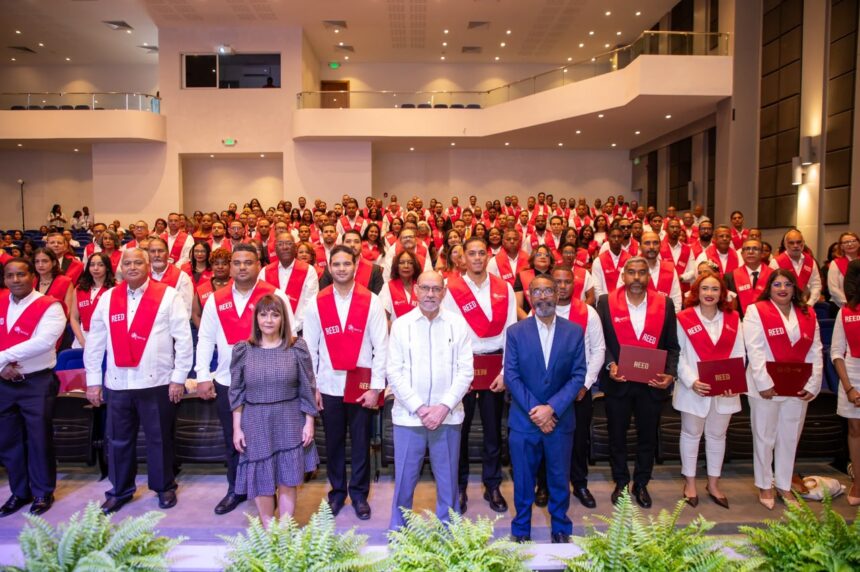
Santo Domingo. – The National Office for Seismic Assessment and Vulnerability of Infrastructure and Buildings (Onesvie) will incorporate 281 new engineers and architects into the Dominican Structural Evaluators Network (REED), bringing the total number of professionals certified by the institution to 950 to conduct building assessments and expand the country’s technical capacity in terms of prevention.
The new specialists completed the Diploma in Building Evaluation, a training program developed by the institution with the certification of the National School of Risk Management (ESNAGERI), aimed at strengthening national capacities for the evaluation of the structural vulnerability of buildings and comprehensive disaster risk management.
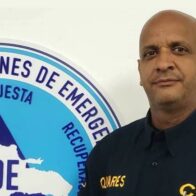
At the event, Juan Salas, president of the Emergency Commission (CNE) and executive director of the Civil Defense, valued the effort of the National Office of Seismic Evaluation and Vulnerability of Infrastructure and Buildings (Onesvie) and each of the graduates, and expressed that the certification of the ninth edition of the Diploma in Building Evaluation strengthens the country’s National Prevention, Mitigation, and Response System.
You can also read: Onesvie and Bahoruco authorities promote actions
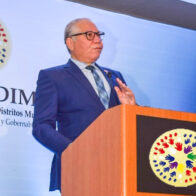
Meanwhile, Leonardo de Jesús Reyes Madera, general director of the institution, highlighted that the continuous training of engineers and architects constitutes one of the main pillars of the institutional strategy to strengthen national capabilities in the face of seismic risk, among others.
“In every corner of the Dominican Republic there must be motivated and prepared professionals like you, to sound the alarm; in the private sector we need to strengthen ourselves to inspect our buildings, our homes, and in this way raise the level of awareness”
More Read

“More than assisting, determining who can stay in their homes after an earthquake is about working on prevention, because without prevention there is no resilience and we urgently need to increase our capabilities,” the official argued.

He reported that the new evaluators are becoming part of a specialized technical body that will provide support to the National System for Disaster Prevention, Mitigation, and Response, through the evaluation of buildings, infrastructure, and lifelines, both in preventive actions and in post-earthquake scenarios.
Likewise, he highlighted that the consolidation of the Network of Dominican Structural Evaluators represents a significant advance for the country, by having professionals trained under national and international methodologies and protocols to carry out structural evaluations that facilitate timely decision-making before and after emergency situations.
More Read

The official also urged public institutions and the private sector to prioritize the assessment of their buildings as a fundamental tool to identify vulnerabilities and reduce risk, highlighting that prevention remains the most effective measure to protect lives and minimize human and material losses caused by an earthquake.
He concluded by reiterating that Onesvie’s goal is to achieve, before the end of 2026, the training and certification of more than 1,000 professionals in building assessment, strengthening national technical capacities for seismic risk management and reaffirming its commitment to reducing vulnerability, protecting lives, and building increasingly safe and resilient communities.
For her part, Dr. Miguelina Tactuk, director of the National School of Risk Management (ESNAGERI), said that one of the challenges facing the Disaster Management System is generational turnover, and that Onesvie, regarding evaluation, has been gradually earning it.
She fully valued the training and certification of the new graduates and said that going forward they have two areas of action: evaluating to recommend and mitigate, and a second one, which is reactive, when something happens, evaluating a building to recommend its demolition, an action she hopes will never happen, the official expressed.