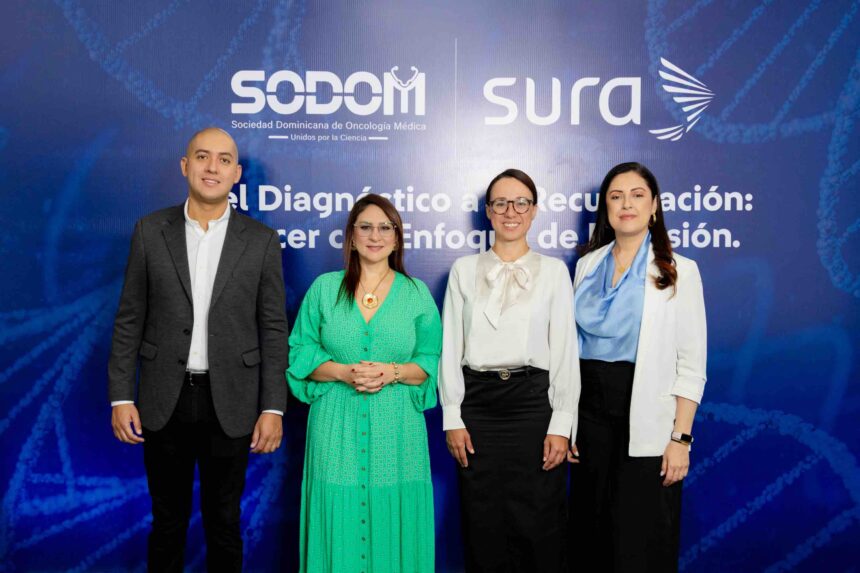
Santo Domingo.- Beyond the scientific advances that now allow for the personalization of cancer treatment, one of the main challenges for health systems continues to be ensuring that these innovations reach patients in a timely manner. Under this premise, Salud SURA Colombia, Seguros SURA Dominican Republic, and the Dominican Society of Medical Oncology (SODOM) held the scientific meeting “From Diagnosis to Recovery: Cancer with a precision approach,” where national and international specialists analyzed how the integration of knowledge, technology, and coordinated care models can contribute to improving health outcomes.
During the day, Dr. Natalia Restrepo, Director of Health Risk Management Model Consulting at SURA Colombia, highlighted that precision medicine only reaches its full potential when integrated into models that accompany the patient throughout their entire care pathway.
“Managing health risk is translating science into timely decisions for each patient. The key lies not only in having better diagnostic tools, but in ensuring that people access them on time, receive the appropriate treatment, and have continuous follow-up throughout their care process,” he explained.
The specialist presented SURA Colombia’s experience in implementing comprehensive models for oncology patients, based on early risk identification, patient stratification, personalized interventions, and continuous monitoring of outcomes.
We recommend reading: SURA celebrates 15 years in DR strengthening its commitment to service
More Read
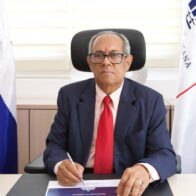
As an example, he shared the results of the model developed for breast cancer, which has allowed for a significant reduction in care times, going from more than 40 days to just five days between clinical suspicion and diagnostic confirmation, in addition to increasing the early detection of the disease.
For her part, Dr. Carolina Jaramillo, coordinator of the SURA Omics Sciences Center, addressed the role of genomics, clinical bioinformatics, and biomarkers in the evolution of precision medicine.
As Jaramillo explained, the increasingly detailed knowledge of the molecular characteristics of tumors is allowing for the selection of more effective treatments for each patient and supporting clinical decisions based on scientific evidence.
More Read


“Today we know that patients with similar diagnoses can have completely different biological behaviors. Precision medicine allows us to understand those differences and choose more appropriate therapeutic alternatives for each case,” he/she noted.
The day also included the participation of Dr. Silvia Guerrero, leader of the Peritoneal Malignancy Group at the Cancer Treatment and Research Center (CTIC) in Bogotá, who shared the most recent advances in the surgical management of complex tumors and peritoneal diseases.
During his speech, Guerrero highlighted the importance of multidisciplinary teams for clinical decision-making and explained how specialized techniques, combined with high-precision diagnostics, are expanding therapeutic possibilities and improving the survival of patients with certain types of cancer that historically had limited prognoses.
The specialists agreed that the future of oncological care requires a comprehensive vision where prevention, early diagnosis, precision medicine, timely treatment, rehabilitation, and continuous support converge.
The meeting also allowed for reflection on common challenges in Latin America, including the fragmentation of health systems, barriers to accessing specialized technologies, the limited interoperability of clinical data, and the need to strengthen people-centered models.
For SURA, these types of spaces reinforce its commitment to the generation of knowledge, continuous medical updating, and the promotion of conversations that contribute to the strengthening of the health ecosystem and the well-being of people.

To close the day, Dr. Natalia Restrepo highlighted the opportunities for collaboration between Salud SURA Colombia and health institutions in the Dominican Republic on three fronts: knowledge transfer between specialists, consulting to strengthen risk management models, and the articulation of a complementary network of services in Colombia for cases that require specific capabilities or when the patient decides to receive care outside the country.
This accompaniment would be developed in coordination with Dominican doctors and institutions, guaranteeing the continuity of care and the patient’s return to their treating team. Thus, the meeting opened new possibilities for cooperation to strengthen oncological care and expand the alternatives available to patients.