


Rome.- World hunger decreased slightly in 2025 but still affects 645 million people, according to a report published this Tuesday by several United Nations agencies, which also highlights “sustained progress” in Latin America and the Caribbean.
While in 2025 7.8% of the world’s population suffered from hunger, in Latin America and the Caribbean the average figure was 4.8%, amounting to 32 million people, which represents a consecutive drop since the pandemic year of 2020, when it stood at 6.1% in that region.
These forecasts are contained in the annual report ‘The State of Food Security and Nutrition in the World’ (SOFI 2026), presented in Rome by the Food and Agriculture Organization (FAO), the International Fund for Agricultural Development (IFAD), the World Food Programme (WFP), the World Health Organization (WHO), and the United Nations Children’s Fund (UNICEF).
Regional inequalities
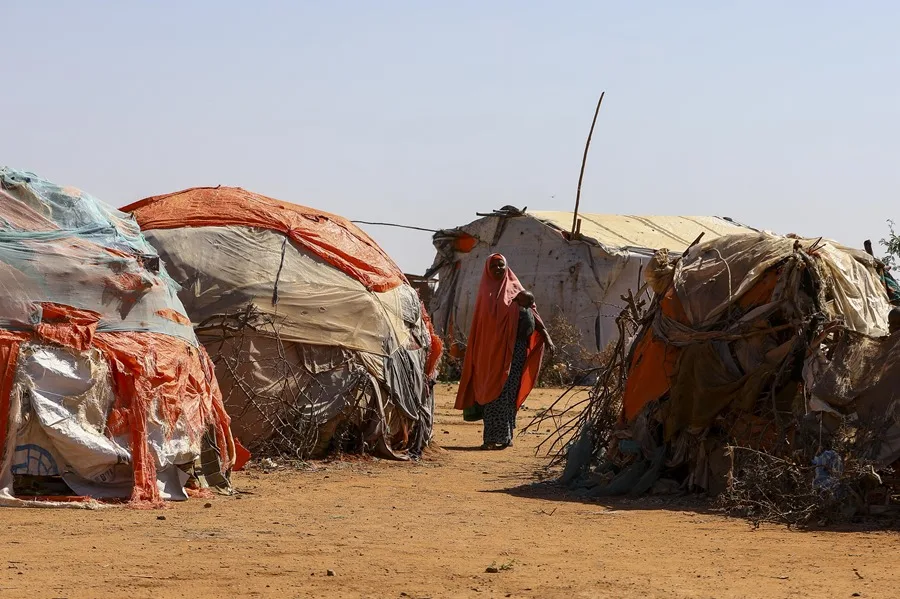
In regional terms, the greatest progress has been made in Asia and Latin America and the Caribbean, while the worst data is in Africa.

So much so that of those 645 million hungry people, almost half were in Africa (309 million), while 292 million were in Asia and 32 million in Latin America and the Caribbean.
On the African continent, estimates see an “interruption of the prolonged upward trend in hunger”: the proportion of the hungry population decreased from 20.3% in 2024 to 20.0% in 2025.
But this is only “a slight percentage improvement” that “does not translate into a reduction in the absolute number of people affected due to population growth” on the continent.
No access to safe food
On the other hand, food insecurity, the fact that people do not have sufficient, safe, and nutritious food, had a greater scope. That is to say, the step prior to hunger.
In 2025, it is estimated that 25.8% of the global population, 2.1 billion people, experienced moderate to severe food insecurity, compared to 28.7% in 2020.
This situation was especially serious in rural areas and also among women, the report warns.
Conversely, obesity among adults also increased: while in 2012 it affected 12.1% of people, in 2024 this figure grew to 16.2%. Because one can eat a lot, but eat poorly.
In this context, the cost of a healthy diet also grew globally, rising from $2.94 in 2017 to $4.28 in 2025. This price increase was especially high in Latin America, where it reached $4.91.

Far from ‘Zero Hunger’
This scenario, aggravated by the impact of conflicts on markets, such as the war in Ukraine or the crisis in the Strait of Hormuz, as well as by climate change, hinders the ‘zero hunger’ goal of the 2030 Sustainable Development Goals.
“There is a slight improvement but we are still stagnant. The numbers have not improved substantially since the 2030 goals were set,” explains Juan Carlos Mendoza, Director of Environment, Climate, Gender and Social Inclusion at IFAD, to EFE.
The Millennium Development Goals were adopted in 2015 but, as the Colombian expert explains, their achievement has been hindered by the climate crisis, several conflicts between 2017 and 2018, and the pandemic. And now we will have to wait to see the impact of the crisis in Hormuz (not calculated in the report).
For his part, FAO chief economist Máximo Torero believes that the fact that world hunger has decreased for the third consecutive year shows that it is “possible to make progress” but warns that progress remains “insufficient” to meet the 2030 Agenda.
“Improvements remain fragile, unevenly distributed, and insufficient to reach the Sustainable Development Goals by 2030. Progress must be accelerated,” he stated in a press release.
Because the report anticipates that, although projections indicate a continued reduction in hunger, by 2030 more than 500 million people will still be hungry in the world. 56% in Africa.