Santo Domingo.- The word anthrax has begun to cause concern among some citizens after the Ministry of Public Health reinforced epidemiological surveillance in the Dominican Republic following the investigation of suspected cases of this disease in Haiti.
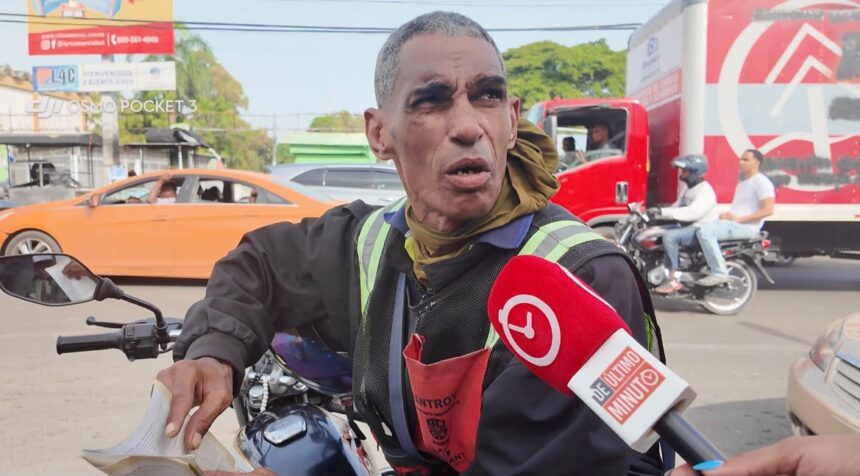
However, when consulting citizens on the streets of Santo Domingo, many acknowledged that they do not know what anthrax is, how it is transmitted, and what its main risks are.
You might be interested in: Public Health reinforces preventive surveillance amid anthrax suspicions in Haiti
Confusion grows as Dominican authorities insist that the country has no recorded cases of anthrax and that there is no health emergency.
The Minister of Public Health, Víctor Atallah, explained that the measures adopted are preventive in nature and seek to strengthen the capacity of health services to timely detect any suspected case.
More Read

The alert comes after Haitian health authorities investigated 13 suspected cases of cutaneous anthrax in the community of Baliverne, in Dame-Marie, Grand’Anse department, where two deaths have also been reported that have not yet been confirmed as a result of anthrax.

But what is anthrax?
Anthrax, also known as splenic fever, is a disease caused by the bacterium Bacillus anthracis, which primarily affects herbivorous animals such as cows, goats, and sheep.
People can become infected primarily by coming into contact with sick or dead animals, or with contaminated animal products.
More Read

The disease is not usually transmitted from person to person, so authorities focus much of their prevention efforts on the surveillance of animals and animal products.
In its cutaneous form, the most common one, a skin lesion may appear that subsequently develops a dark center, accompanied by other symptoms such as fever and malaise.
Given the situation in Haiti, Public Health reported that it maintains coordination with the Ministry of Agriculture and the General Directorate of Livestock to strengthen surveillance and prevent the unregulated movement of animals or products that may pose a risk.
The authorities also urged the population to stay informed through official sources and reiterated that, so far, no cases of anthrax have been registered in Dominican territory.