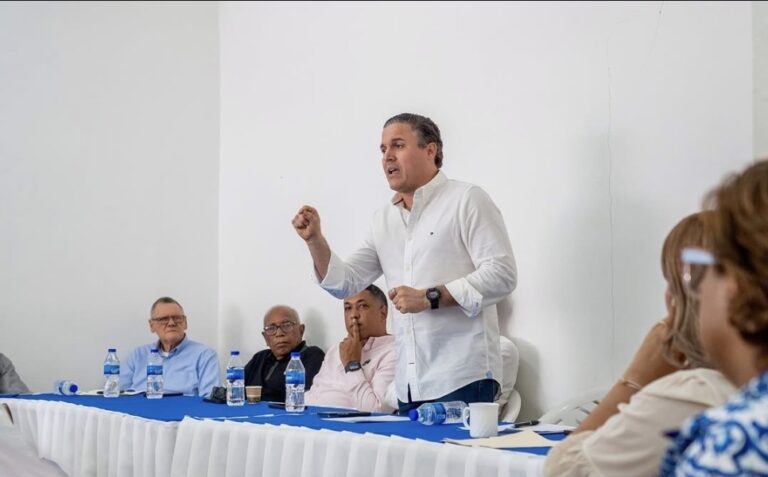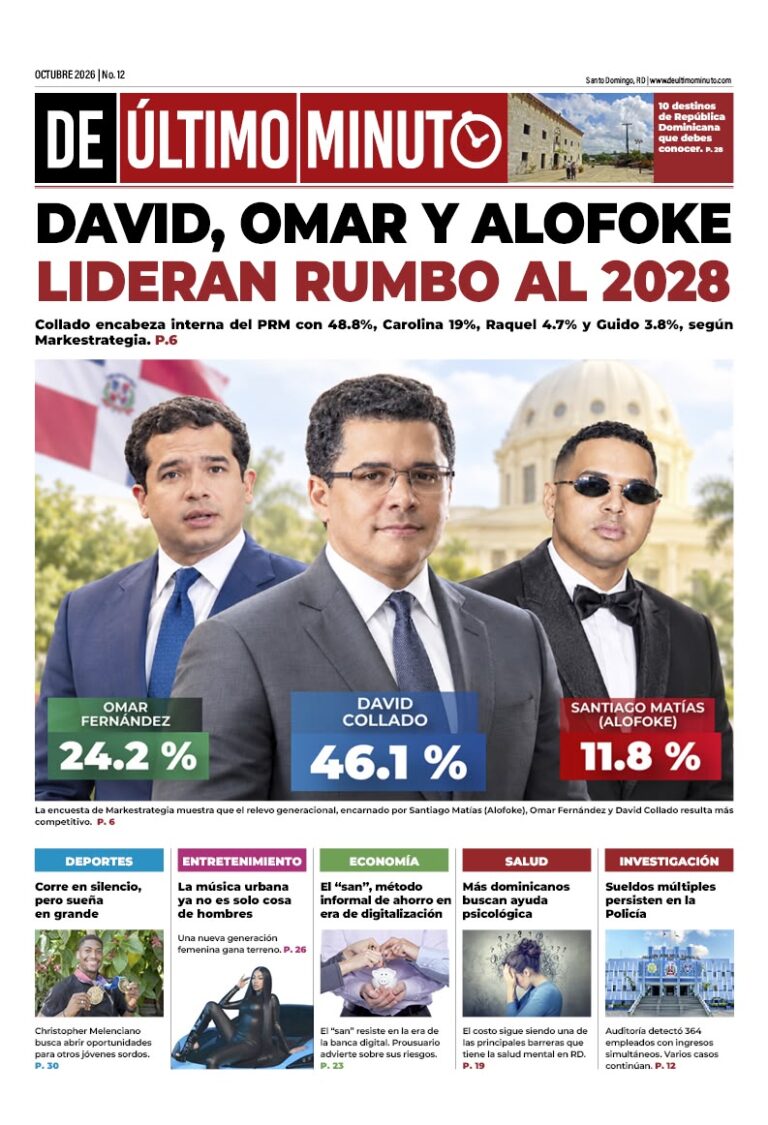



Jean Luis Rodríguez has taken the reins of the Ministry of Housing and Buildings (MIVED) with the firm purpose of replicating the high levels of efficiency and institutional modernization achieved during his tenure at the head of the Dominican Port Authority.
In an exclusive conversation for De Último Minuto, the official remarked that, despite the change in the public administration, his work method remains intact under the premise that “now the sector changes, but my way of managing does not change.”
With this approach, your immediate priority is focused on streamlining construction procedures and boosting pending state projects through the consolidation of the Zero Bureaucracy program.
1. What are your expectations regarding this new challenge? How was the transition from the Port Authority to MIVED?
For me, it is a privilege to serve the country and have the opportunity to work alongside President Luis Abinader.
At the Port Authority, we experienced six years of transformation. We institutionally strengthened the port system, recovered financial capacity, promoted new investments, and contributed to turning our ports into true instruments of economic, tourism, and social development.
Now the sector changes, but my way of managing does not: planning, monitoring, efficiency, and results.
At MIVED, we have defined a very clear priority: finish, unblock, and deliver. We are identifying the projects with the highest level of progress, determining what obstacles affect their execution, and concentrating efforts and resources where we can generate the greatest impact for the population.
I want to leave a Ministry that is increasingly less dependent on individual decisions and more supported by processes, technology, indicators, planning, and performance standards. That is, for me, true public efficiency.
We have a young, professional, and highly trained team. My responsibility as minister is to provide direction, establish priorities, and create the conditions for that team to produce results.
In the end, the citizenry does not measure the Government by the number of meetings we hold, but by the problems we solve and the projects we deliver.
2. What did you find at the Ministry of Housing? Tell us a little about the permitting process.
We found an institution with great responsibilities and, at the same time, a significant opportunity to simplify processes and raise its levels of efficiency.
Permitting is a good example. A construction permit is not simply an administrative procedure: behind every project there is investment, jobs, economic activity, and development.
That is why we are promoting Zero Bureaucracy Construction, with simplification and digitalization of procedures, a single file system, and simultaneous reviews, taking as a reference a 30-day response time for complete files.
But something important must be said: efficiency must be a two-way street. The State must respond with speed, transparency, and predictability, and developers must submit complete and technically correct files.
The results are beginning to show. Between January and September, applications increased by 15% and issued licenses grew by 93%. In September alone, we reached a historic record of 203 licenses, associated with an investment of RD$57.133 billion and more than 42,000 direct jobs.
Our goal is not simply to issue permits faster. It is to build a traceable, predictable, and technically rigorous system, where each file can be measured and where we can identify exactly where the bottlenecks are. What is not measured is difficult to improve.
3. Minister Rodríguez, you said that by the end of the year 2,000 homes will have been delivered. How will that goal be achieved?
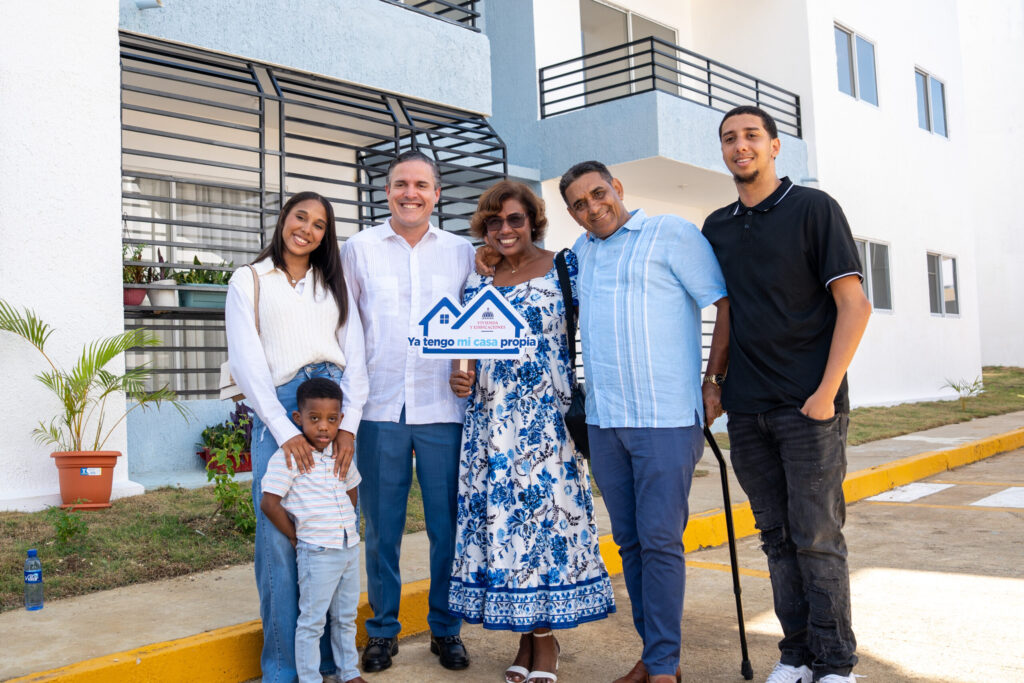
We start from an important reality: this Government has made a significant effort in terms of housing. 24,243 homes have been delivered through different housing programs, with a cumulative investment of approximately RD$64 billion.
In addition, through Dominicana se Reconstruye (Dominican Republic Rebuilds), more than RD$25 billion has been allocated for the repair of more than 57,000 homes.
Our work now is to accelerate what is in execution. Between October and December, we aim to complete 2,000 housing units, within a plan that contemplates another 9,300 homes by 2028.
But the Dominican housing challenge cannot be addressed solely by building homes with public resources.
The State must increasingly become an articulator of the system: combining land, subsidies, financing, banking, and the construction capacity of the private sector to multiply the reach of every public peso invested.
We want to take advantage of mechanisms such as trusts, strengthen alliances with developers and financial entities, and continue creating conditions that allow for the production of low-cost housing on a larger scale.
And our vision goes beyond delivering apartments. Housing also means habitat: safe communities, basic services, public spaces, and conditions that allow families to develop.
The aspiration is to turn MIVED into a regional benchmark for efficiency and best practices in housing policy, indicated Rodríguez

4. How many projects do you currently have under construction?
The Ministry manages a broad and diverse portfolio of projects: housing, hospitals, educational centers, judicial facilities, penitentiary centers, urban parks, and community transformation projects.
Rather than looking only at the total number of works, we are managing that portfolio using criteria of progress level, social impact, criticality, and pending obstacles. This allows us to establish priorities and concentrate resources where we can accelerate deliveries.
For example, the San Cristóbal Trauma Hospital is approximately 80% complete and will add 62 beds to the hospital system, with delivery scheduled for November.
The Nisibón Municipal Hospital, in La Altagracia, is around 95% complete and will add 26 hospitalization beds.
We are also advancing in the comprehensive intervention of Los Praditos, with an investment exceeding RD$130 million, working on sanitation, infrastructure, public spaces, and urban integration.
The UASD infrastructure in Santo Domingo Este is approximately 60% complete, while the Santo Domingo Oeste Judicial City is around 65%.
Additionally, we have nine penitentiary centers in different provinces. Among them is the CCR Anamuya, in La Altagracia, which is approximately 95% complete and will be delivered soon.
Our methodology is simple: identify what is missing to finish each work, establish those responsible, dates, and permanent monitoring.
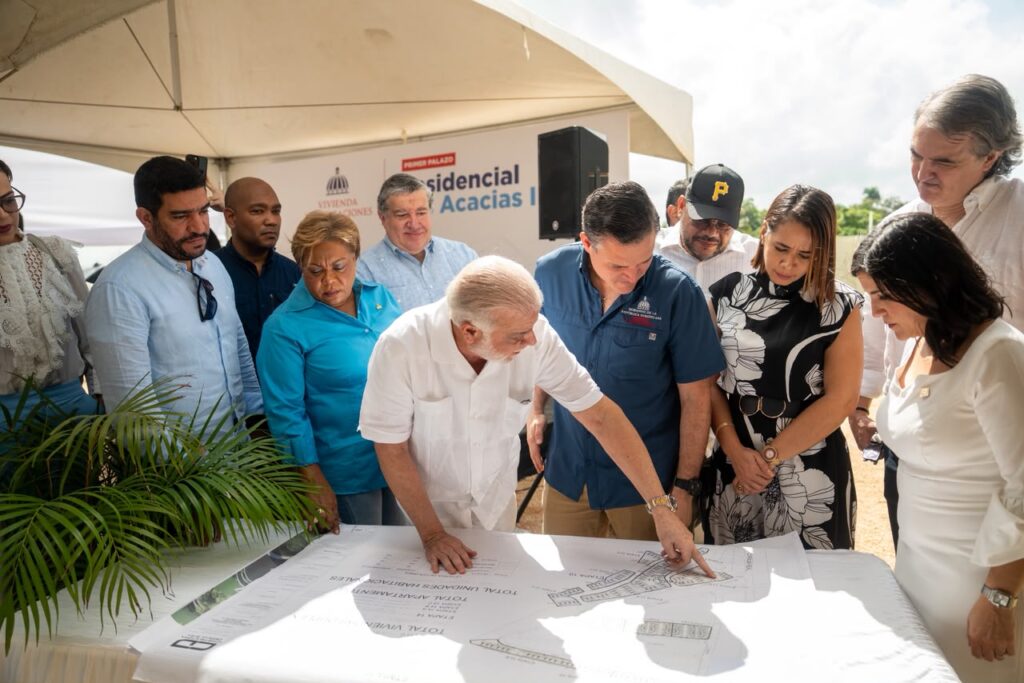
A public work acquires true value when it is completed, delivered, and begins to serve the people.
That will be one of the main criteria by which we will measure our administration: fewer stalled projects, better execution times, and more infrastructure put at the service of the Dominicans.