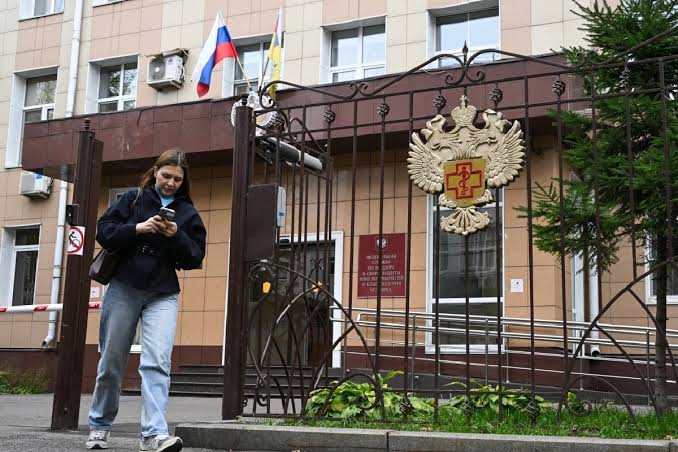



Authorities in Russia’s Irkutsk region are investigating a possible second death amid an alert over suspected pneumonic plague following the death of a 28-year-old laboratory researcher.
The second person reportedly died at a district hospital in Irkutsk, according to local media cited by the British newspaper Daily Mail. However, there is no official confirmation that the person died from plague.
The alert began after the death of Daria Shipilova, who worked at the Irkutsk Anti-Plague Research Institute. Shipilova became ill after an expedition to Buryatia and was hospitalized on September 29. She died on October 2 after spending three days in a hospital in Shelekhov, near Irkutsk.
Local reports said Shipilova may have been exposed to Yersinia pestis, the bacteria that causes plague, after a test tube containing bacteria reportedly broke during laboratory work. The circumstances surrounding her illness and death, however, have not been officially confirmed as pneumonic plague.

Following her death, authorities began identifying and monitoring people who had been in contact with her. Around 200 people have reportedly been placed under observation, while several hospitals in the region have introduced quarantine measures.
Russia denies plague outbreak
Russian health authorities maintain that Shipilova died from pneumonia of unknown origin and say the epidemiological situation in Irkutsk remains stable.
Rospotrebnadzor has denied that there is an outbreak of plague, while Kremlin spokesman Dmitry Peskov urged the public to rely only on information provided by Russian health authorities.
The World Health Organization has also said the cause of Shipilova’s death has not been confirmed. The organization is in contact with Russian authorities to verify the situation and assess its possible public health implications.

According to the WHO, contacts of the deceased researcher have been identified and are under surveillance. So far, none have reportedly developed symptoms.
The possible second death comes as authorities continue preventive measures in the region, including quarantine measures at some healthcare facilities and monitoring of people who may have been exposed.
Pneumonic plague is the most severe form of plague and affects the lungs. It can spread between people through respiratory particles and can be fatal if untreated, although it can be treated with antibiotics when diagnosed and treated early.