

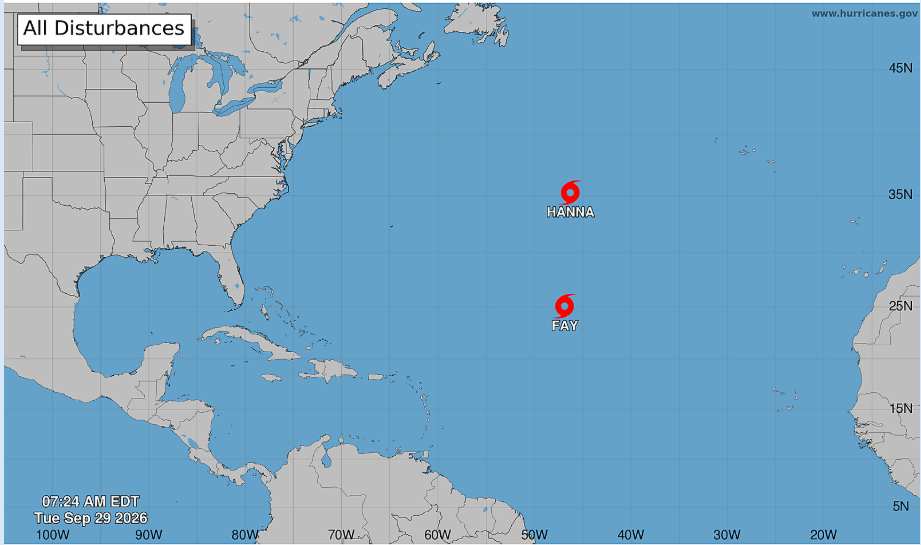

Miami (USA).- Tropical storms Hanna and Fay are moving across the central Atlantic without posing a threat to land for now, the U.S. National Hurricane Center (NHC) reported this Tuesday.
Hanna maintains maximum sustained winds of 75 kilometers per hour (45 miles) as it moves southeast at 24 kilometers per hour (15 miles).
You may be interested in: New tropical depression threatens southern Mexico as Hurricane Polo advances to the northwest
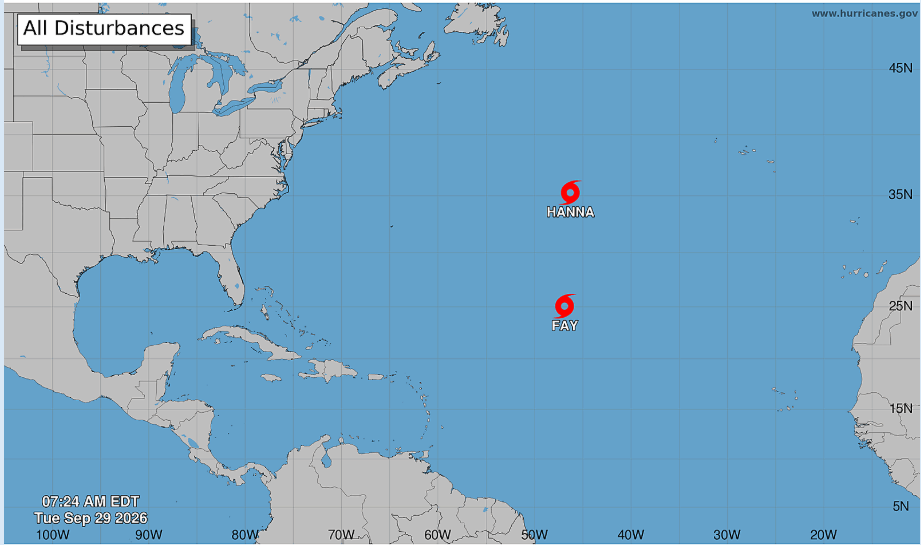
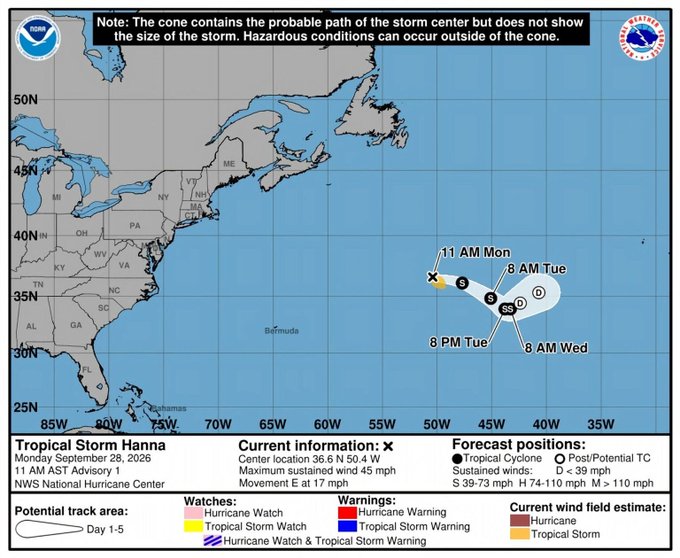
The system was located about 1,745 kilometers (1,085 miles) east-northeast of Bermuda and about 1,740 kilometers (1,080 miles) west of the Azores, according to the latest official bulletin.

The NHC expects Hanna to continue its movement toward the east-southeast for the next day or two and then turn toward the east-northeast, with small fluctuations in its intensity over the next few days.
The agency also forecasts that Hanna will likely become a post-tropical cyclone towards the second half of this week.
Meanwhile, Fay, which has dissipated on two occasions and subsequently strengthened again, continues moving southwest over the Atlantic Ocean with maximum sustained winds of 65 kilometers per hour (40 miles).
The storm was located about 2,360 kilometers (1,465 miles) west-southwest of the Azores and was moving toward the southwest at 20 kilometers per hour (13 miles).
The NHC expects Fay to maintain a southwest or southwest-west motion over the next few days, with an increase in its forward speed

The storm is also expected to weaken over the next day and become a post-tropical cyclone within the next 36 hours.
The Atlantic hurricane season is recording a record low because, so far, no hurricanes have formed, which meteorologists attribute to the El Niño phenomenon, which involves warmer-than-usual waters in the Pacific and this year may break historical records.
The U.S. National Oceanic and Atmospheric Administration lowered its forecast for the Atlantic season on August 6, estimating a maximum of 13 storms, below the historical average, but in the eastern Pacific it expects up to 22, above average, due to the strengthening of El Niño.