
The first trans woman to head a presidential secretariat “opens doors” in Uruguay

10:58 am
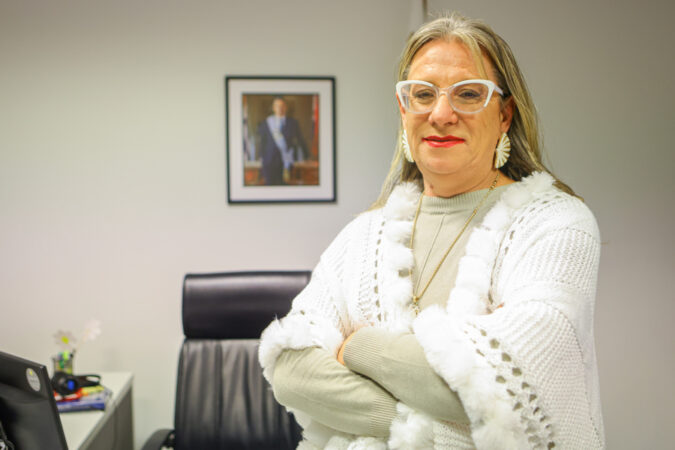
Montevideo, June 27 (EFE).- Opening doors so that in the next governments there are “many more trans people in decision-making positions” is one of the great challenges that Collette Spinetti assumes with her new role, the first trans woman to head a secretariat of the Presidency in Uruguay.
When she learned that she had been appointed by Yamandú Orsi’s team to head the Secretariat of Human Rights, the 59-year-old literature and dance professor, tireless activist and founder of the Trans Union of Uruguay and the Trans Collective of Uruguay, cried and asked herself a question.
“I was very excited, first by the president’s confidence, which the Government placed in me, and also because I thought ‘How many trans women before me fought so that today, 200 years after the country’s independence, I can be the first trans woman in a position in the Executive and (specifically) in the Presidency?'”, she says in an interview with the EFE Agency.
Open doors
She did it, she says, amid the surprise of a decision that was not confirmed to her until she was being summoned to her first work meeting and thinking a lot about her family and her father, whom she describes as “a leader”. “There were many mixed feelings, obviously happiness. And (because of) this that I always said while I was in civil society: we are here to open doors for other people to enter. That’s how I feel. This is opening a door so that in future governments there will be many more trans people in decision-making positions,” she highlights. Who says they don’t believe their trans identity weighed on the decision, because what defines each position is “the person and their ability to perform that position”, only then began to assess the responsibility assumed. “When they told me ‘you are the voice of Uruguay in human rights’, I said ‘don’t tell me more things because I tremble more'”, recalls who also assures having felt the pressure in front of the trans community, because all eyes turned to her. “Not so much now, but at first I was looked at with a magnifying glass and with this of the social mandates ‘¿how a trans woman?’ But I always say that everything is proven with work and that’s what we’re doing”, she adds while saying she feels that, being the first of her community to reach that role, she has to “be excellent” or, at least, get close to perfection by working “with great care and responsibility”.Dialogue and Learn, in Complex Times
Categorical in that her priority will be “that human rights reach the whole world, without distinction”, she does not hide that, having worked all her life for transgender people, she has “a lot to learn” from the other populations for whom she must watch over from her new role. Aware that they will learn directly from Afro-Uruguayans, migrants, people with disabilities, those deprived of their liberty, or descendants of indigenous people – with whom, they indicate, Uruguay has “a debt” due to their historical invisibility – Spinetti is aware of the challenge of facing it in times of “regression” for human rights globally. “I am very concerned about the extreme right,” he replies to the question of what dangers that already affect other countries he fears will emerge in Uruguay, and emphasizes the irrationality of those who, even being victims of their policies, maintain the anti-immigrant discourse “that the far-right, united with Pentecostal churches, imposes.” To avoid this, an unavoidable path for the secretary is “dialogue”, a path that someone who considers “the permanent dialogue between civil society and the State” as one of its central lines of work claims to promote.Questioning the Laws
Near the International LGBTQ+ Pride Day, Spinetti also refers to the challenge of enforcing a key law for their group, the Comprehensive Trans Law, which, approved in 2018, is still not fully complied with. In the four months he has been in office, he has worked with other authorities to move towards this, he specifies that its fulfillment will take time because it implies actions in terms of access to state positions reserved by quotas, education, health and housing. In parallel, the secretary promotes “questioning” human rights laws like this one to evaluate possible modifications or even promote new regulations. “While it names non-binary people, it doesn’t actually grant them any rights, so for me there has to be a reform of the law in many aspects,” says the person who is also seeking a review of the law protecting people of African descent and the country’s anti-discrimination law. EFE
We are a multiplatform outlet offering news and television content. The fastest-growing news outlet in audience in the history of Caribbean communication.


#Most read
- 1.VIDEO: Father throws chair at judge after driver gets 120 hours of community service for killing his daughter
- 2.Dominican woman sentenced to 25 years for killing fellow Dominican friend in Orlando
- 3.British man found dead and naked in Italy had attended pagan gathering involving drugs
- 4.He shot her, mutilated her and put her body through a meat grinder: boyfriend kills businesswoman and her daughter in Russia
- 5.Darya Shipilova, the young laboratory worker whose death triggered health measures in Russia
- 6.5D Cinema in Japan surprises the world with an immersive experience that goes viral
- 7.NYPD searches for Dominican man wanted in death of young woman who fell from 15th floor
- 8.Biography of Juan Ramón Gómez Díaz: The Media Mogul in the Dominican Republic
- 9.Charytín Goyco reveals she was bitten by a black widow spider
- 10.Forensic student obsessed with Dexter admits killing woman in Airbnb ‘murder room’

Newsletter
Subscribe to our newsletter to receive our latest articles instantly!