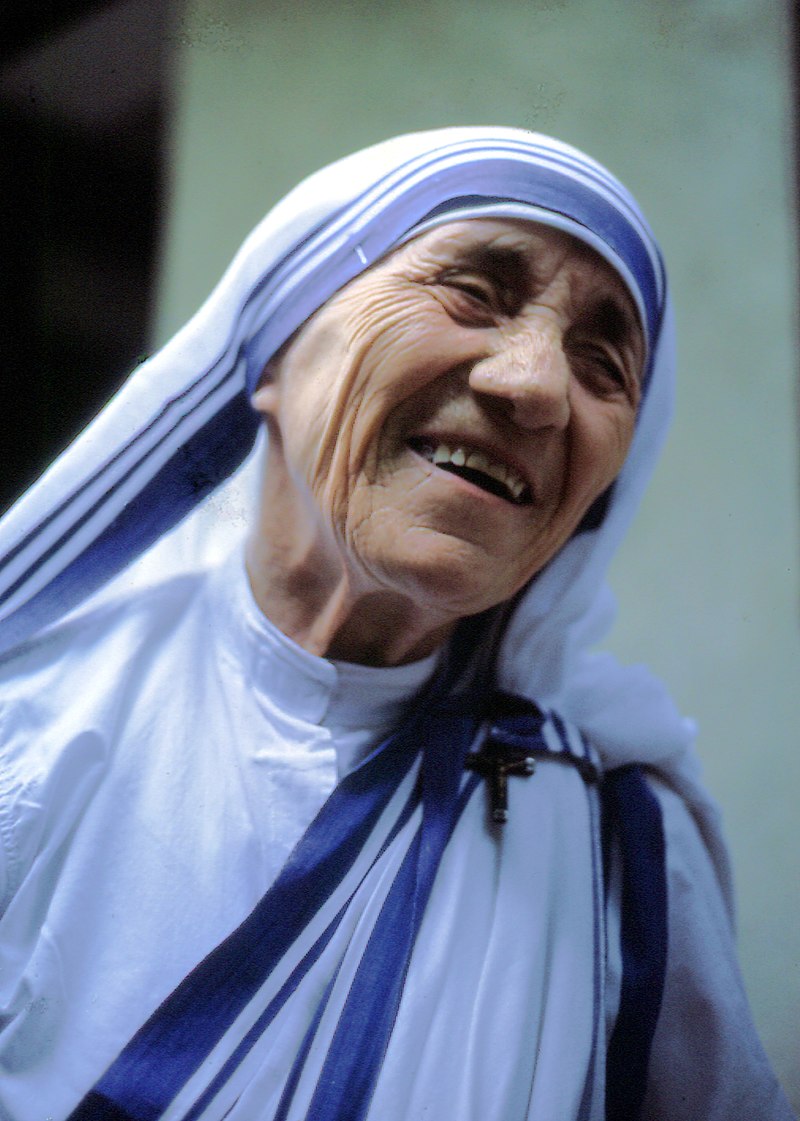
The sound of Mother Teresa’s footsteps in the corridors of Calcutta seemed silent, but her presence was felt in every corner. Each gesture, each smile, and each outstretched hand told a story of compassion, faith, and absolute dedication. From Skopje to the Indian capital, her life became a journey marked by the mission to embrace the most forgotten, those she called the “poorest of the poor”.
Today, 28 years after her death, the world remembers this small woman with a big heart, Anjezë Gonxhe Bojaxhiu, known worldwide as Mother Teresa of Calcutta, and reflects on a legacy that continues to inspire solidarity and fraternity all over the planet.
Life Philosophy and Legacy
Mother Teresa taught that
mercy knows no borders and that every small gesture of love can transform lives. Her most well-known phrase,
“Perhaps I don’t speak their language, but I can smile”, reflects her simple and profound approach.
Even in her final years, facing illness and the so-called
“dark night of the spirit”, she continued serving the most needy until her death on September 5, 1997. Her legacy continues to live on through the Missionaries of Charity, present in more than
123 countries and with more than
4,000 religious sisters, demonstrating that love and solidarity can transcend borders, cultures, and generations.
Your Life
Mother Teresa was born as
Anjezë Gonxhe Bojaxhiu on August 26, 1910, in Skopje, present-day North Macedonia. From a young age, she received religious education and was formed in values of service and solidarity that would shape her destiny. At 18, she decided to dedicate her life to God and moved to Ireland to join the Institute of the Blessed Virgin Mary, where she received the name
Mary Teresa. Shortly after, she traveled to India, teaching for almost two decades in schools for young people from wealthy families.
Her life changed radically on
September 10, 1946, when she experienced what she would call her “call within the call”: a spiritual moment in which Jesus revealed his pain to her in the face of the most needy and invited her to become the face of His mercy. That moment defined her life’s mission and led her to dedicate herself to the marginalized of Calcutta.
Religious Vow and Founding of the Missionaries of Charity
In 1950, Mother Teresa founded the congregation
Missionaries of Charity, with the mission of attending to the “poorest of the poor”: the sick, abandoned, and marginalized of society. She adopted a white sari with blue borders, a symbol of humility and service, and soon several of her former students joined her. The congregation was recognized by the
Archbishop of Calcutta in 1950 and by
Paul VI in 1965, expanding throughout Africa, Latin America, communist countries, and even the Soviet Union.
Their religious vow included poverty, obedience, and chastity, but also an absolute commitment to humanity. Their work transcended borders and cultures, bringing material and spiritual aid to the most needy and consolidating a global legacy of solidarity and mercy.
Nobel Peace Prize and International Recognition
The tireless work of Mother Teresa was internationally recognized in 1979, when she received the
Nobel Peace Prize. In her speech, she highlighted the importance of life and the defense of the most vulnerable:
“The greatest destroyer of peace is abortion”, she stated, reminding that every life deserves respect and protection.
Her figure was also appreciated by religious and world leaders. She maintained a close relationship with
John Paul II, who visited the Calcutta house where she attended to the dying, and with
Paul VI, who supported her humanitarian initiatives. The canonization of Mother Teresa in 2016, less than two decades after her death, consolidated her recognition as an example of holiness and dedication to others.