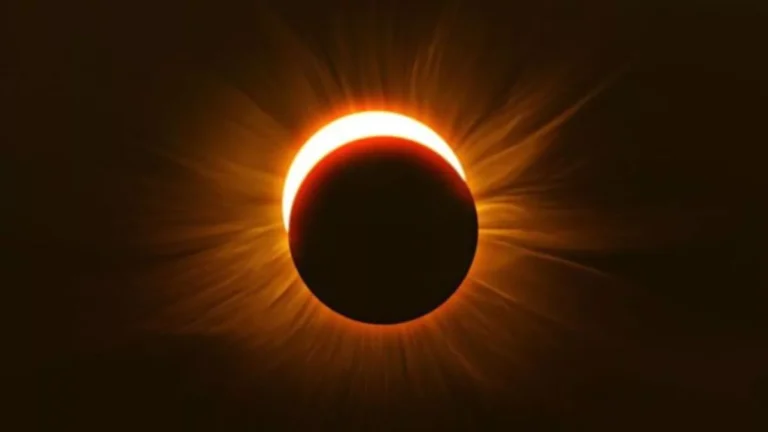



The total duration of the August 12th eclipse will be 264 minutes (a little less than 4 and a half hours)
Madrid.- The world has experienced 16 total solar eclipses so far in the 21st century, including the one on August 12, 2026, which has Spain as a privileged location for its observation, although Europe is one of the least favored continents for it.
Only one other has been witnessed on the European continent in 2015, in the Norwegian islands of Faroe and Svalbard.
A total solar eclipse is a phenomenon in which the Moon completely covers the Sun, and it can cross more than one continent. It is only witnessed by those observers who are located in the so-called path of totality of the eclipse.
You might be interested in: The longest solar eclipse in 100 years now has a date and you can’t miss it

A world map of this phenomenon during the 21st century places Asia in the lead by number of occurrences, where they have been seen on six occasions, according to NASA’s eclipse catalog.
The imminent eclipse on the 12th will cross Spain from Galicia to the Balearic Islands and will also be visible in its totality from parts of Greenland, Iceland, the Atlantic Ocean, the far north of Siberia (Russia), and a small corner of Portugal.
In other areas of the Northern Hemisphere, including parts of the U.S., Canada, Europe, and Northwest Africa, people will be able to witness a partial solar eclipse.
Spain has become, on this occasion, a tourist destination for astronomy lovers from all over the world. According to calculations by the Ministry of Economy, it will generate an increase of 446,700 tourists in the numerous provinces affected by the totality and nearby attraction areas during the week of August 10th to 16th.
The total duration of the August 12th eclipse will be 264 minutes (a little less than 4 and a half hours), highlights the National Astronomical Observatory (OAN). In Spain, the duration of the totality phase depends on the location but will not exceed two minutes.

Longest total eclipse
The longest total solar eclipse since 2001 was the one on July 22, 2009, reaching six minutes and 38.86 seconds, passing through India, Nepal, Bangladesh, China, and the Pacific.
Below are the dates and locations where total solar eclipses have been seen during the 21st century:
- Asia: March 29, 2006, August 1, 2008, July 22, 2009, November 13, 2012, March 20, 2015 and March 9, 2016, and the path crossed Turkey, Russia, Mongolia, China, India, Indonesia or East Timor.
- Africa: June 21, 2001, December 4, 2002, March 29, 2006, and March 20, 2015, observed in Angola, Zambia, Mozambique, Libya, Egypt, Gabon, Congo, or Uganda.
- South America: March 29, 2006, July 11, 2010, July 2, 2019, and December 14, 2020. Brazil, Chile (including Easter Island), and Argentina were the locations where they could be observed.
- North America: August 1, 2008, August 21, 2017, and April 8, 2024, including Canada, the United States, and Mexico.
- Oceania: December 4, 2002, July 11, 2010, and November 13, 2012, covering Australia and parts of the South Pacific.
- Europe: March 20, 2015, in the Faroe Islands and the Svalbard archipelago (Norway) and August 12, 2026, in Spain as a prime location, as well as in areas of Iceland, Greenland, the far north of Siberia, the Atlantic Ocean, and a small portion of Portugal.
- Antarctica: it has been possible to enjoy this astronomical spectacle, so far, on November 23, 2003, and December 4, 2021.
It is also necessary to cite during this century two solar eclipses considered hybrid, that is, they went from annular to total as the Moon’s shadow moved across the planet, and they were on November 3, 2013, and April 20, 2023.