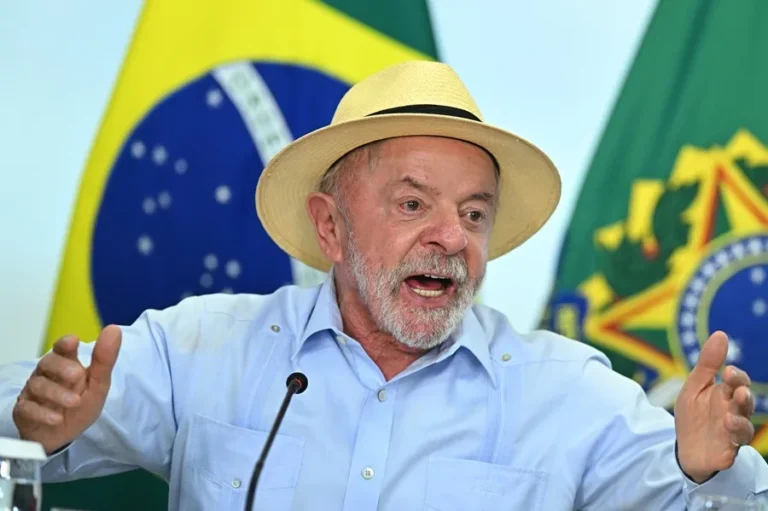

Today’s article could well be intended to vindicate the October 7th installment titled “Lula is a dark horse,” following the result of the runoff in Brazil, where President Lula da Silva triumphed under epic conditions and rewrote recent electoral history, as no candidate who was surpassed in the first round had ever won in the second.
My analysis at the time was not based on a desire for Lula to retain power, but on the roots sown by his government in the heart of deep Brazil, the one that is not made visible; in the millions who ate from the trash amidst fights with others who wanted that same trash and even that was not enough. Lula sowed, giving reasons to live to these millions of excluded people… And he harvested.
However, it is appropriate for me to focus today on the Haitian situation, not because it is different from what it was yesterday—deaths, kidnappings, extortions, displacements—but because of something I consider to be of greater significance.
I am referring to the lack of clarity in the treatment of the issue by external actors seeking a way out of the situation, as they focus mainly on the criminal aspect of these groups, but lose sight of the political and sociological angles.

Given the purely gang-related approach being applied to these groups, it will be difficult to combat them. Firstly, I believe they should be treated as politically belligerent, coaxing their leaders through dialogue and forcing them—using this strategy—to consider themselves relevant, lay down their arms, and control their followers.
It is not that they are important in political terms, but that they must be made to believe that they are, and from there to domination is a simple step.
The other option is the one with the greatest penetration. It is reliably established that criminals who move significant sums of money—which is the case with the Haitian militias—create social ties that serve as a shield to evade authority.
Pablo Escobar in Colombia, Joaquín “Chapo” Guzmán in Mexico, and before them hundreds of criminals globally, acted as they pleased because they created networks of community complicity that helped them evade state persecution.
In Haiti, those models are being replicated. Hundreds of people in the communities where the militias operate benefit from the donations made by their leaders, which generates a loyalty that no military chief or strategist arriving from other latitudes is in a position to understand.
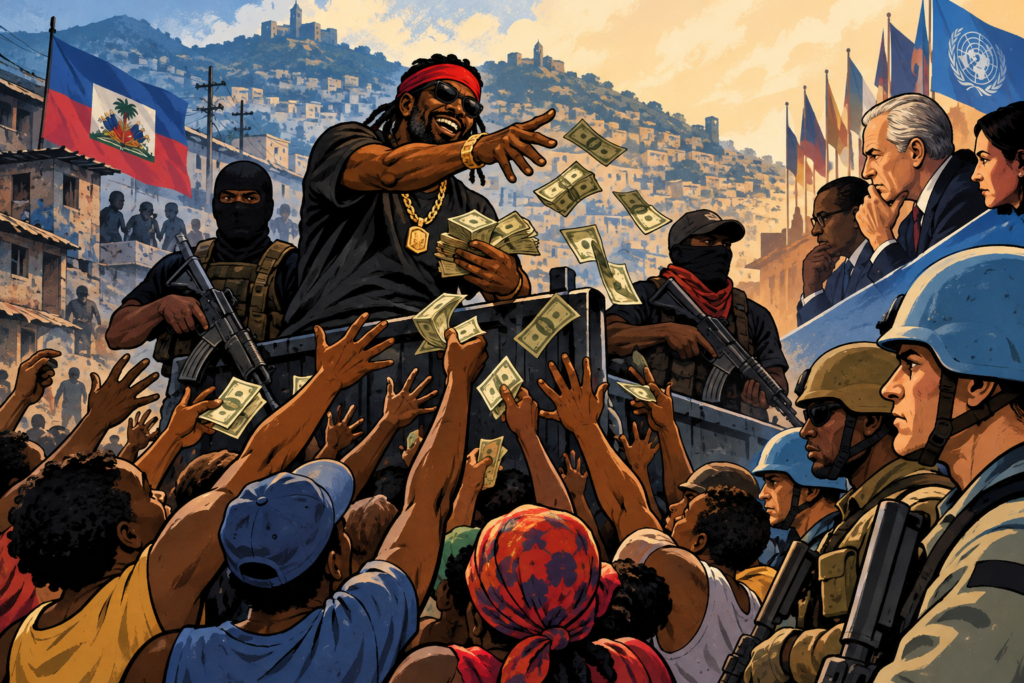
These links have been observed in a miniaturized way with the handing out of money by the handful by a gang or militia leader who, from atop a platform, throws bundles of bills to a crowd excited by the rain of money that falls and that they manage to catch.
Do the bosses of the bombastic Gang Suppression Forces believe that the beneficiaries of these displays of economic power will turn in those who provide them with one, two, or three meals a day in a country where misery is the norm?
I am sure that is not the case. Therefore, as long as the army is used to combat these irregular militias, we regret to conclude that failure is guaranteed.