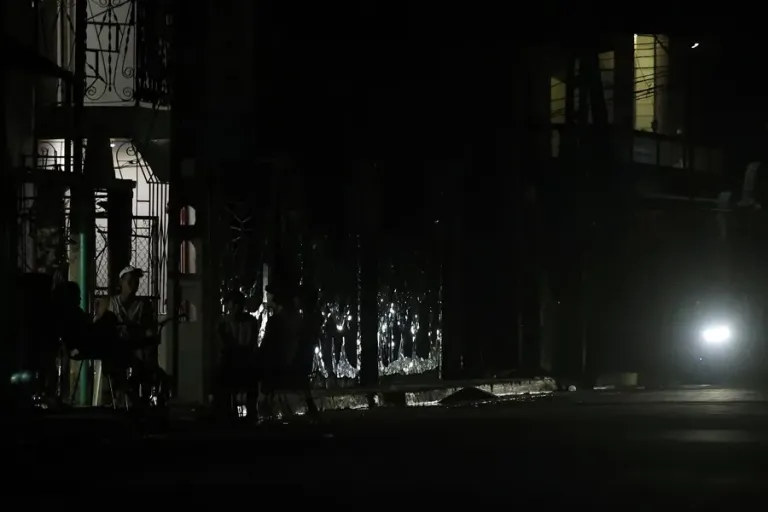

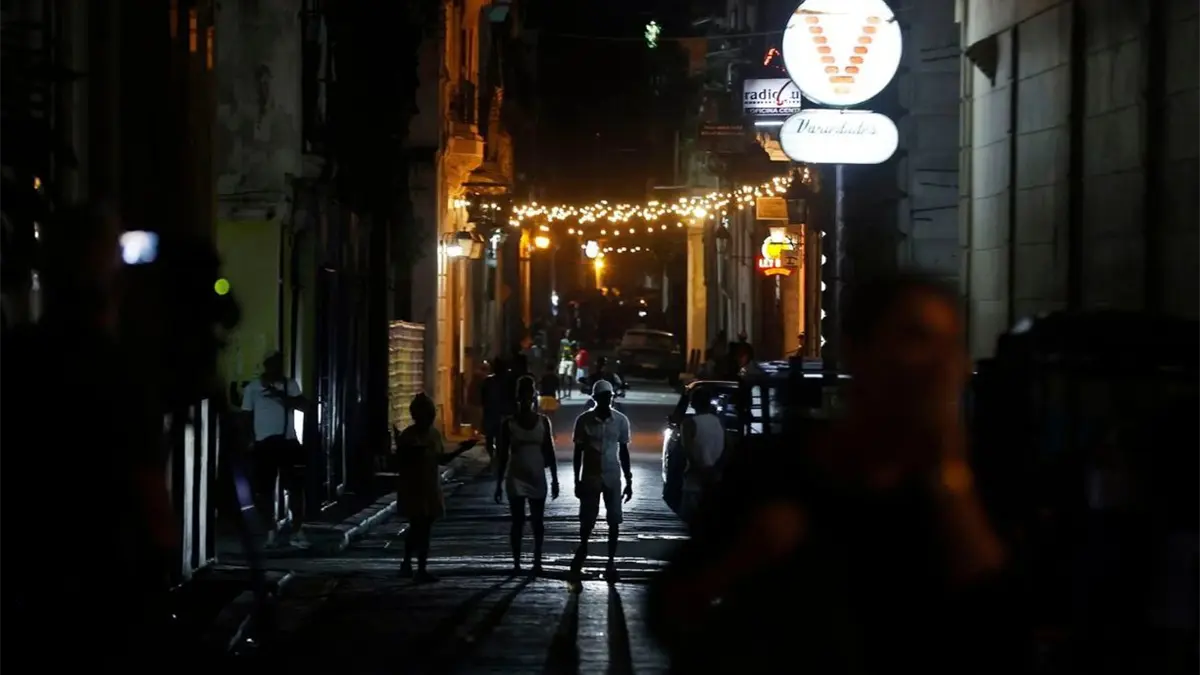

Havana.- Cuba is gradually restoring electrical service after more than 24 hours since the start of the second national blackout this week and the fourth in 2026, with the entry into operation of several of its sixteen thermal power plants, as reported this Saturday by the Ministry of Energy and Mines (Minem).
Currently, the National Electric System (SEN) is linked from Havana (west) to Ciego de Ávila (center) with a microsystem, as reported by the director of Electricity of the Minem, Lázaro Guerra, to state television.
In addition, the official explained that the thermoelectric power plants of Santa Cruz (west), Nuevitas (center-east), and the Energás Jaruco and Varadero plants, in the western zone, are already contributing energy to the SEN.
The specialist said that in the coming hours, the reincorporation of important generating plants is expected, such as the Carlos Manuel de Céspedes in Cienfuegos (center), the Antonio Guiteras (west), as well as those of Felton and Renté, both in the eastern part of the island.

You can also read: Cuba restores the Electric Power System after its second national collapse this week
In Havana, the state-owned company Unión Eléctrica (UNE) reported that electricity supply has been restored to only 12.9% of its customers, with priority given to circuits where hospitals, water supply facilities, and other vital centers are located.
The reconnection of the SEN involves creating microsystems or “islands” with simple start-up sources -solar, hydroelectric, and generation engines- to begin generating energy, and then they interconnect with each other to bring electricity to small regional areas that later interconnect and allow for the energizing of thermal power plants and synchronizing them with the SEN.
During that process, at other times, support from generation engines (diesel and fuel oil) distributed throughout the country was used (because they are quick to start and do not require electricity).
However, the aforementioned generating equipment is, for the most part, out of operation due to a lack of fuel since last January, when the United States government imposed an oil blockade on the island that prohibits the arrival of imported oil and derivatives.

Cuba recorded this new “national disconnection” on the eve, and from that moment on, the procedure to reconnect the SEN was activated, the collapse of which was caused by a failure in the 220-kilovolt line connecting the cities of Santa Clara and Sancti Spíritus (center), which caused “the division of the SEN and the shutdown of several thermal units,” as explained by the Minem.
The previous System failure was reported last Monday, and recovery was achieved about 36 hours later -on Wednesday- when all provinces were reconnected to the SEN.
The island’s energy situation is critical, with prolonged power outages, which in Havana add up to twenty hours a day and in the provinces reach up to two days in a row without supply.
Since mid-2024, Cuba has been experiencing a deep crisis in the sector, with a history of nine national blackouts and many other partial ones.

The island’s government has acknowledged that the situation of the SEN is “critical” and “extremely tense,” marked both by the U.S. oil blockade and by a deeply obsolete energy system with decades of exploitation and a chronic deficit of investment.