

Does the country need a Ministry of Justice? Jurists debate its impact

10:10 am
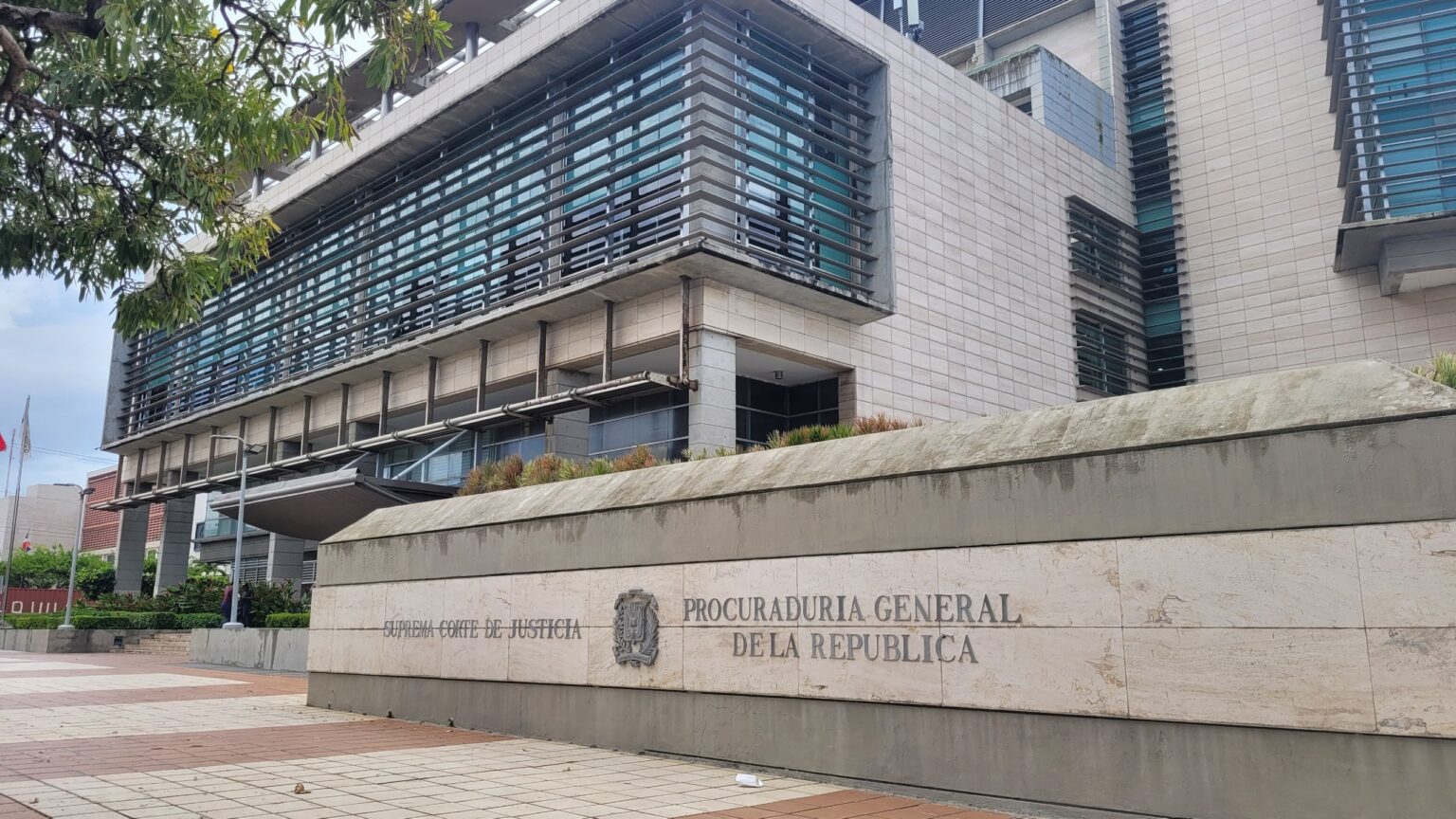
Santo Domingo.- The recent approval in first reading of the bill that proposes the creation of the Ministry of Justice has generated an important debate in the legal community. Lawyers consulted by De Último Minuto have divided opinions: while some consider it a necessary institutional advance, others question its relevance and warn about the risks of a greater concentration of power in the Executive.
Lawyer Edward Moreno argues that this initiative represents an important step in restoring balance to the functions of the State and correcting historical distortions. He recalls that since the disappearance of the Ministry of Justice in 1964, the Public Prosecutor’s Office has assumed tasks that do not correspond to it, such as prison administration and the representation of the State in civil litigation. For Moreno, re-establishing this institution would allow the Public Prosecutor’s Office to focus exclusively on its constitutional role: criminal investigation and public action.
However, lawyer Dángela Ramírez Guzmán considers the creation of a new ministry unnecessary. In her opinion, although this figure exists in other countries, it does not respond to an urgent need in the Dominican context and could generate confusion about institutional competencies. Ramírez warns that the new ministry could excessively strengthen the Executive Branch, to the detriment of democratic balance. As an alternative, she proposes to strengthen the Attorney General’s Office budgetarily to face the burdens of the judicial system, an argument that supports the project.
You may be interested
Ramírez also points out that the inclusion of victim protection among the functions of the new ministry is an interesting element, but warns that it would require a constitutional reform. As he explains, Article 69 of the Constitution assigns this function to the Public Prosecutor’s Office, so its transfer to another institution would imply a change in the current legal framework. The project envisions the Ministry of Justice taking on functions such as the coordination of the penitentiary system, registry and notarial services, and the supervision of INACIF, currently dispersed among different entities. According to Moreno, this does not represent a duplication of structures, but a reorganization aimed at improving administrative efficiency, in line with Article 134 of the Constitution and the State Administrative Efficiency Law. For Ramírez, however, this mandate raises the need to present a sustainability report justifying the creation of the new ministry, something that, so far, has not been made public.
We are a multiplatform outlet offering news and television content. The fastest-growing news outlet in audience in the history of Caribbean communication.


#Most read
- 1.Magnitude 8.0 earthquake reported off Panama’s Pacific coast
- 2.VIDEO: Earthquake reportedly causes damage inside building in Panama
- 3.VIDEO: Father throws chair at judge after driver gets 120 hours of community service for killing his daughter
- 4.Dominican woman sentenced to 25 years for killing fellow Dominican friend in Orlando
- 5.Biography of Juan Ramón Gómez Díaz: The Media Mogul in the Dominican Republic
- 6.British man found dead and naked in Italy had attended pagan gathering involving drugs
- 7.Dominican man shot by ICE agents in New York identified as Oscar Belgal
- 8.Pamela Infante clarifies situation with Wander Franco
- 9.NYPD searches for Dominican man wanted in death of young woman who fell from 15th floor
- 10.He shot her, mutilated her and put her body through a meat grinder: boyfriend kills businesswoman and her daughter in Russia

Newsletter
Subscribe to our newsletter to receive our latest articles instantly!