

Santo Domingo.– The Global Institute of Higher Studies in Social Sciences (IGLOBAL) held the panel “Artificial Intelligence, Justice and Public Administration in the Digital Age”, an academic space dedicated to the analysis of the transformations that new technologies are generating in the justice system, the protection of fundamental rights, and the functioning of public administration.
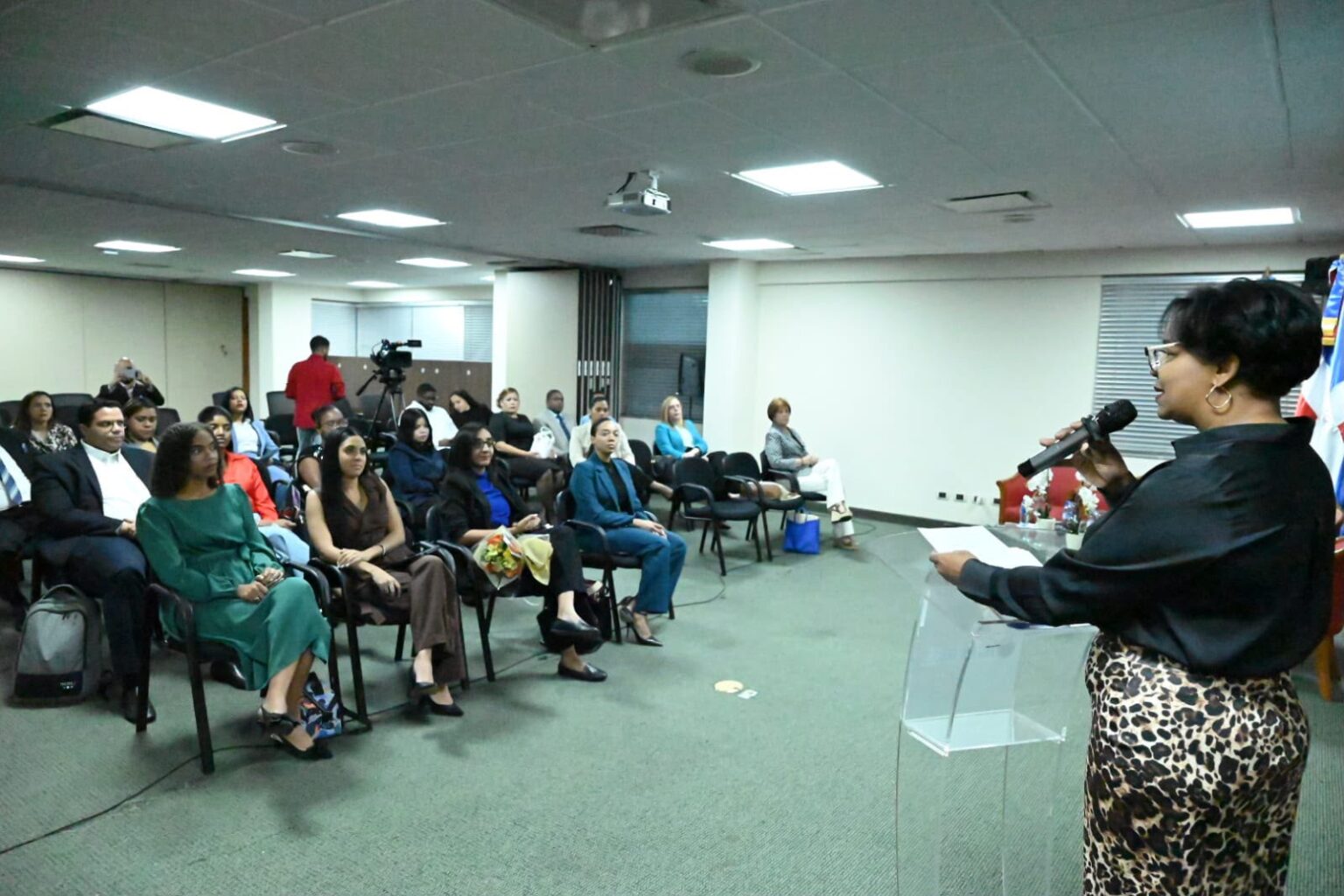
The activity, held on Thursday, July 9, at the headquarters of the Global Democracy and Development Foundation (Funglode), brought together professionals, students, and specialists interested in the legal and institutional challenges arising from the accelerated incorporation of artificial intelligence and digital tools in public services.
The panel featured the participation of Emely Veras, who addressed technological innovation applied to the Civil and Commercial Chamber; Nathalie M. Fernández, with a presentation focused on artificial intelligence and the protection of fundamental rights; and Paola Báez, who analyzed the progress and challenges related to digitalization and electronic signatures in public administration. The moderation was led by Aida Montero, director of the Juan Bosch Library (BJB), who facilitated the dialogue between the panelists and the attending audience.
During her speech, Emely Veras highlighted the importance of leveraging technological tools to modernize judicial processes, streamline case management, and improve the efficiency of services offered to the public. In that sense, she proposed that innovation must contribute to building a more accessible, efficient justice system capable of responding to the new demands of society.

You can also read: IGLOBAL analyzes renewable energy opportunities
For her part, Nathalie Fernández focused her presentation on the challenges posed by the development of artificial intelligence for the effective protection of fundamental rights. She warned of the need to ensure that the use of automated systems occurs under criteria of transparency, accountability, and respect for human dignity, preserving legal guarantees in the face of the advancement of new technologies.
In turn, Paola Báez addressed the digital transformation process of public administration and the importance of the electronic signature as an instrument to streamline procedures, strengthen legal certainty, and improve the provision of state services.
Likewise, he highlighted the need to continue developing institutional capacities and appropriate regulatory frameworks that allow for progress towards more efficient public management that is closer to the citizen.
The speakers agreed that technological transformation represents an opportunity to strengthen institutions and improve the quality of public services, but it also demands legal, regulatory, and ethical responses capable of guaranteeing the protection of citizens’ rights, the transparency of digital systems, and accountability in the use of artificial intelligence.
The meeting also allowed for reflection on the need to strengthen the training of legal professionals and public servants in the face of a scenario characterized by the automation of processes, the increasing use of data and algorithms, as well as the incorporation of new technological tools in institutional decision-making.
With this academic meeting, IGLOBAL reaffirms its commitment to generating spaces for analysis and debate on the great challenges of digital transformation, promoting a vision in which technological innovation contributes to the strengthening of justice and public administration, without losing sight of an essential principle: the development of artificial intelligence must always be accompanied by solid institutions, legal guarantees, and effective protection of fundamental rights.