

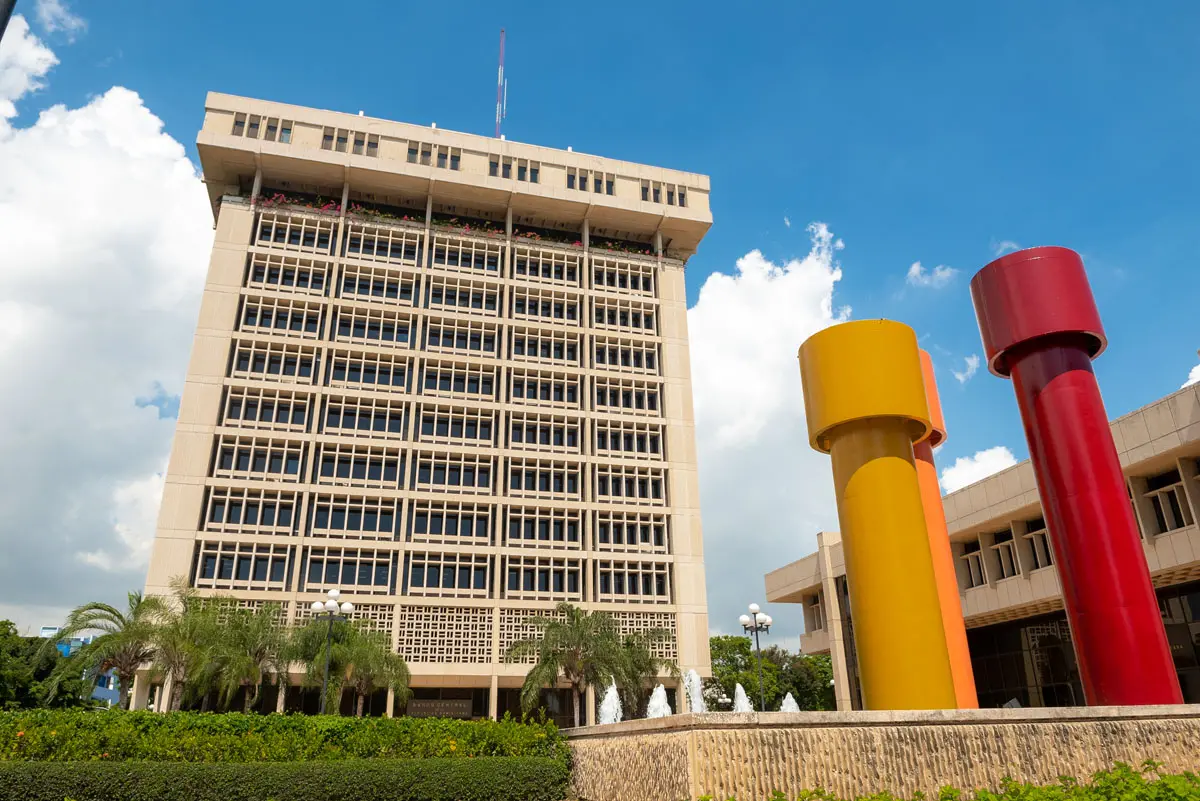

The Central Bank of the Dominican Republic (BCRD) reports that, during the first half of 2026, the flow of remittances to the country reached US$6,219.3 million, recording a year-on-year increase of 6.7%.
Specifically, in June, US$1,049.3 million was captured, a figure that exceeds the amount recorded in the same month of 2025 by US$125.5 million. This result represents a year-on-year growth of 13.6%, a rate higher than the 10.6% year-on-year observed in May 2026.
This growth in June occurs despite the complex international environment currently prevailing. The persistence of conflicts in the Middle East, which have raised the prices of oil and its derivatives, generating greater inflationary pressures and reducing the disposable income of households.
The institution points out that this behavior is largely due to remittances sent by the diaspora residing in the United States, the country that originated 81.4% of the formal flows received in June, equivalent to US$780.7 million. This result is in line with the performance of the U.S. economy. In particular, the Institute for Supply Management (ISM) non-manufacturing Purchasing Managers’ Index (PMI) recorded a value of 54.0 in June, reflecting the sustained expansion of the services sector, a segment that accounts for a significant proportion of employment for Dominicans in that country. Likewise, the general unemployment rate in the United States stood at 4.2% in June 2026, lower than the 4.3% recorded in May 2026, with the creation of 57,000 new jobs during that period.

Likewise, the BCRD highlights the receipt of remittances through formal channels from other countries during the month of June. In this category, Spain recorded shipments of US$61.8 million, equivalent to 6.4% of the total, consolidating its position as the second-largest source country, in line with the size of the Dominican diaspora abroad. It was followed by Italy, with 1.3%, as well as Haiti and Switzerland, with a 1.2% share of the flows each. The rest of the funds were distributed among nations such as France, Canada, and Germany, among others.
Regarding the geographical distribution of remittances, the BCRD points out that the National District received 51.0% of the flow entered in June, followed by the provinces of Santiago and Santo Domingo, with shares of 9.6% and 6.8%, respectively. These figures show that the country’s metropolitan areas concentrated more than two-thirds (67.4%) of the total resources received during that month.
These foreign currency inflows have favored the relative stability of the exchange rate observed at present, such that, as of July 8, 2026, the national currency appreciated 7.2% against the US dollar and, at the close of the first semester, it appreciated 5.6%, in both cases with respect to December 2025. These higher external flows also allow for maintaining an adequate level of international reserves, which at the end of June stood at US$15,821.6 million, representing 11.3% of GDP and covering about 5.7 months of imports, indicators above the thresholds recommended by the IMF.
The most recent BCRD outlook for the external sector anticipates that the positive trend in foreign currency inflows will persist throughout 2026. In this regard, tourism revenues are projected to exceed US$11.9 billion, while remittances are expected to be above US$12.2 billion. Likewise, total exports are estimated at around US$17.3 billion, and foreign direct investment (FDI) is expected to surpass US$5.3 billion. The dynamism of these flows, together with other exported services (approximately US$3.2 billion), would allow for a total foreign currency inflow exceeding US$50.2 billion by the end of 2026.

The Central Bank reaffirms its commitment to monitoring the current economic environment to continue taking the necessary measures to mitigate the impact on the Dominican economy of the challenging international landscape, in order to guarantee price and foreign exchange market stability.