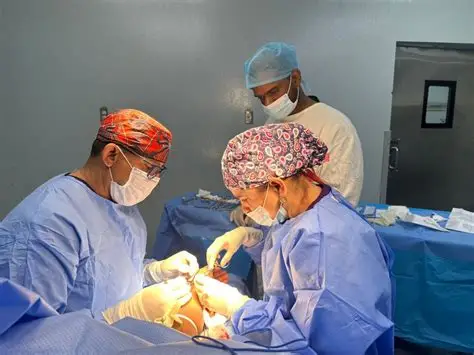
Santo Domingo.– The National Health Service (SNS) recorded a historic record of 25,395,290 specialized services offered between January and June 2026, the highest production achieved by the Public Health Network in a first semester.
The SNS has reinforced the frequency and permanence of follow-up meetings with technical teams at the headquarters, regional directors, and hospital directors; it has carried out supervision and evaluation visits to health facilities to verify the quality of services, identify opportunities for improvement, and accelerate the response to the needs of each center.
Likewise, the hospital network has continued to be strengthened with the delivery of medical equipment, the optimization of care processes, permanent monitoring of performance indicators, the promotion of humanized care, and the strengthening of the hospitals’ problem-solving capacity, with the goal that more and more patients receive timely care without the need to be referred to other centers.
You can also read: SNS and National Police strengthen joint actions to
As a result of these actions, between January and June 22, 2026, the SNS invested RD$397,044,550.72 in equipping hospitals and Primary Care Clinical and Diagnostic Centers, strengthening critical areas and expanding the diagnostic, surgical, and specialized care capacity of the Public Network.
More Read

During the administration of President Luis Abinader, the strengthening of the National Mental Health Network was also consolidated, which currently has 47 Crisis Intervention Units, 25 of them enabled during the first six months of Dr. Julio Landrón’s management, allowing for 300 beds for the care of patients in mental health crises in the Public Network. This progress is part of the institutional goal of reaching 500 beds before the end of the year, to expand timely access to these specialized services throughout the country.
During the first semester of the year, 4,190,871 consultations, 224,814 hospitalizations, 347,416 surgeries, 15,702,742 laboratory tests, 2,408,155 imaging studies and 2,521,292 emergency visits were provided, for a total of 25,395,290 specialized services.
When comparing these results with the same period in 2019, prior to the transformation process of the Public Health Network, the impact of the investments made in infrastructure, equipment, and the strengthening of services is evident.
More Read


In that sense, consultations increased by 614,683, surgeries by 172,715, laboratory tests by 7,120,547, imaging studies by 1,196,394, emergency care by 172,981, and hospitalizations by 1,900, figures that reflect a greater response capacity of health facilities and greater public confidence in the Public Network.
The executive director of the SNS, Dr. Julio Landrón, highlighted that these results are the fruit of the commitment of the health personnel and the continuous process of strengthening the Public Network, just as the Head of State has instructed.
“This production record does not only represent an increase in figures; it means that millions of Dominicans received timely and quality care in our hospitals and health centers. These results also reflect the investments made to strengthen the equipment of our establishments and the expansion of the National Mental Health Network,” he expressed.
First Level also strengthens your responsiveness
The strengthening of the healthcare system is also reflected in the First Level of Care, which during January-June 2026 offered 5,443,181 services, consolidating its role as the gateway to the health system.
Within that production, 2,796,578 consultations, 365,127 home visits, 348,900 dental procedures, and 1,684,662 diagnostic services were recorded, consisting of laboratories, imaging, and Pap smear tests.
More Read

The National Health Service reaffirmed its commitment to continue strengthening the Public Network through the continuous improvement of hospital infrastructure, the equipping of health facilities, permanent monitoring of management, the optimization of care processes, and the development of strategies that allow for the provision of increasingly timely, safe, humanized, and higher-quality services for the entire population