

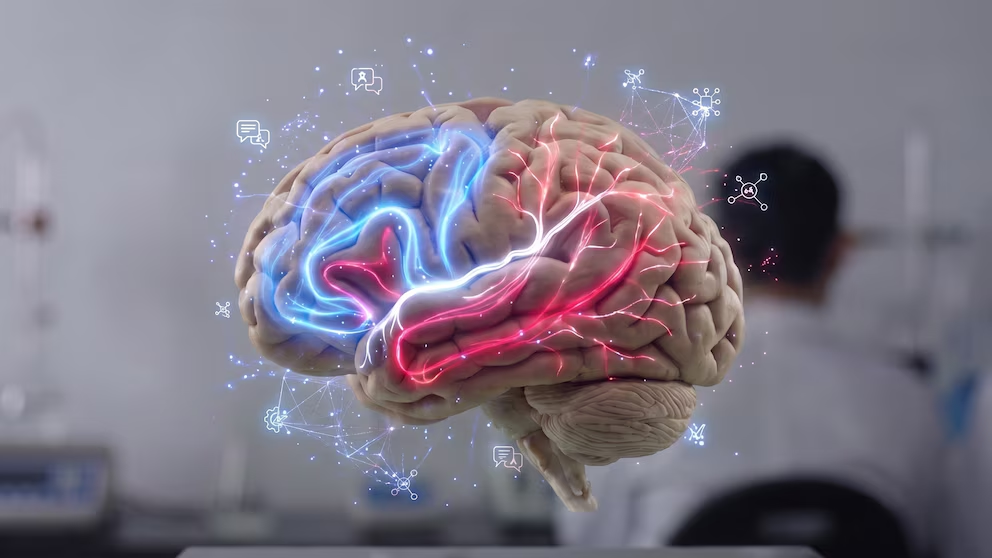

Brain health does not always advance at the pace of the calendar, and experts cited by Prevention maintain that certain daily habits can make a difference in memory, attention, and the speed at which the mind ages.
The state of the brain does not depend solely on chronological age. Diet, physical activity, rest, connection with other people, and the way of processing stress influence that journey.
Prevention gathered signs that are often associated with more favorable brain aging as well as indicators that may anticipate faster deterioration. Based on that review, specialists proposed simple measures to protect cognitive functions.
Signs often associated with a younger brain
1. It feels
One of the first clues involves the personal perception of age. As reported by Prevention, feeling younger is linked to better health outcomes and greater longevity. This concept is called subjective age.

Feeling younger than one’s chronological age is associated with better health outcomes, greater longevity, and more favorable brain aging.
The explanation cited by the publication points to a chain of behaviors. Those who perceive themselves as younger tend to engage more frequently in physical activities and mental challenges, two factors associated with a better state of the brain and body.
We recommend reading:Work-related stress impairs sleep in middle age, according to a study
Everyday actions can reinforce that feeling, such as listening to music linked to early stages of life, dancing, or participating in games and recreational activities with family and friends.

2. Speaking several languages
Another favorable sign appears among those who speak more than one language. Prevention detailed that recent research links bilingualism to better preservation of gray matter volume, an area of the brain linked to thinking, memory, and decision-making.
The report added that bilingual people also demand less effort from certain frontal regions of the brain when processing language. That lower demand could reduce cognitive wear over the years and decrease the risk of dementia.
For those who did not grow up in a multilingual environment, experts pointed out that it is never too late to start. Language learning apps and short vocabulary exercises appear as an accessible way to stimulate those functions.
3. Living in the moment
The ability to focus on the present appears as a favorable sign for mental health
The third favorable sign is linked to the ability to focus on the present. The practice of mindfulness, according to a study cited by Prevention and conducted by researchers at the University of California, Los Angeles and the Australian National University, could help preserve gray matter.
Meditation occupies a central place within those strategies. This practice helps reduce stress, a factor that can affect mental health and interfere with other bodily responses. It also mentioned potential effects on communication between neurons.
Among the recommendations included by Prevention is dedicating at least 10 minutes at the start of the day to a meditation routine, with the intention of establishing a more stable start to the day.
Indicators of accelerated cognitive decline
1. Being tired all day
Persistent daytime sleepiness is among the clearest warning signs. If a person feels frequently tired or falls asleep easily, the brain might not be getting the restorative rest it needs during the night.
Persistent daytime sleepiness is among the clearest warning signs.
That fatigue can also be related to obstructive sleep apnea, a disorder in which breathing is interrupted several times while the person sleeps. Prevention noted that previous studies linked that condition to a reduction in the size of the hippocampus, a key area for learning and memory.
“Sleep is a very important protector of the brain,” stated Neil Graff-Radford, a professor of neurology at the Mayo Clinic in Jacksonville, Florida, in statements reported by Prevention. The specialist recommended consulting a doctor if there is daytime exhaustion or frequent snoring.
2. Being very cynical
Another less obvious sign is extreme cynicism. Researchers in Finland, as reported by Prevention, detected in a study that older men with a very distrustful view of their environment showed higher cognitive decline and a lower life expectancy.
The hypothesis points to cortisol, a stress hormone that, at sustained levels, can affect brain function. Based on that link, Prevention suggested strategies such as psychological therapy or gratitude exercises aimed at reviewing patterns of distrust.
3. Frequent distraction
Difficulty in sustaining attention appears as a warning sign of cognitive aging.
The difficulty in sustaining attention also appears as a warning. A team from the University of Southern California identified that frequent distraction can function as a sign of cognitive aging, especially at more advanced ages.
If the distraction repeats regularly or interferes with daily tasks, specialists recommended a medical evaluation. The publication added that mind games, puzzles, and brain training exercises can help with concentration.
4. Being forgetful with your friends
A fourth indicator arises when the environment begins to notice memory lapses. Forgetting a commitment in isolation may not have clinical relevance, but repeating that pattern or modifying habitual behavior does deserve attention.
“The patients I see who have a memory problem usually do not recognize that they have one,” noted Thomas R. Vidic, a member of the American Academy of Neurology and a physician at the Elkhart Clinic in Indiana, as reported by Prevention. The neurologist added that if family members or friends notice changes, it is advisable to seek a professional opinion.
Habits that can help preserve the mind
1. Try the Mediterranean diet
Among the preventive measures, Prevention placed the Mediterranean diet in the foreground. This dietary pattern includes fish, lean proteins, leafy vegetables, nuts, berries, and olive oil, and various studies link it to a lower risk of cognitive decline.
The Mediterranean diet is associated with a lower risk of cognitive decline due to its intake of fish, leafy vegetables, nuts, and olive oil.
2. Exercise
Physical activity also occupies a central place. Prevention cited research published in JAMA according to which walking 7,000 steps a day is associated with a reduction in the risk of cognitive decline, a figure lower than the 10,000-step goal that is often repeated in health campaigns.
Vidic pointed out that the most useful exercise is the one that a person can sustain because they find it enjoyable. That adherence favors the continuity of the routine and reinforces the physical and mental benefits.
3. Expressing feelings
Social contact appears as another protective factor. A study led by the NYU Grossman School of Medicine, cited by Prevention, linked the presence of trusting bonds and people capable of listening with a slowing down of brain aging.
Social contact appears as a protective factor against brain aging.
Talking about worries, tensions, or conflicts with people close to you can help release emotional burden and reduce stress. Taking advantage of calls, messages, or virtual and in-person meetings can sustain that exchange.
4. Keep hope alive
The last recommendation mentioned by the specialists is to maintain a hopeful outlook. Graff-Radford told Prevention that a positive attitude contributes to protecting cognitive aging.