

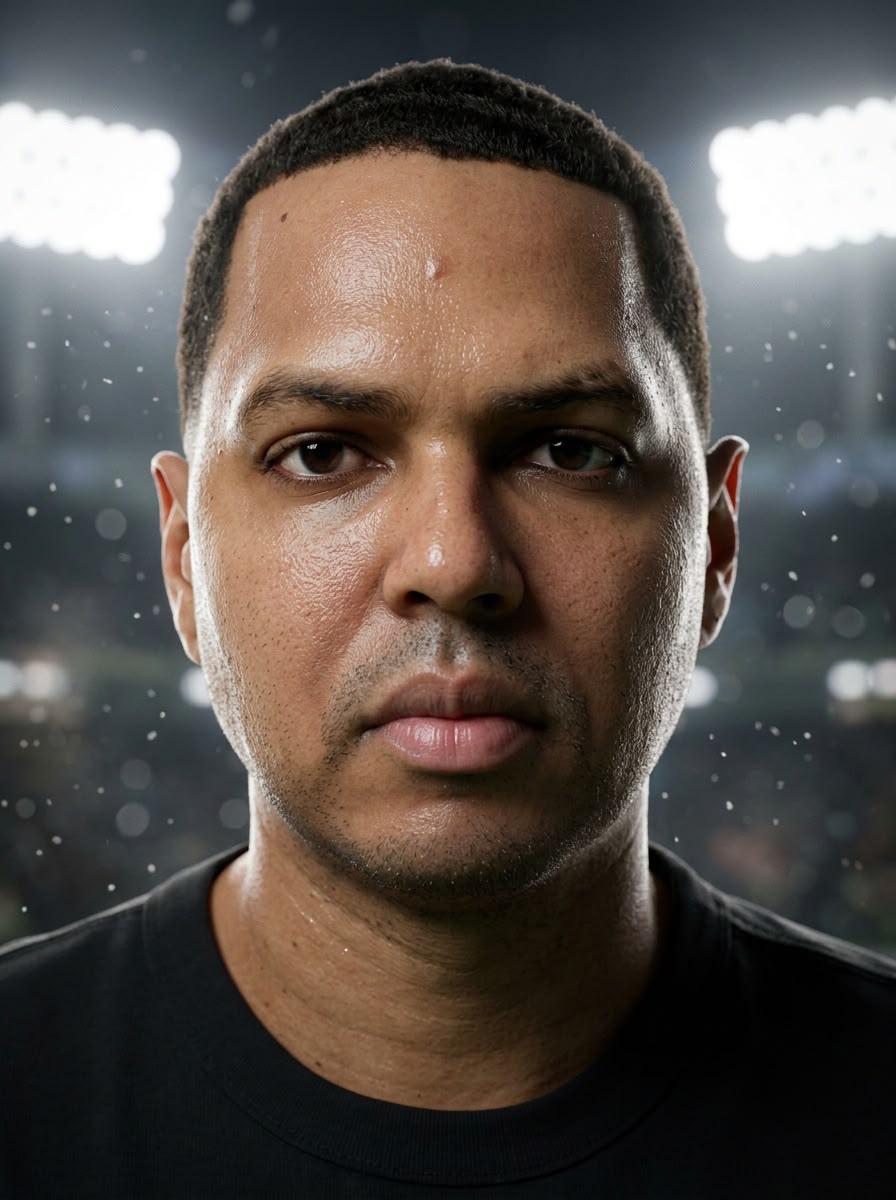

SANTO DOMINGO.- The results of the most recent survey by the firm ACD Media, published this Monday, transcend the simple measurement of voting intention to which Dominican society has been accustomed.
The public opinion study reveals an increasingly profound phenomenon: the progressive erosion of traditional party structures and the emergence of an alternative leadership on the front line of the debate, embodied by the figure of Santiago Matías “Alofoke”.
With 6.3% of the electorate’s preference, Matías is placed in practically a technical tie with long-standing figures such as Gonzalo Castillo (6.5%). Likewise, the renowned communications businessman comfortably surpasses the mayor of the capital, Carolina Mejía (3.5%), and significantly leads the Vice President of the Republic, Raquel Peña (0.5%).
The relevance of this positioning lies in the fact that, without the backing of a political organization, lacking territorial structures, and without having made his aspirations official, Matías is already organically consolidating himself as the fifth most mentioned name in the local political scene.

We recommend reading: Alofoke claims that Congress will modify 16 articles of the Penal Code before it enters into force
The true value of this 6.3% percentage is understood when analyzing the 25.3% of respondents who opted for “Don’t Know/No Answer” and the 5.8% who chose the “None” box. This block, which consolidated represents 31.1% of the electorate, constitutes the natural niche for an independent candidate.
Unlike traditional parties, Matías does not compete for the hardline vote of the Modern Revolutionary Party (PRM) or the People’s Force (FP); his direct competition is against collective apathy, managing to connect with a segment of citizens who do not identify with traditional elites and who consume national events through the digital environment rather than traditional rallies.
While traditional forces allocate millionaire budgets to the maintenance of premises and leadership, the producer’s strategy is energized in every interview and live broadcast of his conglomerate Alofoke Media Group, turning the digital space into a platform of permanent national reach.

Generational handover
Undoubtedly, the polling firm’s data confirms the transition from social media notoriety to actual voting intention. The positioning of Omar Fernández (12.1%) and Santiago Matías (6.3%) places two figures under 45 years of age in direct competition with former presidents and ministers, evidencing a generational shift where young voters prioritize alignment in communication codes over inherited sympathies.
For the ruling party, although David Collado leads the numbers with 20.6%, the landscape suggests a certain internal dispersion.
Therefore, an independent actor with 6.3% has the potential to subtract the urban and young vote that the PRM requires to secure a victory in the first round.
On the opposition side, the bloc of the People’s Force and the Dominican Liberation Party (PLD) gathers 33.1%, showing a conditioned ceiling.
Matías’s presence alters that years-long thought of “change versus continuity,” projecting a third way for the disenchanted electorate.
A validated model in the region
This scenario validates the possibility of competing in the Dominican electoral system outside of traditional parties, even though traditional politics was structured to close the gap for independent candidacies.
You can also read: Alofoke claims that Congress will modify the Penal Code to eliminate articles that affect freedom of expression
The case of Santiago Matías emulates recent regional phenomena such as Nayib Bukele in El Salvador (2015), Javier Milei in Argentina (2021), or the alternative movements in Colombia (2026), where the digital path ceased to be a trial and became a real force.
While these numbers do not place the media entrepreneur at the head of the race, the truth is that this percentage grants him the status of a decisive political actor with the capacity to influence a potential runoff or force strategic coalitions.
Above all, because in an electoral market where one in four voters remains undecided, the leadership that manages to channel that dissatisfaction will define the course of the process.