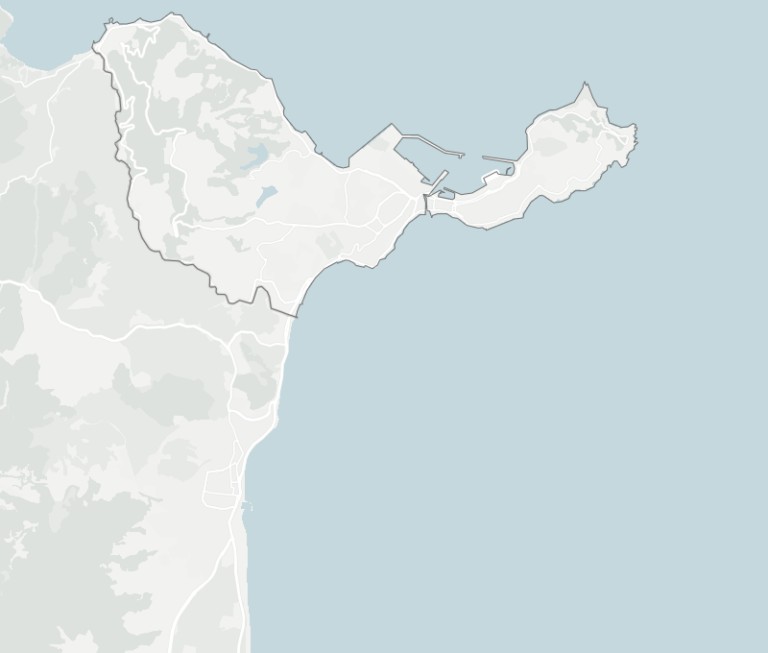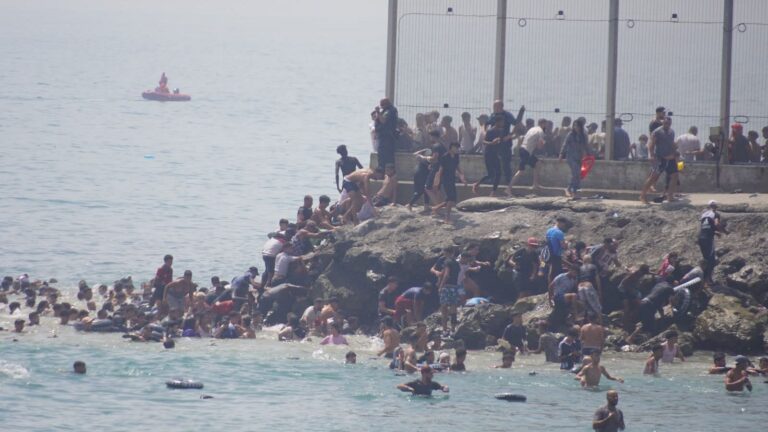

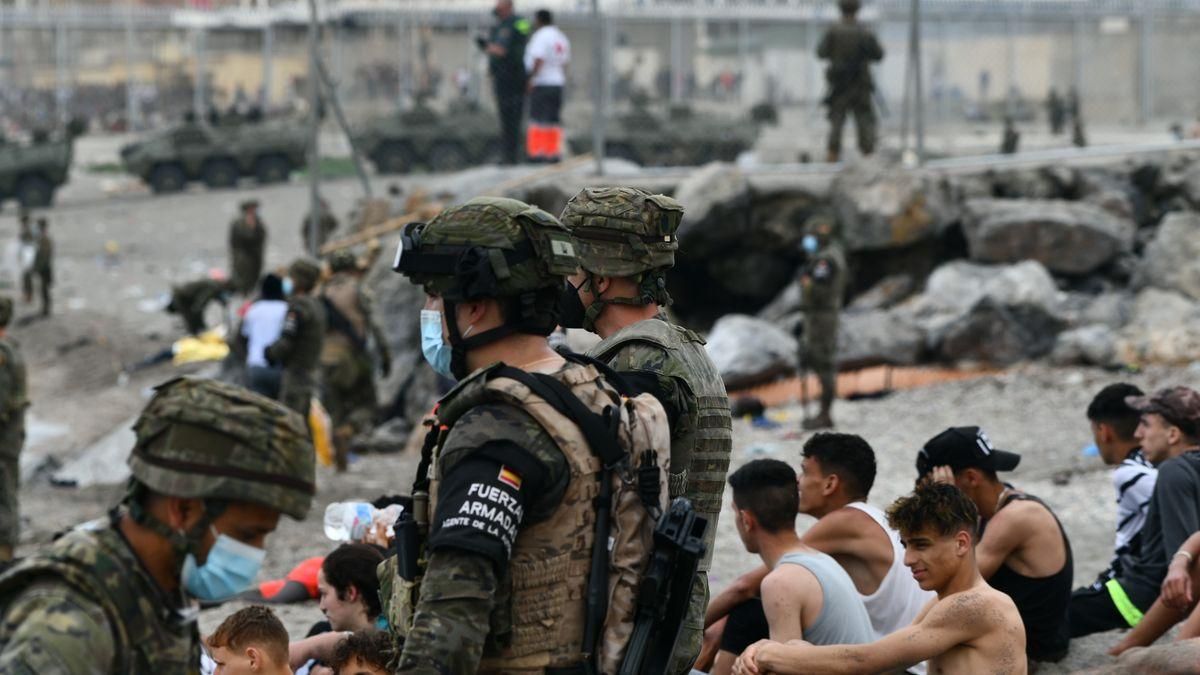

Morocco.- Morocco has reinforced security on the Ceuta border, which has not prevented thousands of people from refusing to leave the area and crossing along the coast into the Spanish enclave amidst sporadic outbreaks of violence, in the most serious bilateral migration crisis since 2021, which has left at least 18 dead.
Moroccan authorities have tightened controls in the last few hours to reduce pressure on the border, but thousands of people, mostly young people, have taken refuge in the nearby hills and have even thrown stones at the security forces.
The result of these isolated outbreaks of violence has been the burning of a bus a few hundred meters from the border crossing, the causes of which are unknown, and which has left no victims.
At sea, the Moroccan auxiliary forces have not stopped the constant flow of people towards the Ceuta breakwater along the coast, one of the final obstacles to stepping onto Spanish territory.

While security forces clear the vicinity of the Ceuta border, waves of young people have bypassed the road access controls installed a kilometer from the fence during the early hours of the morning.
You can also read: Morocco uses tear gas and water cannons at the border with Ceuta
The problem has also reached Melilla, the other Spanish enclave in North Africa. The Beni Enzar border, the only one operational between Spain and Morocco in the city, remains closed due to attempts of irregular entry by migrants.
Rabat and Madrid have announced that migrants who have entered Spanish territory irregularly will be returned to Morocco, but this announcement has not eased the tension either.
Although Rabat has implemented controls this Thursday at public transport stations and on roads to prevent the increase in the flow of people towards Tangier, Fnideq, and other towns in the north of the country, there are still many young people who try to arrive even by walking dozens of kilometers through the forests.

The center of Fnideq (Castillejos) is taken over by young people who have tried to cross into Ceuta or aspire to do so in the coming hours. Past midnight, many of them rushed to buy floats in the old medina, ready to throw themselves into the sea as soon as possible, sheltered by the heat and a dense fog.
The city is in gridlock, restaurants and cafes have closed earlier than their usual hours for fear of riots, and getting around by car is practically impossible due to the monumental traffic jams caused by the chaos and traffic blockades.
What will happen now? “We have cleared the area closest to the border. We will continue advancing to clear everything tonight,” a police source assured.
A possibility that does not daunt Hadiya, who arrived this Thursday in Castillejos accompanied by her daughters because she saw “a notice on the phone that Spain was opening the border to enter without papers,” she asserts.
The rumor has spread like wildfire and has fueled the mobilization.

“Is it true that they have opened the border and you can enter Spain without papers?” asked a young Moroccan man this Thursday as he ran alongside a group of friends to reach Ceuta.
Although Morocco has not provided official figures on arrivals, rescues, or deaths at sea—the 18 fatalities correspond to data from the Spanish administration—local media speculate that this crisis may exceed that of 2021, when 10,000 immigrants arrived in Ceuta in a context of diplomatic tension between Madrid and Rabat.
This massive attempt to enter Ceuta has coincided with the celebration in Morocco of the 27th anniversary of the enthronement of King Mohammed VI, who this Thursday offered an official reception in M’diq (Rincón), about 20 kilometers from Castillejos, and who in his address to the nation on Wednesday, made no mention of the situation.
The crisis began at the beginning of the week, a few days after Spain moved towards recognizing the nationality of Sahrawis born under Spanish administration, and a week after the visit of the Spanish Prime Minister, Pedro Sánchez, to Algeria, a country with which Rabat has not maintained relations in 2021, with tensions fueled by serious differences over the Sahara.