

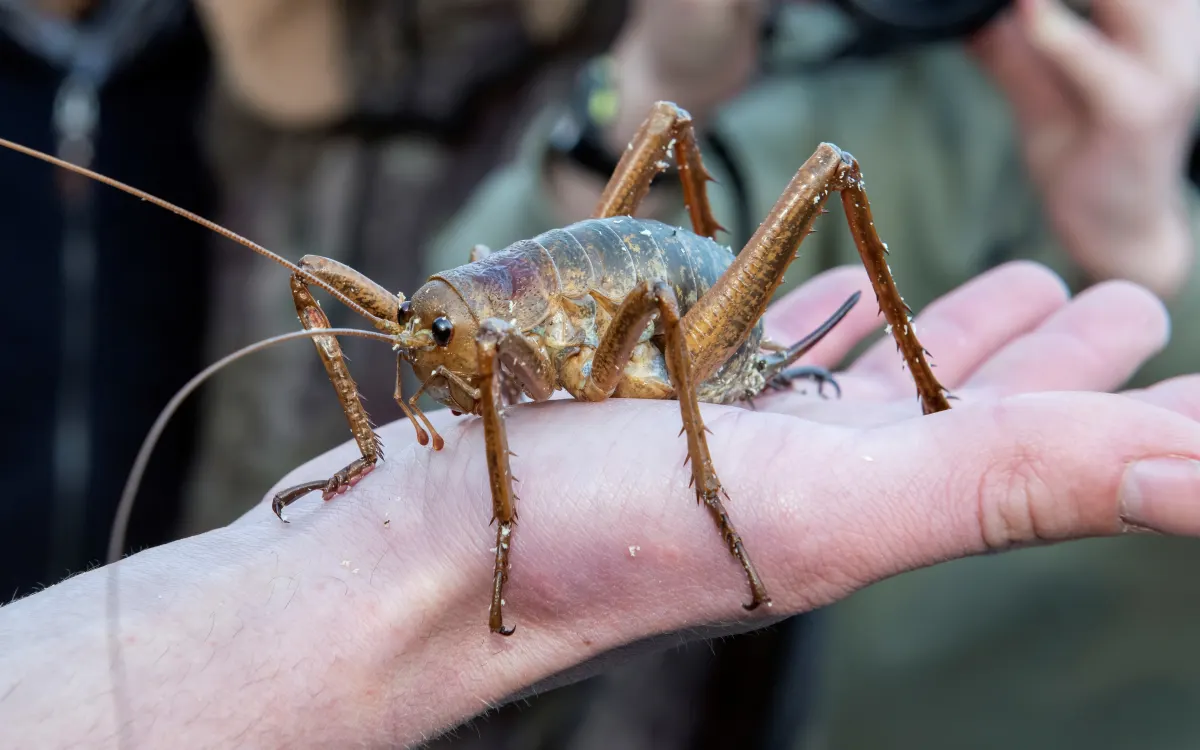

The giant wētāpunga, New Zealand’s heaviest insect, is no longer considered at risk of extinction after a 15-year selective breeding and reintroduction program helped restore its population in areas where invasive predators and habitat loss no longer threaten it.
The species, scientifically known as Deinacrida heteracantha, survived only on Little Barrier Island after disappearing from most of its former range in Northland and Auckland. Although Pacific rats were eradicated from the island in 2004, scientists continued to find very few wētāpunga during annual surveys over the following five years.
According to New Zealand’s Department of Conservation, around 11,000 individuals have since been successfully reintroduced to suitable areas. Before their release, the insects were fed fresh foliage, fallen leaves and fish flakes to provide enough protein to support the survival of their offspring.
The wētāpunga belongs to the orthopteran group, which includes grasshoppers and crickets, and can weigh about as much as a mouse. An adult female can reach around 10 centimeters in length, while its legs can extend up to 20 centimeters.

The species was once found across parts of Northland and Auckland, but deforestation and the introduction of invasive predators, including rats and stoats following European colonization, caused its disappearance from most of the country. Little Barrier Island, a predator-free nature reserve northeast of Auckland, became its last refuge.