
An appointment that raises alarm
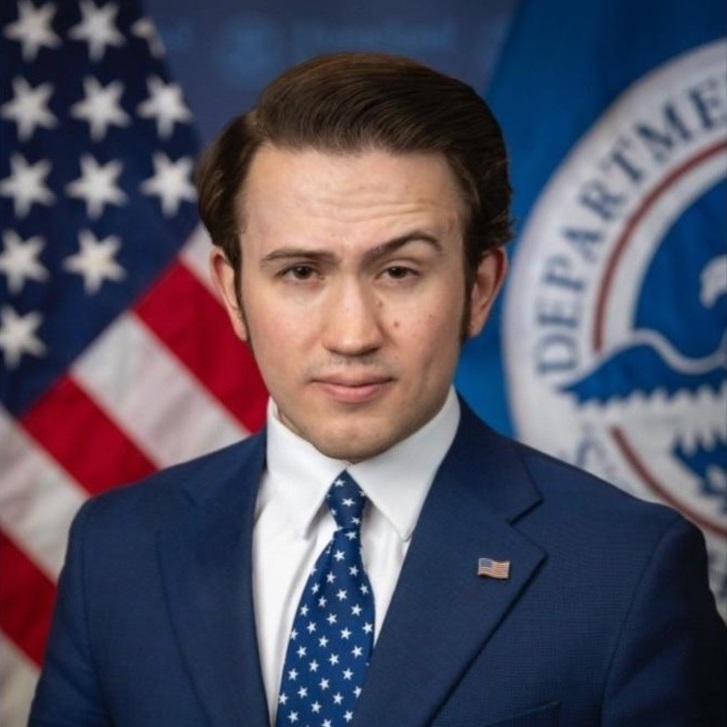
Fugate’s meteoric rise has been interpreted by many as part of a broader strategy by the Trump administration to dismantle institutional structures inherited from the previous government. Since Trump retook the presidency, the staff of the CP3 was drastically reduced (going from 80 to less than 20 employees) and the operational focus was shifted towards immigration and border security. Experts in counterterrorism, former officials, and beneficiaries of the CP3 believe that Fugate’s appointment reflects an alarming lack of professionalism. On his social media, Fugate describes himself as a “Trumplican”, and claims that his political awakening began at age 13, inspired by Donald Trump. Since then, he has documented his foray into politics: he participated as an alternate delegate at the Republican National Convention, celebrated the former president’s birthday with Club 47 in Florida, and was part of the campaign team that accompanied Trump in the final stretch of his return to the White House.Doubts about your preparation
The CP3 was led until March by Bill Braniff, an expert with more than two decades of experience in national security. Under his management, the office distributed nearly 90 million dollars in grants to prevent radicalization and acts of violence. Braniff resigned when he saw how the office was dismantled. In his farewell, he wrote that the CP3 represented “the foundational mission of the DHS: to prevent terrorism”.Today, with a reduced budget and less staff, the CP3 faces operational uncertainty. Current and former employees claim that Fugate demonstrates little technical knowledge of the function he leads. Some internal meetings have been described as “career guidance sessions” rather than spaces for strategic planning.
Contents

Political Reward or Decorative Figure?
Within the DHS and among external experts, two theories are considered. One suggests that Fugate was politically rewarded with a high-profile position, but with little real power. Another describes him as a “caretaker” of the CP3, appointed to accompany its dismantling and redirect its resources towards priorities more aligned with Trumpism, such as border security or strengthening friendly local law enforcement.
What does Thomas Fugate represent?
For some, he is an ambitious young man, a representative of Generation Z breaking into political power with new forms of activism and ideological loyalty. For others, he is the embodiment of the deterioration of the fight against internal terrorism in the United States.His presence in office has set off alarms inside and outside the government; “The problem here isn’t him (admitted a former National Security official). The real problem is what his appointment says about the future of our institutions.”